In the high-stakes world of global rail transport, safety is the ultimate metric of success. At SFFST, we understand that the reliability of the rail network depends on critical fastening components: the rail fastening system. As a specialized manufacturer with over 40 years of experience, we focus on rail fastening system for track safety that provides the essential rail restraint and railway track stability required to reduce the risk of track failure. By acting as the critical interface between the rail and the sleeper, our solutions ensure that every journey is defined by rail fastening safety and long-term operational reliability. We are committed to “Fastening Excellence, Entire Solution” to ensure that global infrastructure remains secure under the most demanding mechanical loads.
Core Mechanics of Track Stability and Safety
Maintaining Precise Gauge Control to Prevent Derailment
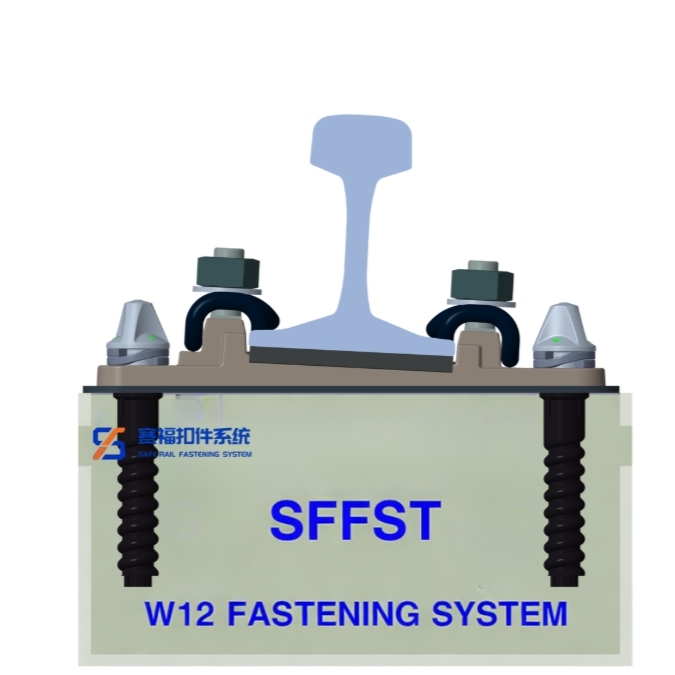
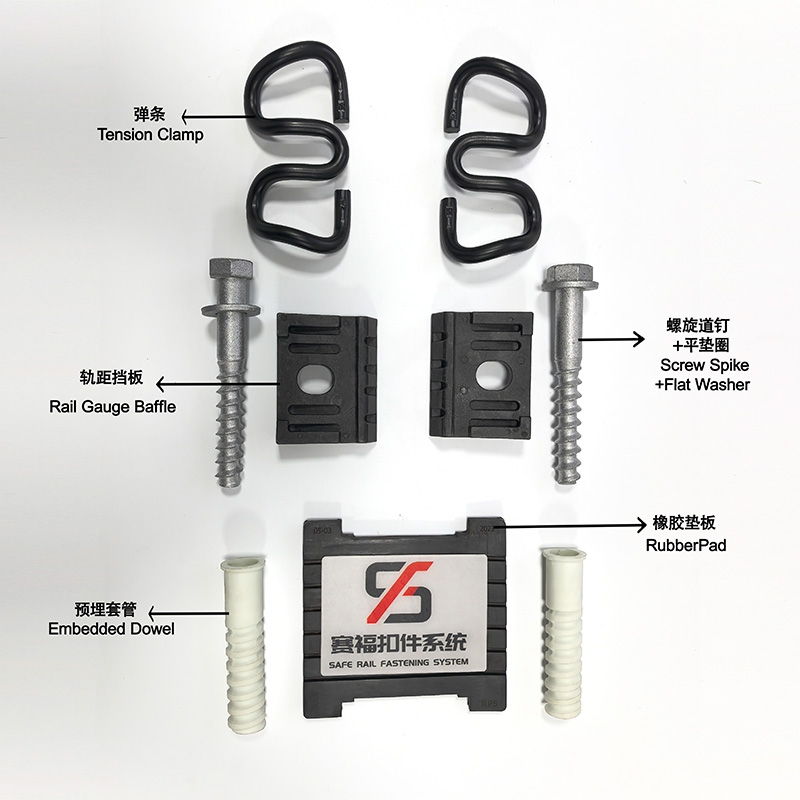
One of the leading causes of derailment is the loss of gauge—the distance between the two rails. If the rails spread or tilt, the wheelset can drop between them. We developed the SFFST W12 Fastening System specifically to solve gauge control issues in rapidly growing networks. By utilizing high-precision Rail Gauge Baffles and Rail Gauge Insulators, we ensure that the rails remain locked in their designated position even under extreme lateral forces. Our W12 Fastening System is designed to handle tough mechanical loads, preventing the gauge deviation that often precedes a derailment event.
Ensuring Robust Rail Restraint Under Dynamic Loads
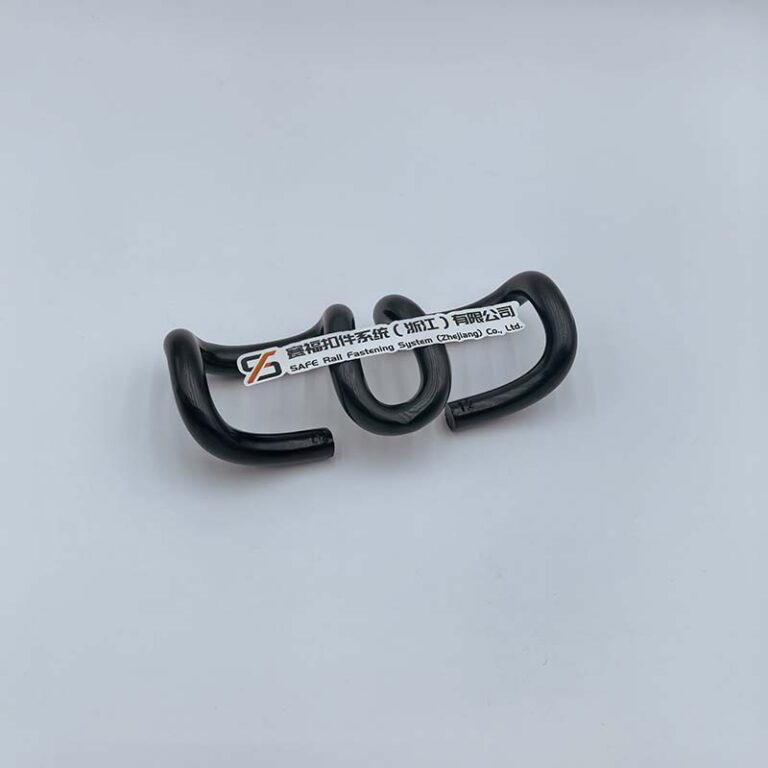
When a train passes, it exerts vertical, lateral, and longitudinal forces. A reliable rail restraint system must counteract these forces to prevent rail rollover. In our recent work on the Chile Alameda-Melipilla Railway Project, we supplied the SKI 12 tension clamp, a component chosen for its exceptional fatigue resistance and stability. These clamps provide the necessary down-force to keep the rail seated firmly on the Rail Pad, ensuring that the track structure remains a cohesive unit regardless of South America’s complex geographical conditions.
Managing Dynamic Forces and Vibration Control
Optimizing Longitudinal Resistance for Track Integrity
Longitudinal resistance is the force that prevents the rail from “creeping” or moving forward and backward relative to the sleepers. Without sufficient resistance, thermal expansion or heavy braking can cause track buckling or “sun kinks,” which are major derailment risks. At SFFST, we utilize our specialized Track Fastener Longitudinal Resistance Testing Machine to verify that our systems, such as the WJ-7 Fastening System or Type V Fastening System, meet the required resistance levels to maintain railway track stability throughout the seasons.
Advanced Vibration Damping with High-Performance Pads
Excessive vibration is the enemy of railway track safety. It leads to component fatigue and the loosening of bolts. We operate digital CNC polyurethane pouring lines to produce high-performance Resilient Tie Pads, Baseplate Pads, and Rail Pads. These non-metal parts act as shock absorbers, damping the high-frequency vibrations generated by the wheel-rail contact. By using materials engineered for compression resistance and wear resistance, such as those found in our WJ-8 Fastening System, we protect the sleepers and the ballast from premature degradation.
Engineering for Extreme Fatigue Resistance
Withstanding Millions of Stress Cycles in Heavy-Haul Rail
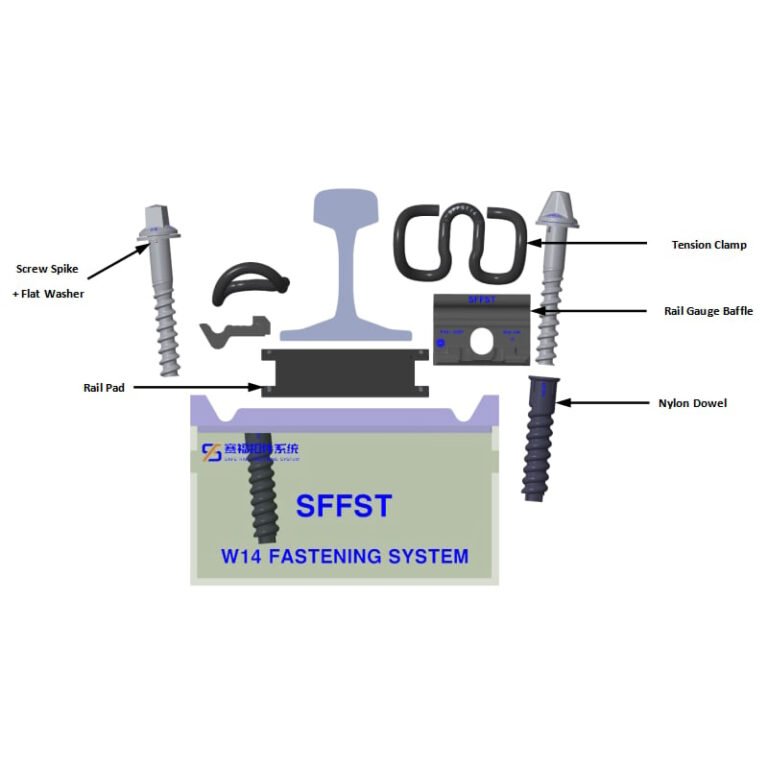
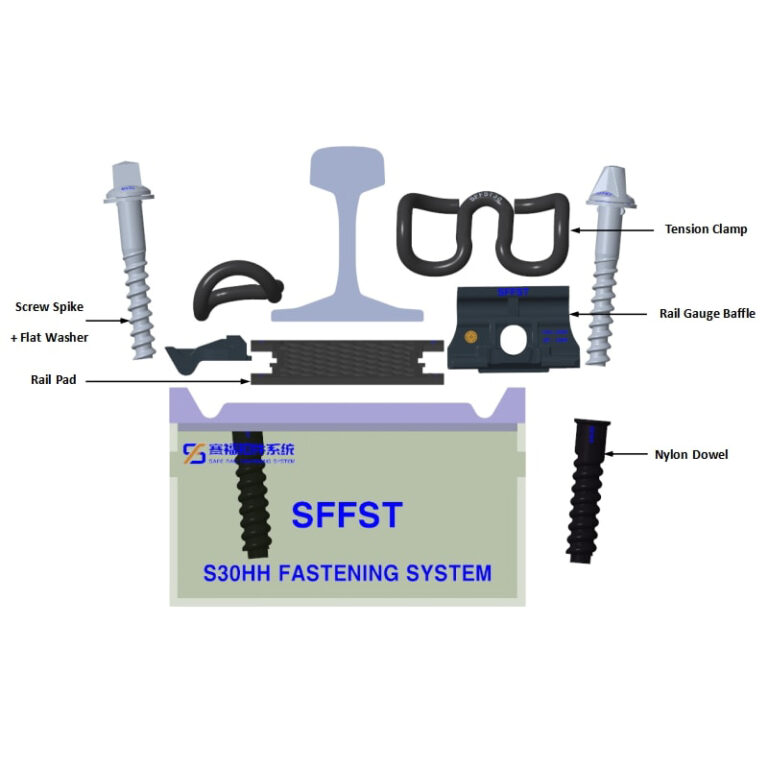
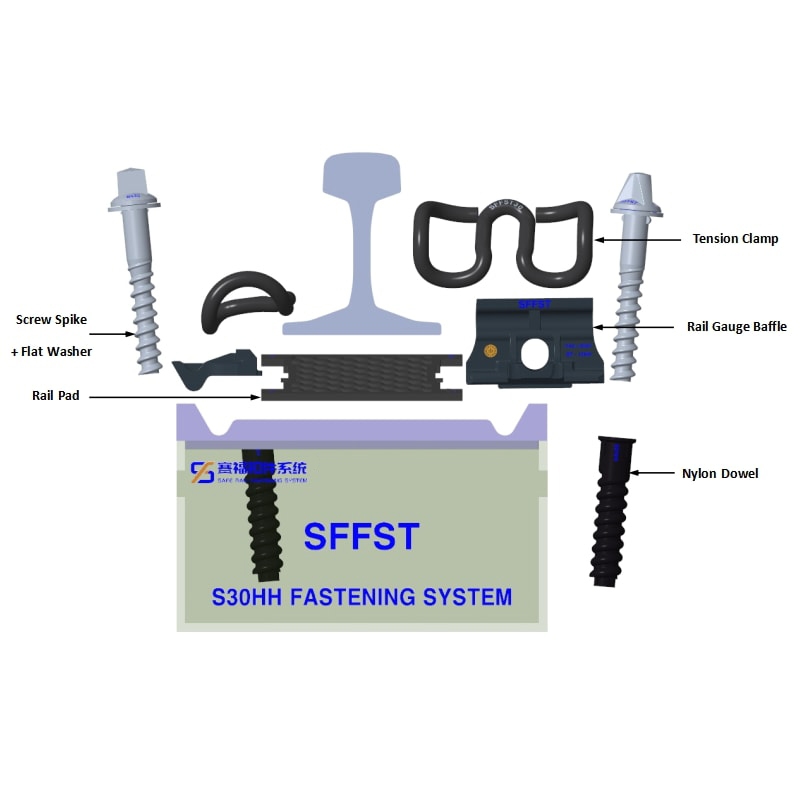
In the world of heavy-haul logistics, the mechanical loads are staggering. Systems like our S30HH Fastening System and W14HH Fastening System are specifically engineered for heavy-duty applications. We utilize fully automated production lines for our W-Tension Clamp, E-Clip, and Fast Clip to ensure that every metal component undergoes precise quenching and tempering. This improves fatigue resistance under continuous heavy rail traffic loads.
Material Innovation for Long-Term Structural Stability
We constantly push the boundaries of material science to enhance rail fastening safety. Since 1987, when we began as a rubber products factory, we have evolved our formulas to create parts that resist aging and environmental stress. In 2020, we invested in a new automated formula production line to manufacture high-strength rubber pads that meet the requirements of both 350 km/h high-speed lines and general railway use. This ensures that components like the Rubber Boot or Railway Rubber Level Crossing maintain their structural integrity even in harsh climates.
Validating Safety in SAFE Laboratories
Rigorous Metal Lab Testing for Component Reliability
Our Metal Lab performs vital testing on hardness, metallographic structure, and residual deformation. Using a Direct Reading Spectrometer, we verify the chemical composition of raw materials for Bolts, Spikes, Nuts, and Washers. This ensures that no sub-standard metal enters our production stream, preventing sudden failures on the track.
Dynamic Performance Analysis of Non-Metal Elastic Parts
In our Non-metal Lab, we focus on the “lifeblood” of vibration control. We test the tensile performance, Shore A hardness, and hot air aging of our Resilient Tie Pads. Crucially, we conduct static and dynamic stiffness testing to ensure that our Elastic Pads provide consistent performance across a wide range of temperatures and load conditions, which is essential for passenger comfort and railway track safety.
Full Assembly Testing for Maximum Safety Assurance
The ultimate test of an anti-derailment fastening system is how it performs as a complete assembly. Our Assembly Testing Lab features the Electro-Hydraulic Servo Rail Clip Fatigue Testing Machine and a Drop Hammer Impact Test System. These machines simulate long-term high-impact loading conditions in a compressed timeframe, allowing us to help ensure long-term operational safety of systems like the E2091TAV Fastening System or the Nabla C1 Fastening System. By providing reports with CMA/CNAS accreditation, we offer our clients the data-driven peace of mind they need for their most critical projects.
Conclusion
Ensuring railway track safety is a complex engineering challenge that requires more than just manufacturing components—it requires a deep understanding of the physics of the wheel-rail interface. SFFST has spent nearly 40 years perfecting this science, providing anti-derailment fastening system solutions that protect infrastructure and lives across the globe. From solving gauge control issues with our W12 Fastening System to ensuring high fatigue resistance in the SKI 12 tension clamp, we remain committed to “Fastening Excellence, Entire Solution”. By integrating advanced laboratory testing with our EPC+M+O framework, we empower railway operators to achieve the highest standards of rail fastening safety and operational efficiency. We don’t just build fasteners; we build the foundation of a safer world.
Secure your track’s future with SFFST’s safety-certified fastening solutions—contact us today for a professional consultation.
FAQ
Q: How do fastening systems prevent train derailment?
A: Fastening systems prevent derailment by acting as a rigid rail restraint system that maintains the correct track gauge and prevents the rails from tilting or spreading under the immense lateral forces exerted by passing trains. Systems like the SFFST W12 Fastening System are specifically designed to address gauge deviation, which is a primary risk factor for derailments.
Q: What is the role of longitudinal resistance in railway safety?
A: Longitudinal resistance prevents the rails from “creeping” or moving forward and backward due to thermal expansion or braking forces. High longitudinal resistance, verified by our Track Fastener Longitudinal Resistance Testing Machine, is essential for maintaining track stability and preventing dangerous track buckles that can lead to derailment.
Q: What testing ensures the reliability of SFFST fastening systems?
A: We conduct comprehensive testing in our Labs, including metal hardness and metallographic analysis in the Metal Lab, and static/dynamic stiffness and aging tests in the Non-metal Lab. We also perform full-scale assembly testing, such as drop hammer impact tests, to ensure the entire rail fastening system meets international standards like ISO 9001 and CRCC.