In modern railway infrastructure, precision and reliability are non-negotiable. Every component in a rail fastening system directly affects track stability, passenger safety, and long-term maintenance costs. Among these components, the Nabla Blade plays a critical role by maintaining consistent toe load, absorbing vibration, and securing rails firmly to sleepers.
However, traditional small-batch manufacturing methods often struggle to deliver the high level of consistency required for today’s high-speed rail and heavy-haul networks. Minor variations in forming accuracy, heat treatment, or material properties can lead to uneven pressure distribution, premature component wear, and increased maintenance risks.
To solve these challenges, SFFST has developed a fully automated Nabla Blade production line that replaces manual inconsistencies with advanced manufacturing precision. By integrating automated stamping, controlled heat treatment, robotic surface processing, and strict laboratory testing, SFFST ensures that every Nabla Blade meets international standards such as EN 13481 and TB/T 3065 while maintaining exceptional durability and performance.
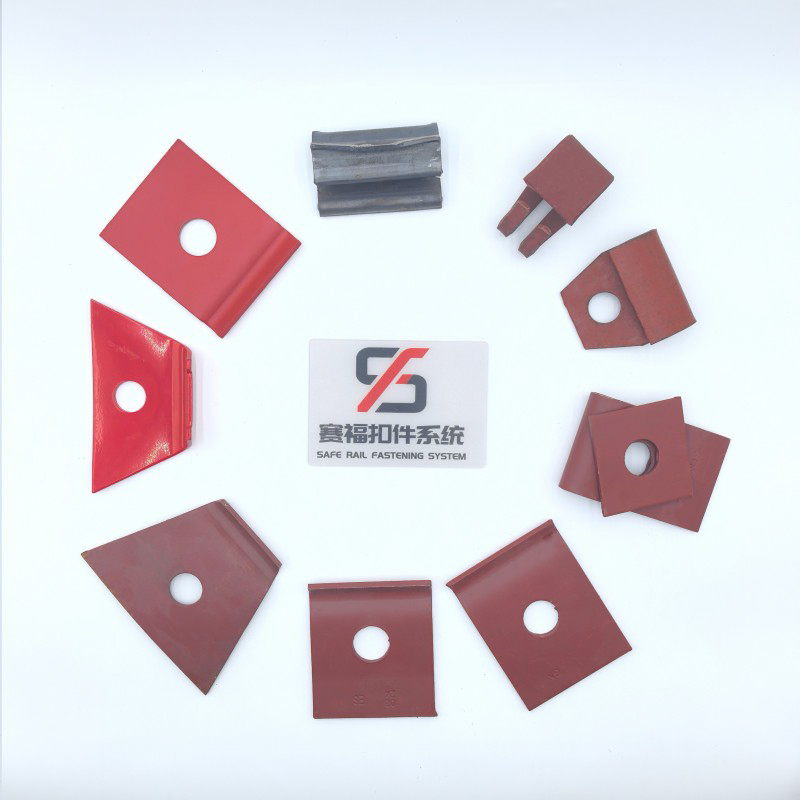
Challenges in Traditional Rail Fastener Production
- Limitations of Traditional Small-Batch Manufacturing: For the Nabla Blade, a tiny shift in the curve or a minor variation in heat processing might disrupt its gauge-holding power. And small operations usually miss the advanced checks needed to spot these changes right away.
- Impact of Precision Gaps on Rail Safety: In setups like the NABLA C1 Fastening System, the Nabla Blade needs to apply a precise toe load to hold the rail to the sleeper. If the blade’s shape has flaws, pressure spreads out unevenly. This raises the chances of track shifts or faster damage to parts such as the Rail Pad or Dowel.
- Addressing Quality Instability in Manual Processes: Hand work, though expert-level, brings in factors we aimed to remove with automated manufacturing. Worker tiredness or small handling differences during quenching or tempering can cause uneven strength in the Spring steel plate material.
The Advanced Nabla Blade Production Line
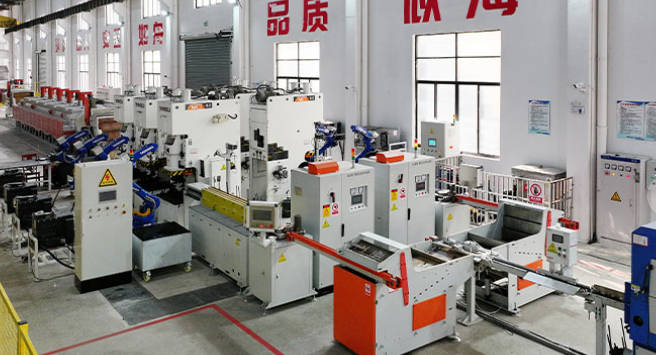
High-Precision Automated Stamping and Forming
We apply precise automated manufacturing methods. Raw spring steel plate enters a steady flow system. The SFFST production lines manage cutting and shaping with machine accuracy. As a result, each Nabla Blade gets matching sizes. This stamping step proves vital for the exact “Nabla” form. That shape gives it strong bounce-back and vibration control features.
Integrated Heat Treatment for Enhanced Durability
Strength is a must for rail clips. Our line includes a complete automated heat process. It covers heating, quenching, and tempering. Digital CNC systems keep steady heat levels. These match the needs for better steel traits. Thus, every Nabla Blade gains wear resistance to handle moving forces in fast trains or heavy freight paths.
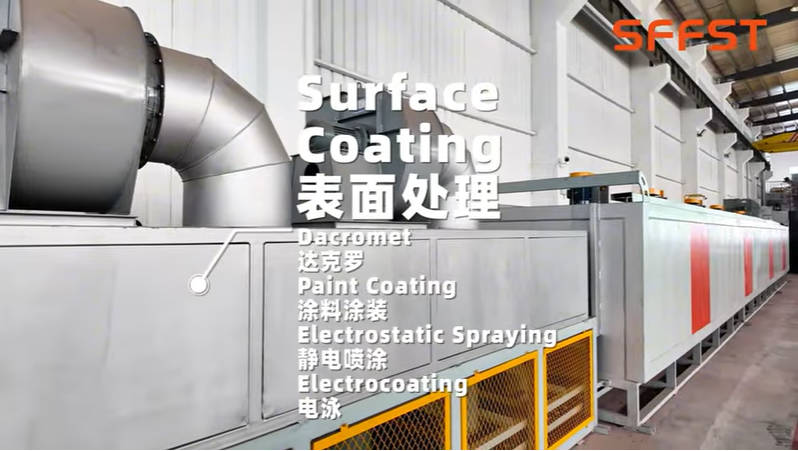
Automated Surface Treatment and Anti-Corrosion Coating
Blades must cope with weather shifts and rough settings. So, our Nabla Blade goes through strict automated surface work. This includes even anti-corrosion layers put on by machines. Blades for projects like the Morocco Kenitra-Marrakech High-Speed Railway Project or city subway paths get this protection. It fights rust and wear from chemicals.
Benefits of SFFST Automated Manufacturing
Achieving Unmatched Product Consistency at Scale
With a yearly production of 5 million sets of rail fastening systems, SFFST backs big building efforts without dropping standards. Our automated manufacturing makes sure the first Nabla Blade matches the last one in a million.
Eliminating Human Error through Robotic Integration
We blend machine automation and live computer checks into our SFFST production lines. This wipes out worker mistakes in the main steps. Machines stay alert and stick to their set paths. Such oversight lets us offer Nabla Blade quality control that beats old ways.
Streamlining Efficiency with JIT Production Management
Our drive for top work shows in how we run things. We use JIT (Just-In-Time) production management and ERP systems to boost daily flow. So, we meet special needs for shades or details quickly. At the same time, we keep a tight supply chain. Our automated 3D warehouse holds 30,000 tons. It handles shipping and drops with the same care as our manufacturing process.
SFFST Nabla Blade Quality Control Systems
Rigorous Testing in Advanced SFFST Metal Laboratories
Quality starts early and runs through each stage. Still, our SFFST Metal Lab gives the final proof. We use top tools like the Rockwell hardness machine, Universal material testing machine, and Direct reading spectrometer. They check the makeup and power of every Spring steel plate batch for our Nabla Blade.
Fatigue Resistance and Metallographic Sample Analysis
For lasting trust, our Nabla Blade quality control includes deep wear tests. The Clip fatigue testing machine mimics years of train passes in just days. Plus, our inverted metallographic microscope lets experts view the metal’s inner build.
Adhering to International ISO and CRCC Standards
At SFFST, we value our worldwide approvals. We follow ISO 9001, ISO 14001, and ISO 45001 in operations. Products like the Nabla Blade carry CRCC certification. We tested them with TÜV NORD to meet EN 13146 and EN 13481 rules.
Conclusion
Moving from old making ways to the smart Nabla Blade production line at SFFST means more than technological advances. It shows our pledge to world rail protection and “Fastening Excellence”. With automated manufacturing, we fix ongoing issues like accuracy slips and quality ups-and-downs that hit small shops hard.
Pick SFFST, and you get a teammate for a full EPC+M+O solution—from skilled planning and building to ongoing care. Contact SFFST today to discover how our automated rail solutions can enhance the safety and longevity of your next infrastructure project.
FAQ
Q: What are the primary functions of the Nabla Blade?
A: The Nabla Blade serves key roles. It holds the rail steady. It offers strong flex to take in shakes. It keeps the track width exact. And it adjusts to heat-based growth or shrinkage. The build targets less noise and lower upkeep for the whole track.
Q: Why is automated manufacturing better for Nabla Blade consistency?
A: Automated manufacturing on our SFFST production lines cuts out handwork risks. Robots handle cutting, shaping, and heat steps with spot-on accuracy and live checks. This guarantees each Nabla Blade hits the precise shape and steel specs. Hand-done small runs can’t match that steadiness.
Q: How do you ensure the quality of the materials used in production?
A: We get our spring steel plate from trusted local and global sources. Tests happen before and after making in our SFFST Metal Lab. Tools like the Direct reading spectrometer check chemical makeup. The Universal material testing machine tests pull strength.
Q: Can you provide customized Nabla Blade solutions?
A: Yes. As a proven OEM and ODM ally, we tailor specs, sizes, and colors of the Nabla Blade for project fits. Our International Joint R&D Center teams up with customers. We turn ideas into top-working products.