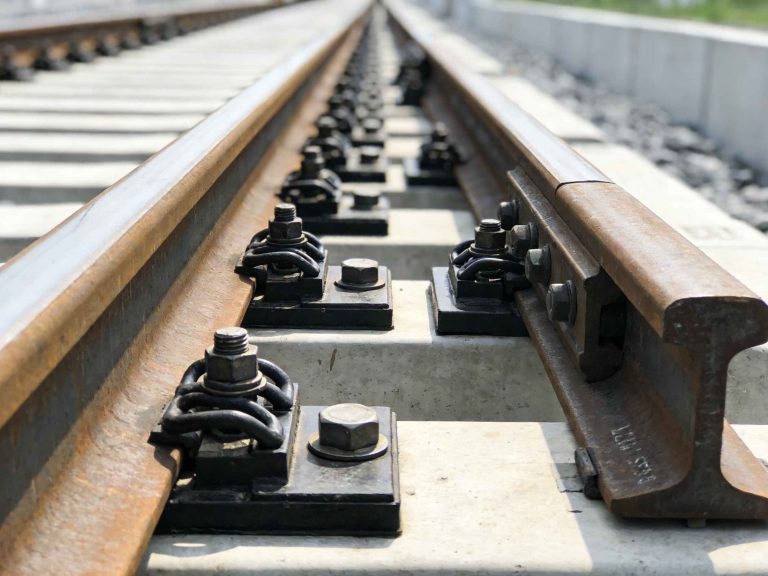
Railway setups form a key part of logistics and transport systems both within countries and across borders. Rail stability sits at the heart of this setup. It affects safety and how well the system works. As axle loads grow and train traffic picks up speed, maintaining rail stability under dynamic forces becomes more challenging as axle loads increase and train speeds rise. Fastening systems counteract these pressures by providing essential support at the rail-sleeper connection. They provide consistent support at the rail-sleeper interface, preventing rail displacement, reducing vibrations, and enhancing the longevity of both rails and track foundations.
Introducing the Type VII Fastening System
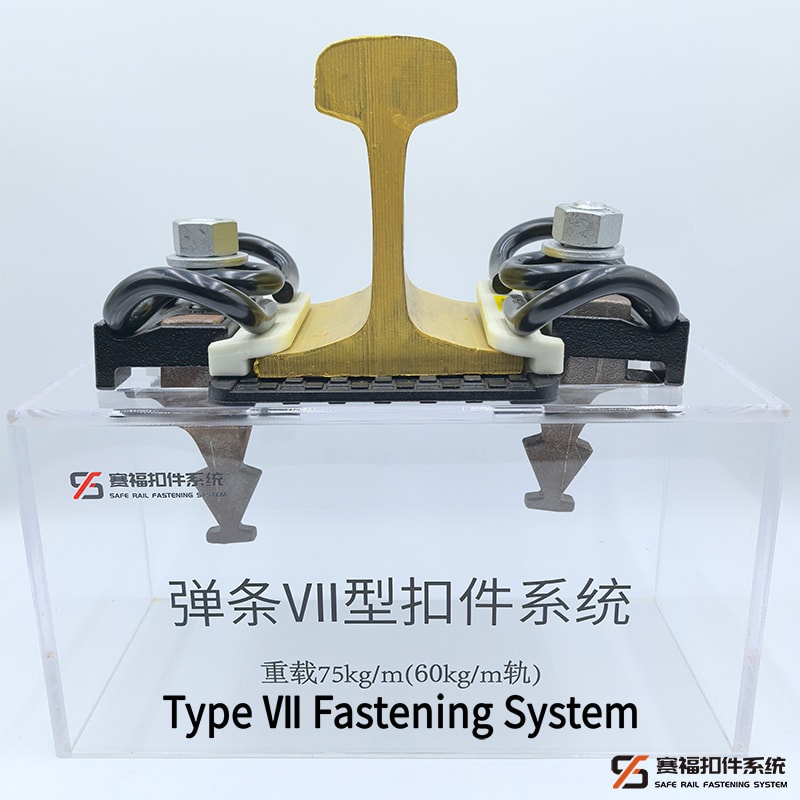
To meet the demands of modern ballasted tracks, we at SFFST created the Type VII Fastening System. This setup works well for 60kg/m and 75kg/m rails. It is designed to withstand heavy axle loads, particularly in freight-heavy routes. The system follows Q/CR 481-2015 rules in China. It also matches EN 13481-2 Category E for use worldwide. That means it fits into many different work settings.
Structural Design Features
Core Components of the Type VII System
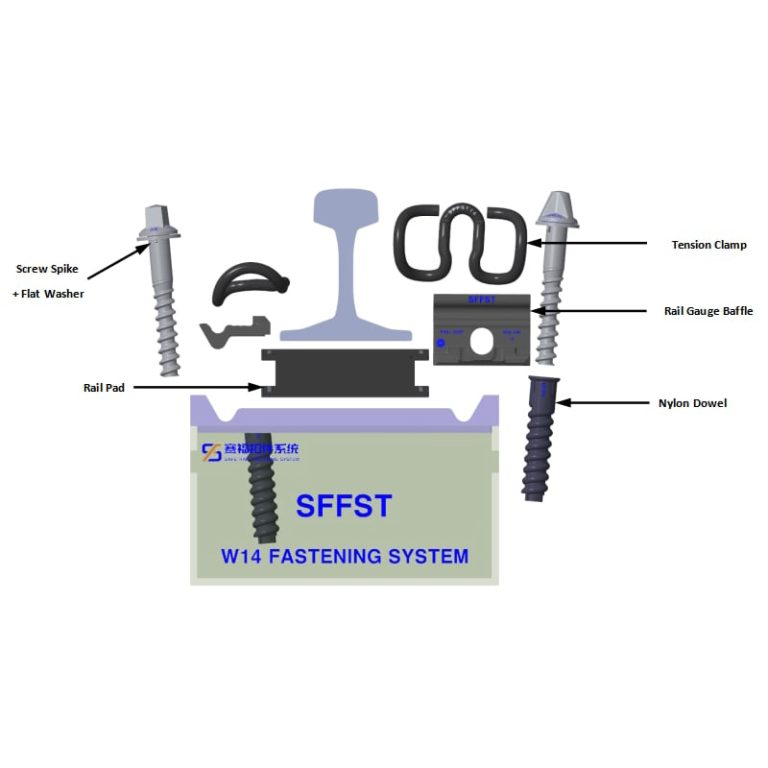
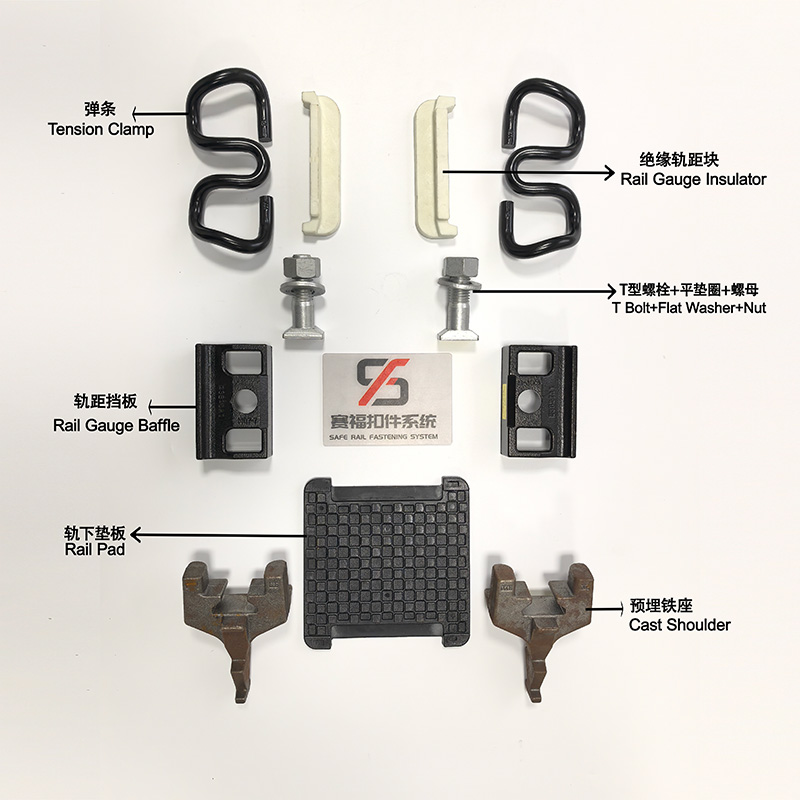
The Type VII Fastening System uses a strong mix of parts. They team up to keep rails straight and the structure solid. The key components of the system include:
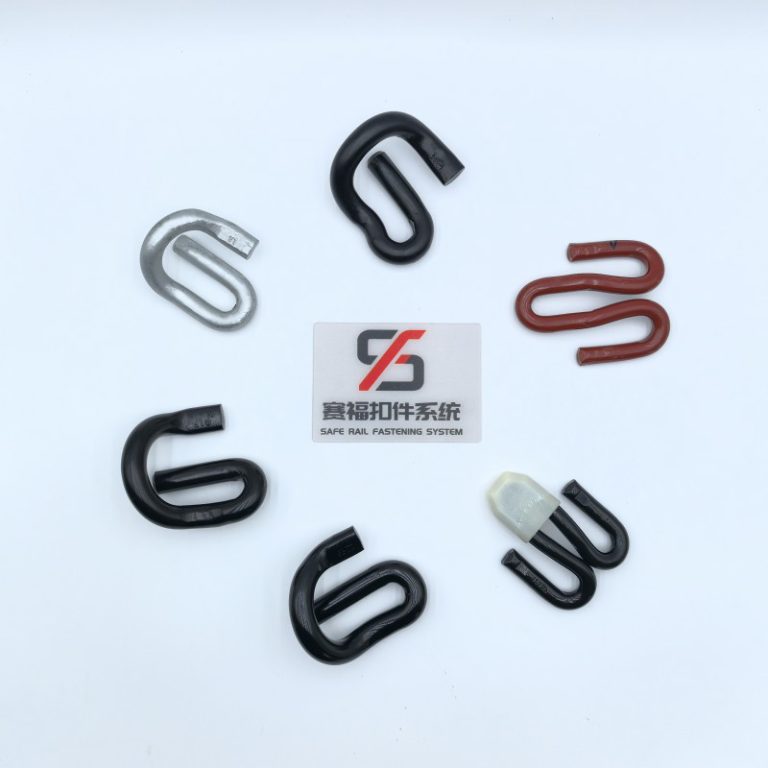
- Tension Clamp W4: Built from 60Si2Mn steel, it gives a clamping force ≥ 12kN.
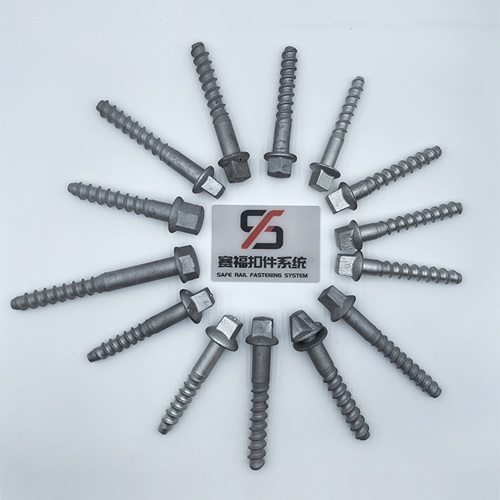
- T Bolt T2, Nut M24, and Flat Washer: These parts lock in the mechanical hold.
- Rail Pad P7 (TPEE material): It adds bounce with a static stiffness of 140±20kN/mm.
- Cast Shoulder TZ5 and Rail Gauge Baffle MG7: Made from QT450-10 cast iron for solid strength.
- Rail Gauge Insulator G7: Formed from PA66+30%GF, it stands up well to shear and impacts.
Workers craft each part with care. This way, they get the right pressure at contact points, plus good insulation and damping.
Engineering Innovations in Design
The setup includes fresh ideas to boost how long it lasts and fight off tiredness from use. Materials like QT450-10 cast iron and TPEE compounds that act like rubber hold up against rubbing and weather damage. The shape of tension clamps and pads spreads loads evenly. This matters a lot. It cuts down on wear from shakes and keeps things working steady, even when loads shift around.
Compatibility with Rail Profiles
A big plus is how it matches 60kg/m (P60) and 75kg/m (P75) rails. These are common in rail networks around the world. The fit keeps contact pressure even. It holds the rail tight, even in tough work conditions.
Performance Under Load Conditions
Response to High-Frequency Vibrations
Elastic parts like the Rail Pad P7 soak up moving loads well. This cuts wear on the main pieces and keeps the rails lined up for a long time. Such shake control helps a lot on crowded routes. There, repeated vibrations can break parts early.
Performance Under Heavy Axle Loads
Built to take axle loads up to 30 tons (China) and 35 tons (international), the Type VII System stands strong against forces. It resists moving under many load repeats. This slows down ballast breakdown. As a result, the whole track lasts longer. Data from Jingshen Railway trials show the system holds position with under 2mm deviation after 1 million passes of 30-ton loads.
Compliance with Industry Standards
Meeting Q/CR 481-2015 Requirements
The system hits or beats key points in Q/CR 481-2015 for heavy-haul rail work:
- Longitudinal rail resistance ≥11kN.
- System clamping force ≥24kN.
- Electrical resistance ≥5kΩ.
- Proof load test for pull-out resistance ≥60kN.
- Fatigue performance: Rail gauge deviation ≤6mm, Clamping force change rate ≤20%.
Our team checks these through lab tests that mimic real conditions. They also do on-site trials. For instance, pull-out tests in controlled setups match field results from Fenghong lines, where forces stayed above 60kN after simulated storms and heavy rain.
Alignment with EN 13481-2 Specifications
For global applicability, it complies with the EN 13481-2 Category E standard. This makes it right for I-shaped rails on ballasted tracks. It meets or tops measures like vertical stiffness (≤25%), electrical insulation (≥5kΩ), and lateral resistance (≥9kN). These components meet the safety requirements and are ideal for high-load conditions.
SFFST Manufacturing Excellence
Precision Engineering Capabilities
At SFFST, we run production with modern machines and checks via finite element analysis (FEA) in design stages. Our line for tension clamps does it all: from raw cuts and heat treatment to finishes and packing. This keeps every batch uniform.
Quality Control Processes
Our ISO setup includes checks at many steps. More than 100 automated tools in metal and non-metal labs test for hardness, pull strength, fatigue limits, insulation hold, and other traits. Production watches in real time make sure batches pass our tough rules.
Application Scenarios and Benefits
Use Cases Across Rail Networks
The Type VII Fastening System works well in many rail areas. Think freight lines, passenger paths, and routes that mix both. It adjusts to weather and land types, so it is adaptable to various geographical and environmental conditions. For example, it went into deals for heavy-haul jobs like the Fenghong and Jingshen Railway projects.
Operational Advantages for Rail Operators
Those who run Rails see fewer fix-ups. That’s thanks to tough materials and strong mechanics. Plus, better side hold and electrical barriers add safety buffers. This lowers day-to-day risks.
Conclusion: Engineering Value of the Type VII Fastening System
The Type VII Fastening System shows how smart design brings steady work in hard rail setups. Choices in materials, exact builds, and matches to world standards highlight our drive at SFFST to raise the bar in rail fastening tech. As part of our full EPC+M+O services, it slips right into today’s rail projects around the globe.
FAQ
Q: What makes the Type VII fastening system suitable for heavy-load railways?
A: Its structural design efficiently distributes stress while elastic components absorb vibrations, making it ideal for high-frequency heavy-load scenarios.
Q: Is the Type VII system compatible with both 60kg/m and 75kg/m rails?
A: Yes, it is engineered by SFFST to securely fit both profiles while maintaining optimal holding force.
Q: How does the system meet Q/CR 481-2015 standards?
A: Through rigorous material selection, fatigue testing, and compliance verification aligned with mechanical performance criteria defined in the standard.