Introduction to E54AV Fastening System
Understanding the Versatility of E54AV Fastening System
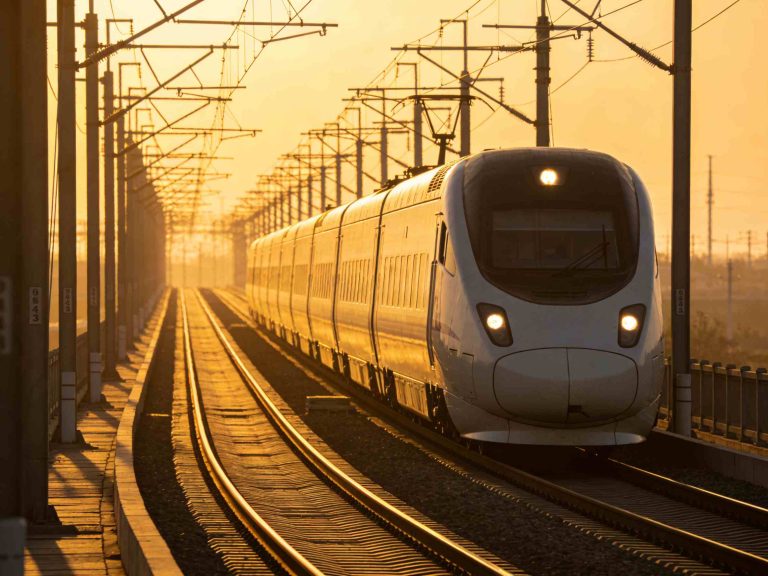
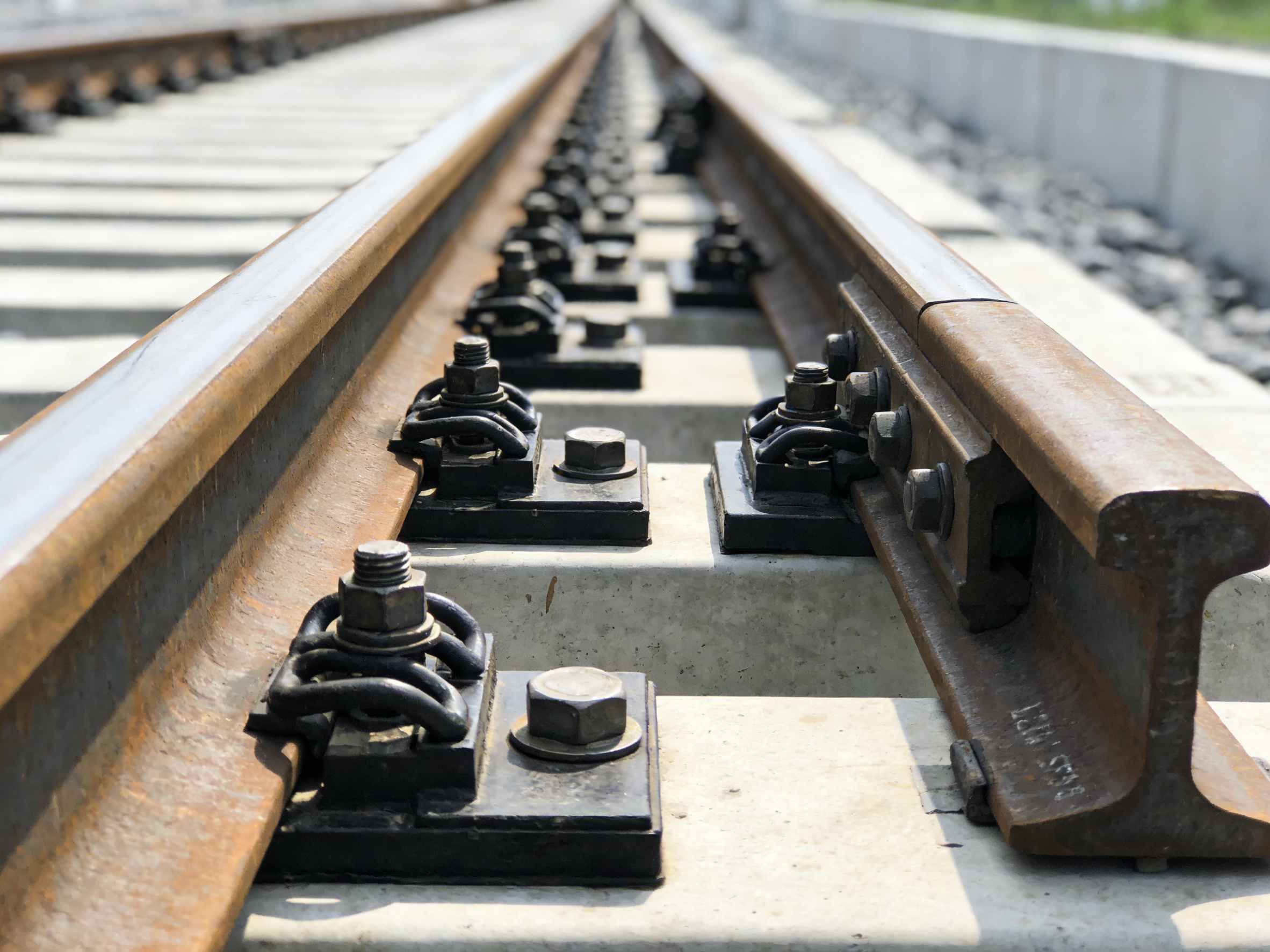
In today’s rapidly evolving rail infrastructure projects, flexibility and adaptability are essential to ensuring success across diverse track conditions and environments. Enter the E54AV fastening system from SFFST, a state-of-the-art solution designed to meet the rigorous demands of modern railway systems. Whether you’re working with UIC54 rails on ballasted tracks or customizing for I-section rails in mixed networks, the E54AV fastening system offers unmatched versatility and durability. Engineered for high-speed and heavy-haul applications, the system allows for seamless adaptation to various rail types, gauges, and track layouts, reducing installation time and costs. With its modular design and compliance with international standards such as EN 13146 and EN 13481, the E54AV fastening system ensures reliable performance while streamlining complex railway construction projects.
How SFFST Enhances Rail Track Components
SFFST runs some of the top production lines in the field. Their automatic lines for tension clamps handle steps like cutting, heating, quenching, tempering, surface finishing, rust protection, packing, and storage—all without human touch. This setup delivers even quality for millions of pieces each year. On top of that, SFFST’s labs run fatigue tests and metal structure checks to match EN 13146 rules. In one case, tests showed clips holding up after 2 million load cycles, proving real-world durability.
Importance of Modular Fastening Systems for Dynamic Site Work
Current railway builds need to handle tough demands, such as heavy wheel loads and sharp bends. A track has six key parts: rails, sleepers, ballast, fasteners, anti-climb stops, and turnouts. All these must link smoothly with systems like E54AV fastening system to keep lines straight and firm. Modular setups make fitting and upkeep simpler. They also let crews tweak for width or weight shifts quickly—which matters in fast-build jobs or spots needing regular changes.
The Role of E54AV Fastening System in UIC54 Rails
Design Specifics for UIC54 Rails
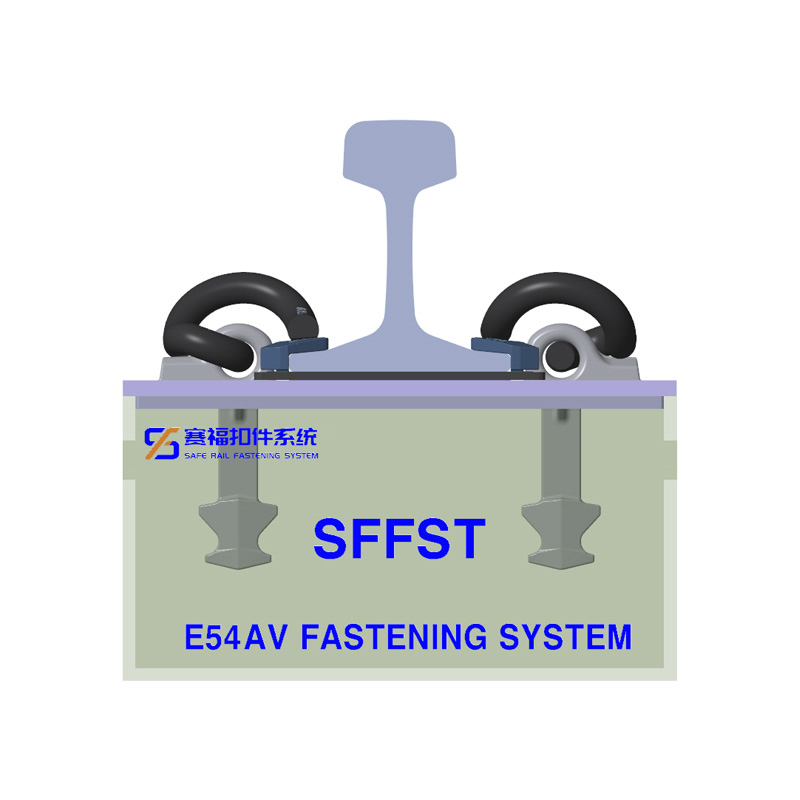
The E54AV Fastening System fits UIC54 rails on ballasted tracks with concrete sleepers. It delivers a clamping force ≥11 kN per clip, built from 60Si2Mn spring steel. The cast shoulder (IS546) has tensile strength ≥500 MPa, and its inner structure stays clean of sand holes or carbides. These traits help it fight loosening from shakes and jolts.
Every unit comes with PA66+30%GF insulators that provide solid hardness (≥100 HRR) and electrical resistance >10⁷ Ω for dependable insulation. TPU rail pads, with Shore A hardness between 60–80, absorb shocks while keeping vertical stiffness within EN 13146 bounds.
Benefits of Using SFFST’s Rail Strips and Rail Plates
SFFST makes rail tie plates and cast shoulders on automated casting lines that guarantee exact sizes and steady material buildup. These lines mainly turn out rail tie plate/rail baseplate, cast shoulder, various gusset plates, rail supports, and frog with a sliding bed plate. Such parts spread loads evenly over sleepers and stop side shifts—a key point for holding track shape through years of use.
Adapting to Custom I-Section Rails
Compatibility with Various Rail Specifications
A key trait of E54AV fastening system is its ability to work outside UIC54 norms. The system adjusts to other I-section rails based on track conditions and width needs. This range lets engineers use it in areas with odd rail types without rebuilding whole setups. For instance, in mixed-standard networks in Europe, teams fitted E54AV fastening system to older I-sections with minor tweaks, speeding up upgrades. SFFST reaches this range through careful making, backed by CNC molding systems that tweak part sizes to fit job details.
How SFFST Ensures Compatibility with Diverse Rail Gauges
Gauge means the smallest gap between the inner edges of two rails, up to 16 mm under the rail top. To fit different widths—from the usual 1435 mm to wider or tighter ones—SFFST adds movable cast shoulder plates and gauge blocks. These allow fine changes of ±8 mm, as set in EN 13481-2 tests. This setup aids smooth shifts in shared-width tracks or areas getting updates.
Components of Rail Track and Their Integration
Railway Tie Plate and Its Functionality
Railway tie plates spread downward forces from rails to sleepers while holding steady under constant pressure. SFFST’s casting lines use reliable cast iron for these plates, keeping output high. When linked with E54AV fastening system, each plate connects exactly to the clip group. This cuts wear on pad tops and sleeper faces.
Integration with the E54AV Fastening System for Optimal Performance
Paired with flexible pads from polyurethane pouring lines—where automatic machines make resilient tie pad/elastic pad, baseplate pad, rail pad using digital CNC control all the way—the setup gains strong shake reduction. It also holds side pull resistance ≥9 kN, as needed by EN 13146‑1. In urban metro builds, this combo has lowered track vibrations enough to meet noise rules without extra barriers.
Cast Shoulder Plates and Gauge Blocks Adaptability
Cast shoulder plates lock rail clips tight against side slips. Their JS500-7 material gives the bendability needed for ongoing load hits without breaks. Movable gauge blocks pair with them, so site teams can reset gaps during checks without taking apart full groups. This saves hours in big overhaul jobs.
SFFST’s Modular Approach to Fastening Systems
Meeting Dynamic Site Work Challenges
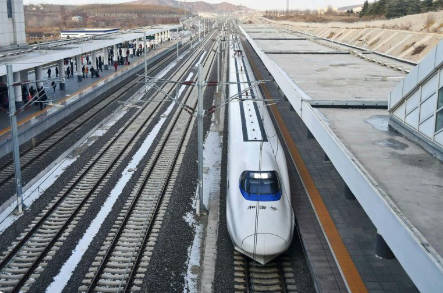
Under SFFST’s EPC+M+O setup: Engineering handles advice, design, and checks; Procurement covers mold making, tool delivery, and packing; Construction gives field tips; Management watches quality; Operation brings worldwide tech aid. This full plan allows quick changes when job factors change, such as land shapes or weather limits. For example, in projects like Morocco’s Kenitra–Marrakech High-Speed Railway or China’s Datong–Xi’an Passenger Line, teams made site-based fixes with modular parts that fit both home rules and global ones (EN 13146/13481). These adjustments ensured tracks stayed stable through rainy seasons and heavy traffic starts.
Benefits for Contractors and Designers in Dynamic Environments
Builders gain from shorter wait times, as automated storage holds up to 30,000 tons of goods set for global shipping. Designers get access through an R&D spot set up with Shanghai University of Engineering Science. It focuses on “fastening system type selection and optimization” plus “precise mechanical parameter calculation.” This mix of study detail and factory scale makes SFFST a solid ally for tough build plans around the world. Contractors report easier handling of surprises, like sudden spec changes, thanks to ready stock and expert input.
Conclusion
Ready to take your railway projects to the next level? Explore how SFFST’s E54AV fastening system can enhance your track construction with its adaptable, high-performance design. Contact us today to learn more and find the ideal solution for your next railway project!
FAQ
Q: What makes the E54AV fastening system adaptable to different rails?
A: The E54AV fastening system uses modular components such as adjustable cast shoulders and gauge blocks that allow adaptation across various I-section profiles while maintaining compliance with EN standards.
Q: How does SFFST ensure compatibility with different rail gauges?
A: By integrating adjustable gauge blocks offering ±8 mm tolerance range within each assembly configuration, tested under EN 13481‑2 protocols.
Q: What are the benefits of using a modular fastening system like E54AV?
A: Modular systems offer flexibility during installation or maintenance phases; they reduce downtime through easy part replacement while ensuring consistent clamping force under dynamic loads.
Q: Can the E54AV fastening system be used for both UIC54 and custom I-section rails?
A: Yes. It was explicitly engineered by SFFST for UIC54 but can also be customized for other I-section rails depending on operating conditions or regional specifications.