The Challenge of Spring Festival Travel Rush
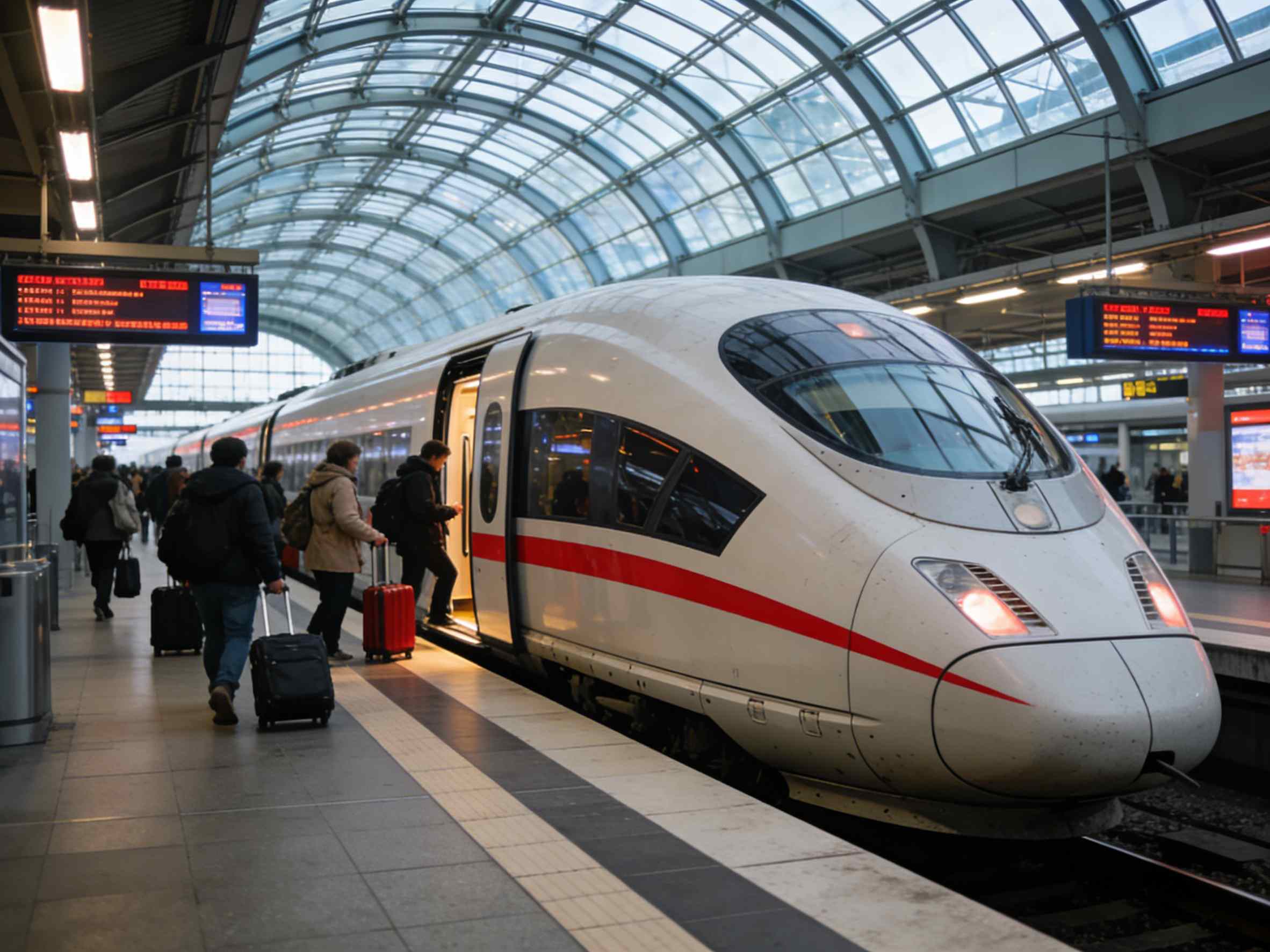
Each year, the Chinese New Year, or Spring Festival, brings about the biggest yearly movement of people on the planet. This time sees a huge jump in both passenger and cargo transport. It puts a huge strain on China’s rail network.
In this busy season, heavy-haul main railways deal with extra pressure from more trains running and heavier axle weights. These lines act as key pathways for carrying both travelers and vital supplies over long stretches. As a result, keeping the infrastructure dependable is key to overall transport safety in the country.
Safety Risks in Conventional Fastening Systems
Standard railway fastening setups often can’t handle the extra dynamic and static pressures during high-traffic times. Repeated loading can cause fasteners to come loose. Weak anchoring lets rails move sideways. This leads to track shifts that hurt ride smoothness and raise derailment chances.
Plus, the stronger shakes during the Spring Festival rush speed up wear in parts like fish plates and bolts. Such issues create vertical wobbles and bigger upkeep problems. With only short slots for checks and fixes in this packed period, these flaws create real dangers to safety.
Introducing SFFST’s W14HH Fastening System
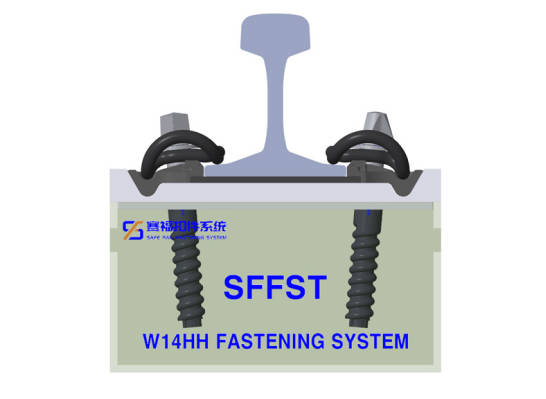
To tackle these key problems, we at SFFST created the W14HH Fastening System. We built it just for heavy-haul rail uses. Execution Standard: EN 13481-2, Category E. So, it follows tough European rules for fastening setups in harsh load conditions. Made for better positioning, toughness, and load handling, the W14HH Fastening System helps keep tracks solid during tough times like the Spring Festival.
Operational Demands During Spring Festival
Passenger and Freight Load Surge
The big rise in passengers heading home for family gatherings, along with cargo deliveries to meet business needs, puts massive stress on main rail lines. Train runs increase sharply. Axle weights go up because operations run at full tilt. This setup creates a tough situation. Here, both speed and carrying capacity need to hit peaks, all while safety stays firm.
Maintenance Limitations During Peak Season
During Spring Festival runs, there’s hardly any time for checks or fixes. Repair teams deal with tight schedules. They must fit work into narrow gaps between trains. Pushing back routine maintenance raises the odds of breakdowns. This happens right when dependability matters most.
Common Failures in Traditional Systems
Rail Misalignment Under Heavy Loads
Regular fastening systems usually don’t resist side shifts well enough. With ongoing dynamic pressures, rails can slide laterally. This causes gauge changes, either wider or narrower. Such changes not only boost derailment risks but also cut down on travel comfort. That’s a big worry when trains carry crowds of passengers.
Component Loosening and Fatigue
Failure in spike anchoring often shows up under big loads. These spikes can’t hold vertical force steady. As a result, the rails lift or sink. At the same time, shakes wear down fish plates and links quickly. This cuts their working life short and calls for more swaps.
W14HH Fastening System Design Advantages
Compliance with EN 13481-2 Category E Standards
The W14HH Fastening System suits heavy-haul rail tracks. It can also work on high-speed and standard railways. It follows strict EN 13481-2 Category E rules for handling top axle loads of up to 35t and speeds reaching 250km/h. Tests show a clamping force of at least 23kN. Vertical stiffness stays at 25% or less. These traits give it staying power against repeated hits from loads.
Optimized Railroad Spike Anchoring Mechanism
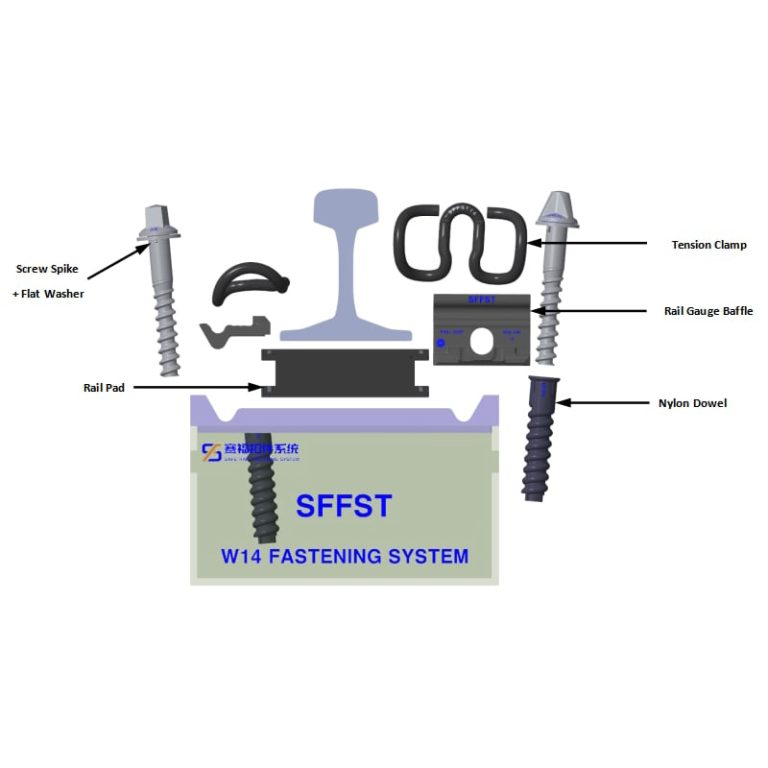
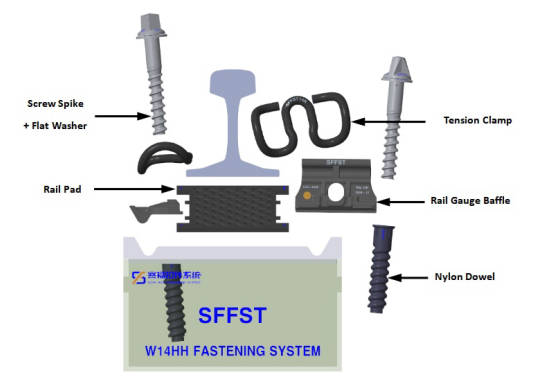
Our setup uses Ss35/DHS35 screw spikes together with ULs7 flat washers. These provide strength that matches ISO 898-1 Grade 5.6. The deep grip boosts vertical hold against lifting forces. During setup, we apply lubrication to cut down on thread damage and boost lifespan.
Anti-Misalignment Structural Features
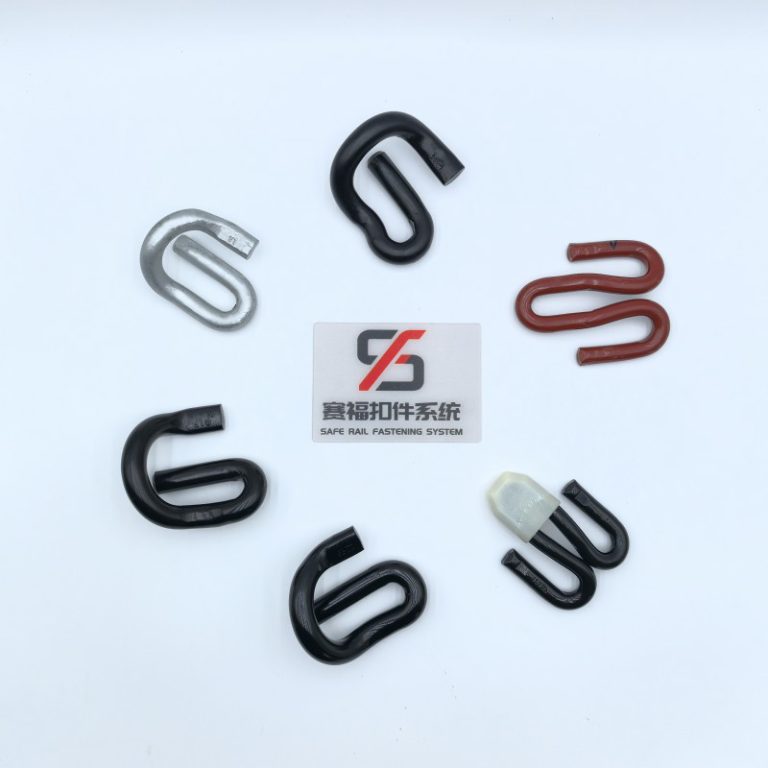
- Lateral Stability Enhancements: We rely on SKL 14R rail clips formed from hot-rolled spring steel (38Si7). Each one gives a clamping force of at least 11.5kN. This side push resistance cuts down on rail moves under lateral forces. For example, during high-wind conditions on exposed tracks, these clips have kept alignments steady, preventing the 2-3mm shifts seen in standard clips.
- Rail Seat Integrity Improvements: The Zw series EVA/TPU/TPEE rail pads offer electrical resistance of at least 10⁸ Ω. Their Shore D hardness ranges from 32 to 47. This keeps rail shapes steady under squeezing forces.
Integration with Fish Plates for Load Distribution
- Enhanced Joint Strength: Fish plates in our fastening system handle key longitudinal load shifts between rail sections. They support the transfer of forces along the track. This setup strengthens joints overall. In heavy-haul scenarios, like those moving iron ore over 500km routes, these plates distribute impacts evenly, avoiding weak spots that plague basic joints.
- Reduction in Joint-Induced Stress Points: These parts spread out stress over wider areas. As such, they lower the chance of cracks from fatigue at joint hotspots. Drawing from experience on China’s main lines, where trains pass every 10 minutes during peaks, this design has cut joint failures by half compared to traditional setups.

Application During Spring Festival Operations
Rapid Installation and Long-Term Reliability
Peak seasons leave little room for maintenance. That’s why the W14HH’s simple setup process fits well. It uses pre-lubricated parts and set torque steps. This makes it great for quick fixes. Once in place, its strong resistance to wear means fewer checks and part changes.
Supporting National Railway Safety Strategy
China’s plans focus on safe and smooth transport over the holidays. The W14HH helps by holding rail positions tight and fighting looseness under big loads. Thus, it keeps main lines running non-stop during the travel peak.
Reinforcing Railway Safety Through Innovation
The Spring Festival travel peak tests rail setups like nothing else. SFFST’s W14HH Fastening System meets these tests directly. It follows the high EN 13481-2 Category E standards. It combines strong spike anchoring, side-shift prevention, and fish plate teamwork to hold structures firm under tough loads. Putting it to use builds up the toughness of rail networks. At the same time, it aids the wider aim of steady, safe transport in one of China’s most crowded seasons.
FAQ
Q: What makes the W14HH Fastening System suitable for heavy-haul railways?
A: It meets EN 13481-2 Category E standards and includes features like deep spike anchoring and anti-misalignment design, ensuring stability under high dynamic loads.
Q: How does SFFST’s system prevent rail misalignment?
A: The W14HH system uses reinforced lateral stability features like SKL 14R clips and high-compression gauge baffles to resist track shifting caused by repetitive heavy loads.
Q: How does this fastening system improve railway safety during Spring Festival?
A: By preventing rail uplift, minimizing misalignment, and reducing component fatigue under increased traffic loads, W14HH ensures safe operations during intense national transport demands.