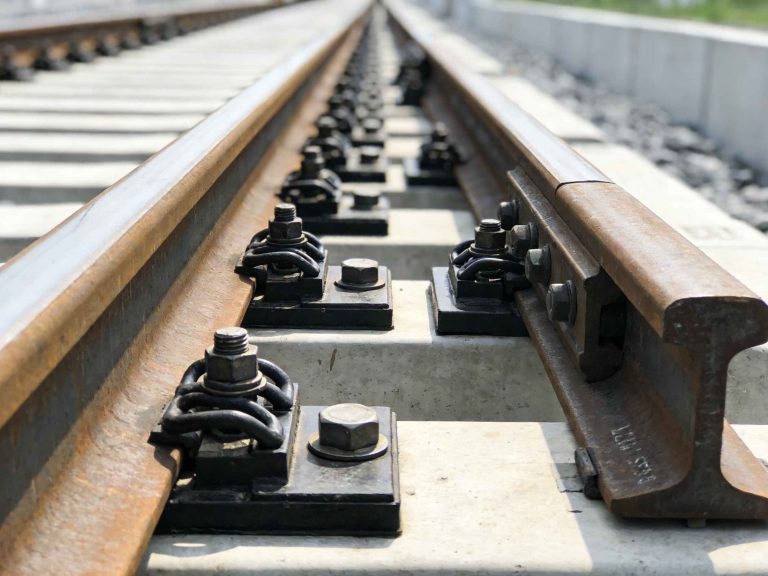
In the world of railway infrastructure, safety and reliability are paramount. Among the various components that ensure smooth operations, e-Clips play an often-overlooked yet critical role in fastening rails to their base. These small but mighty parts bear immense responsibility, securing the rail in place while enduring constant stress, temperature fluctuations, and vibrations caused by the passage of heavy trains. Choosing the right material for e-Clips is essential to ensure they perform effectively over the long term.
Spring steel, especially the alloy 38Si7, is widely regarded as the optimal choice for creating durable, high-performance e-Clips. This material ensures the clips maintain their springiness and withstand the wear and tear of continuous service, helping to prevent costly track failures and ensuring smoother, safer journeys for all railway users. Let’s explore how spring steel enhances the performance of e-Clips and why it is the go-to material for leading manufacturers like SFFST.

Understanding Spring Steel Composition and Properties
Composition and Properties of Spring Steel
Spring steel forms the core of each strong e-Clip. This alloy is designed for bounce-back ability and toughness under repeated loads. 38Si7 stands as a popular choice for rail clips. It has a well-balanced mix, mainly carbon (0.35–0.45%), silicon (1.5–2%), manganese (0.6–0.9%), and small amounts of other elements that boost strength.
Such a makeup delivers outstanding springiness and resistance to wear from repeated use. This lets clips like SFFST’s e-Clip hold steady pressure after millions of load cycles. The springiness of 38Si7 steel ensures that the e-Clips maintain secure clamping force, even under vibrations and thermal expansion. For instance, in busy lines where trains run daily, these clips prevent small shifts that could lead to bigger problems over months.
The Role of Heat Treatment in Steel Performance
The strength of spring steel comes not only from its makeup but also from careful heat treatment steps. Our automatic rail clip/tension clamp production lines can produce a variety of rail clips/tension clamps for the fastening system. From cutting, heating, molding, quenching, tempering, surface treatment, anti-corrosion treatment, and packaging, to warehousing, all processes have been fully automated and mechanized.
Each stage matters a lot. Workers cut bars to the right length first. Then, they heat them evenly. Next comes shaping under set stress levels. After that, quenching builds hardness. Tempering is used to add flexibility. This process brings back bendability that quenching removes, while keeping the firmness needed for carrying loads. As a result, e-Clips avoid breaking under pressure and don’t bend out of shape for good.
Key Properties of 38Si7 Spring Steel for e-Clips
| Property | Typical Value | Benefit for e-Clip Performance |
|---|---|---|
| Tensile Strength | 1200 – 1400 MPa | Provides high clamping force to secure the rail. |
| Yield Strength | ~1100 MPa | Prevents permanent deformation under heavy train loads. |
| Elongation (Ductility) | 6 – 9% | Allows for elastic flexing during rail expansion/contraction. |
| Hardness
(after QT) |
36 – 42 HRC | Ensures excellent wear resistance against vibrations. |
| Fatigue Limit | ~550 MPa | Guarantees long service life by withstanding millions of cycles. |
Addressing Common Concerns with e-Clips
Heavy-haul work puts extra strain on track parts because axle loads go over 27 tons per vehicle. Freight trains operating under such conditions require fastening components capable of resisting plastic deformation over extended service periods. SFFST tackles these issues with better material handling. We adjust the 38Si7 steel steps for longer fatigue life. We also add surface coatings that fight rust in wet spots, like tunnels or seaside paths.
Our work on projects such as the Fenghong and Jingshen Railway Project proves this strength. In 2023, we supplied 130,000 sets of high performance heavy-haul railway fastening systems to Shaanxi. This hands-on proof shows how solid materials and exact process handling give top reliability under tough mechanical pressures.

SFFST’s Advanced Manufacturing Process
Automated Production Lines
Automation marks top-level making at SFFST today. Our Automatic Tension Clamp Production Line shows how we blend robots with ongoing checks for control over the whole flow, starting from feeding raw materials to packing at the end. This automated setup ensures uniformity in product dimensions, which is critical for maintaining consistent pressure on the rail. For example, in high-speed rail setups, even a tiny variation might affect safety during fast passes at over 300 km/h.

Ensuring Durability and Reliability
Durability supports safe running in railway setups, where heavy loads move daily at different speeds. Among these connecting parts are e-Clips that must resist fatigue caused by train-induced vibrations. SFFST’s method makes sure clips keep their best grip force. They don’t come loose or break under ongoing stress. Our materials hold their spring traits, even in very cold or hot conditions. This matters because temperature swings make rails grow or shrink a lot. In regions with winters dropping below -20°C and summers over 40°C, such reliability prevents failures that could halt operations.
Through careful metal control in automated quenching and tempering, our e-Clips stay within their planned pressure levels for the full service time. This stops track shifts or widening gaps from heat strain.
SFFST’s Commitment to Quality Control
Quality checks at SFFST go well beyond simple looks. They rely on tested methods done in our modern labs. Our specialized production lines and laboratories are equipped with over 100 sets of advanced international automation and testing equipment. Metal Lab includes a Brinell hardness machine, Impact specimen notch hydraulic broaching machine, Clip fatigue testing machine, Inverted metallographic microscope, SO₂ salt spray tester, and Universal material testing machine.
These facilities enable us to analyze metallographic structure integrity after heat treatment and assess decarburization layers that could compromise fatigue life. Besides metal tools like spectrometers and magnetic particle flaw detectors for spotting tiny cracks, non-metal lab equipment, such as electro-hydraulic servo fatigue testing machines, evaluates rubber pads’ dynamic stiffness used alongside clips.
Every group gets checked for pull strength with universal testing machines before getting cleared for putting together into systems like E2091TAV, E54AV, or W14HH Fastening Systems. This confirms they are suitable for various uses, from high-speed lines to heavy freight routes.
Conclusion
At SFFST, we understand the importance of quality and precision in rail fastening systems. Our advanced manufacturing processes, backed by the strength of spring steel, ensure every e-Clip we produce meets global standards for performance and durability. Ready to enhance the reliability of your railway infrastructure? Explore our customized solutions today and discover how SFFST can help optimize your track systems for maximum safety and efficiency.
FAQ
Q: What type of steel is used in manufacturing e-Clips?
A: e-Clips are typically made from high-grade spring steel such as 38Si7 due to its superior elasticity, fatigue strength, and wear resistance required for continuous load-bearing applications.
Q: How does heat treatment improve spring steel performance?
A: Controlled quenching increases hardness, while tempering restores ductility, resulting in balanced toughness essential for resisting fracture during cyclic loading conditions common on railway tracks.
Q: Can SFFST customize clip designs based on project needs?
A: Yes, SFFST offers OEM services, allowing clients to specify dimensions, tensile requirements, and coating preferences, so we can deliver tailor-made fastening solutions optimized for their unique operational environments.
Q: Can e-Clips handle extreme weather conditions?
A: Yes, the spring steel’s composition and anti-corrosion surface treatments allow e-Clips to maintain their grip and structural integrity in temperatures ranging from very cold winters to hot summers.