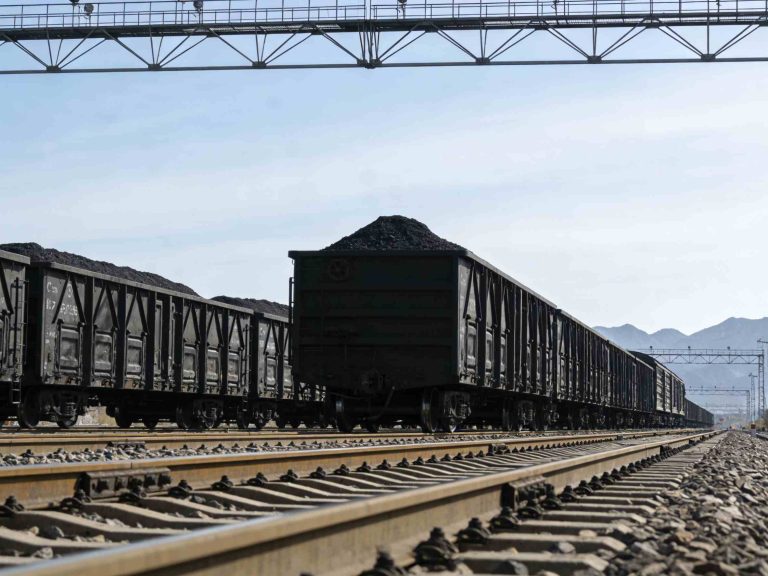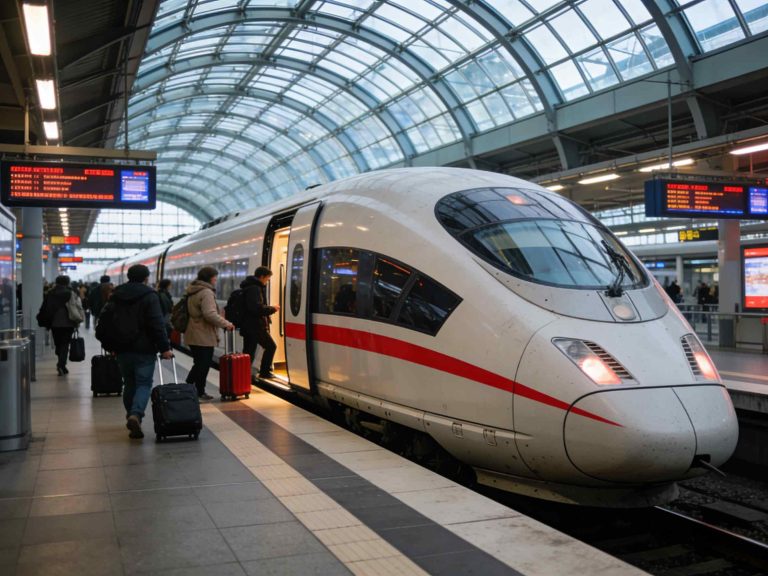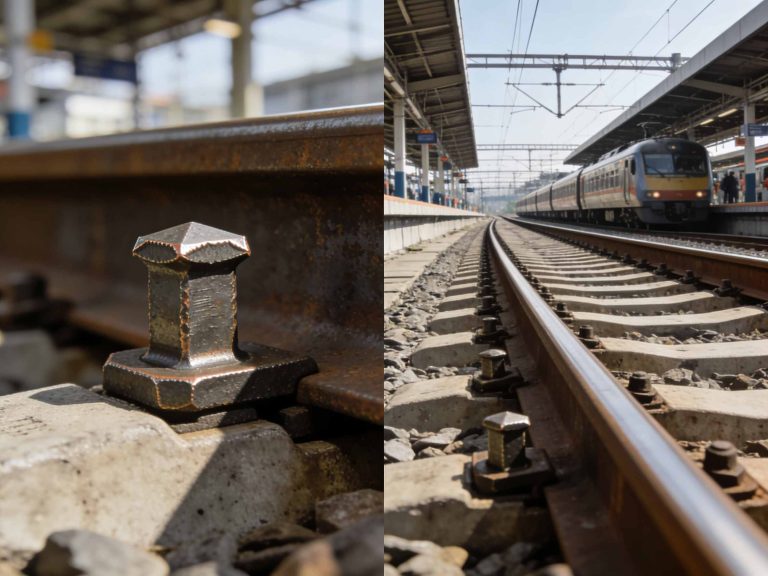
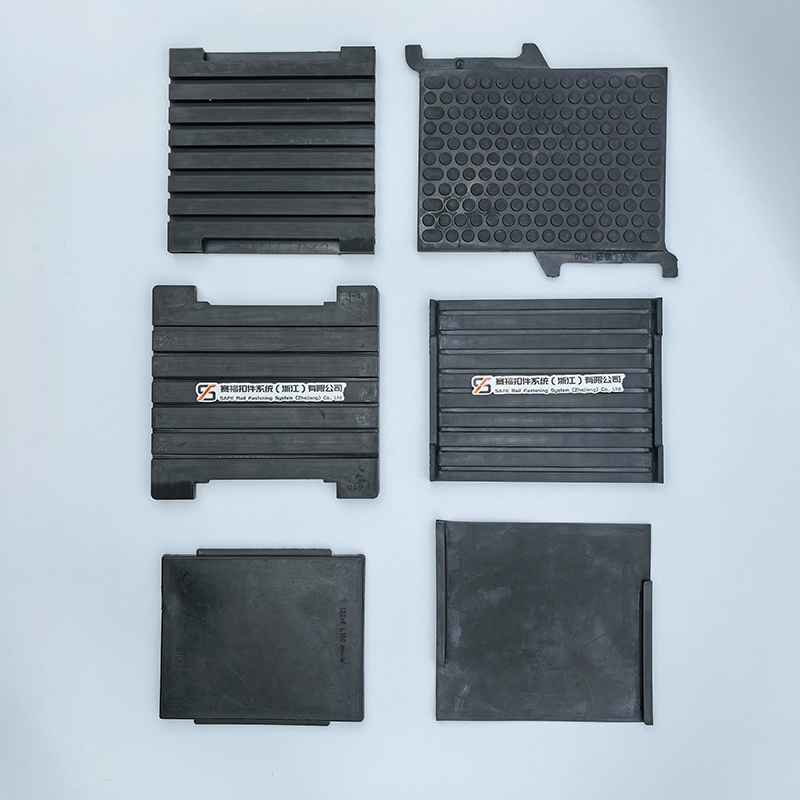
Rubber pads may appear minor in size, but they play a critical role in rail track performance. They are essential shock buffers that absorb shocks, serve as insulators, dissipate loads, and ensure track stability in advanced rail fastening systems. Without rubber pads, rails may experience increased stress and track instability, leading to accelerated wear, higher maintenance demands, and potential safety risks.
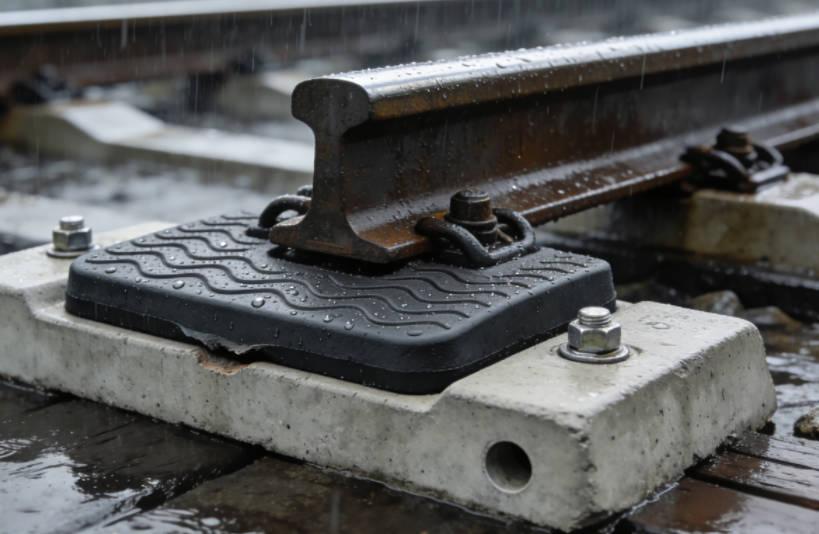
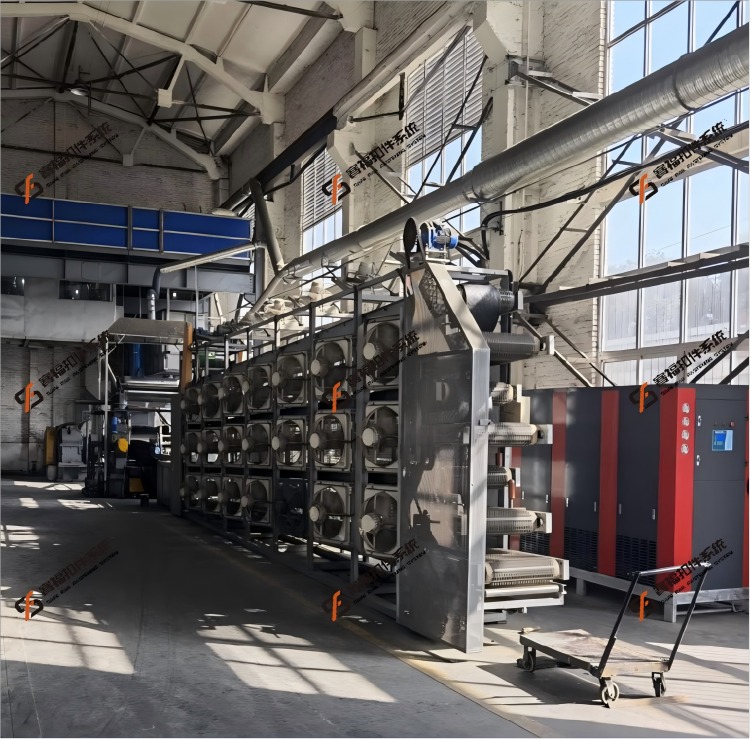
SFFST has expertise in delivering superior rail solutions, such as high-grade rubber pads for different fastening systems. It produces 5 million sets annually using world-class automated lines and guarantees accuracy, reliability, and regular performance for all of its products.
Core Functions of Railway Rubber Pads
Vibration and shock absorption
One of the main functions of a railway rubber pad is to act as a vibration and shock absorber for heavy-haul or high-speed trains. In addition to reducing track noise, this also helps maintain track integrity. The rubber products divisions have full production equipment, such as process flows where automatic batching, automatic mixing, and vulcanization are utilized. This guarantees that our rubber pads offer maximum resilience and elasticity even when under constant stress.
Electric insulation properties
Rubber pads serve as electrical insulating pads between rail and sleeper, ensuring safe current isolation in electrified railways. This helps preserve equipment as well as the safety of passengers and signal integrity.
Minimization of stress and load distribution
Through the distribution of loads across the sleeper surface, railway rubber pads reduce points of localized pressure. These advantages are in the prevention of sleeper damage and extending the lifespan of both rolling stock and track.
Track Stability Improvement
Rail Displacement Prevention
Rubber pads cooperate with rail clips and tie plates to secure rails in a firm position. Tests performed according to EN 13146-1:2019 demonstrate that SFFST rubber pads used with Clamp III fasteners effectively limit longitudinal rail movement under standard test conditions. This guarantees that rails remain in their correct position, even with constant and high volumes of train traffic.
Maintaining Consistent Track Geometry
Proper track alignment is crucial to the comfort of passengers, the safety of the train, and operating performance. Rubber pads are resistant to permanent deformation under load and maintain their elasticity over time. This ensures smooth rides, reduces maintenance intervention, and helps railroads achieve long-term performance objectives.
Meeting Different Environments
Performance During Extreme Weather
Railway rail is subjected to extreme variations in temperature, from below-zero winter to blistering summer. SFFST’s rubber formulations are made to stay soft and resilient under these conditions. Pads, manufactured from high-quality natural or synthetic rubber compounds, resist hardening, cracking, and deformation, ensuring consistent performance under extreme weather conditions.
Resistance to Moisture and Chemicals
Rubber pads are built to endure rain exposure, humidity, and chemical spills during freight operations. SFFST can also customize products according to certain needs, such as chemical resistance and waterproofing, to suit different railway conditions across the globe.
Facilitating System Longevity and Safety
Reducing wear on other components
Through vibration dissipation and impact absorption, rubber pads also tend to minimize wear and tear on other elements such as sleepers, clips, and rails. Their lives are thus prolonged, and the replacement rate is minimized.
Minimizing maintenance requirements over time
With fewer parts being subject to shock or misalignment, maintenance requirements for the track drop decrease significantly. Comparison between tested fastening systems and reference systems demonstrates how durable rubber pads contribute to reduced lifecycle costs by minimizing maintenance and replacement needs.
Customization and Compatibility
Shaping rubber pads to track types
Various tracks—city metro rail lines, high-speed rail, or heavy-haul freight lines—require different pad specifications. We have specific solutions such as rubber pads for speed-up turnouts or resilient tie pad/elastic pad, both designed to perform optimally with their specific application.
Multi-fastening system integration
Our products have complete compatibility with prominent fastening systems such as W-Tension Clamp, E-Clip, Fast Clip, and Nabla types. Automated production lines allow manufacturing of various types of rail clips and tension clamps compatible with multiple fastening systems. This makes SFFST a one-stop solution provider irrespective of your type of infrastructure.
SFFST’s Commitment to Quality and Innovation
Materials and Manufacturing
SFFST uses premium-grade natural and synthetic rubber from top suppliers, with each pad produced to strict performance standards. Production is totally automated with lines that ensure precision, consistency, and high production volume, producing pads that are dependable under heavy use and harsh conditions.
Testing and Standards
All SFFST products are rigorously tested based on international railway standards such as BS EN 13146-8:2012 and EN 13481-2:2022. Testing ensures static stiffness, clamping force, ease of installation, and long-term mechanical performance. SFFST also helped support national standards such as GB/T 21527-2008 for elastic tie pads, which was the company’s vision in terms of product innovation.
Conclusion
Rubber pads are not simply cushioning elements— they are construction units that provide track stability, electrical insulation, and long life. Contemporary railroad fastening systems depend on the most innovative pads to support high loading, adverse weather conditions, and high-demanding operations. SFFST’s state-of-the-art production, severe testing, and tailored solutions make it a trusted solution for railways that require challenging, safe, efficient, and long-life infrastructure.
FAQ
Q: What kind of rubber pads does SFFST produce?
A: We have an extensive variety that includes rubber pads for II/III fastener clamps, elastic tie pads, baseplate pads, and railway special crossing rubber plates.
Q: Is it possible for SFFST products to be used in overseas railway projects?
A: Yes. In 2025, we supplied core components to the Morocco Kenitra-Marrakech High-Speed Railway Project, it just one of many domestic and foreign projects.
Q: How do you ensure a rubber pad is safe?
A: We test all of our pads to EN standards like BS EN 13146-8:2012 for performance and static stiffness. Results are recorded in accordance with international guidelines.
Q: Is there a custom design available?
A: Yes. We can design, manufacture, and customize a range of rubber products to customer specifications. Contact us directly through our website or email at info@sffst.com.