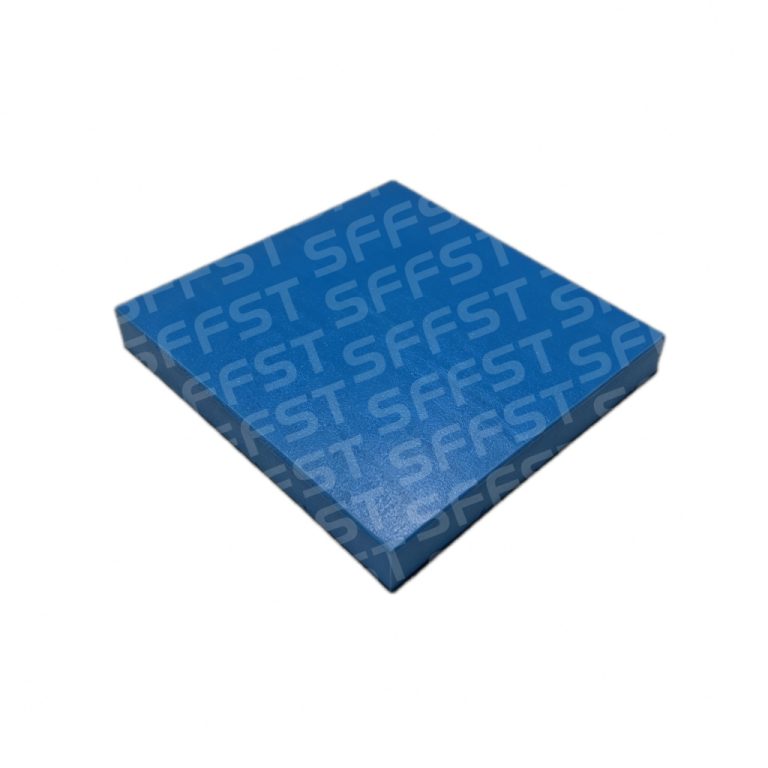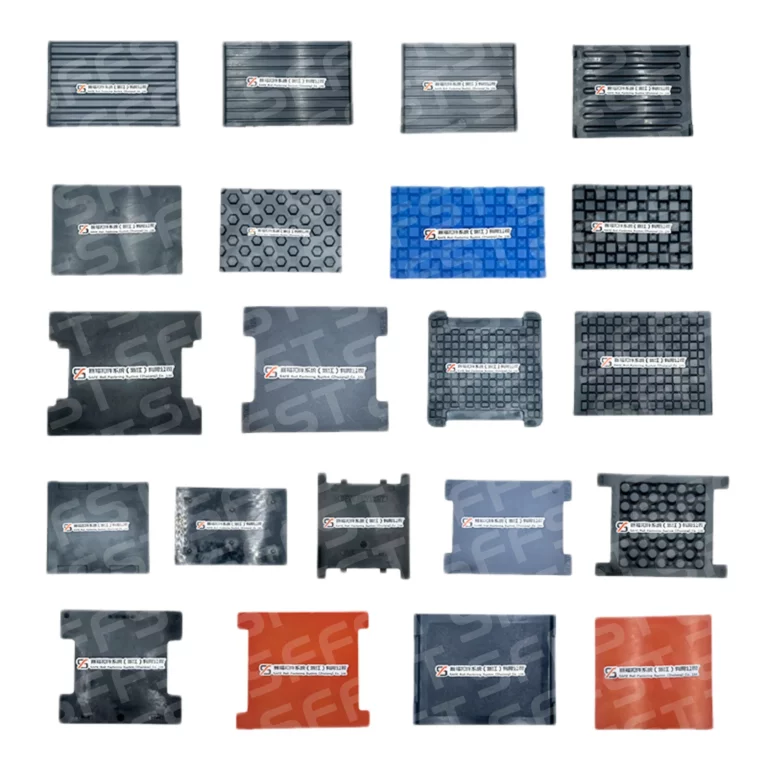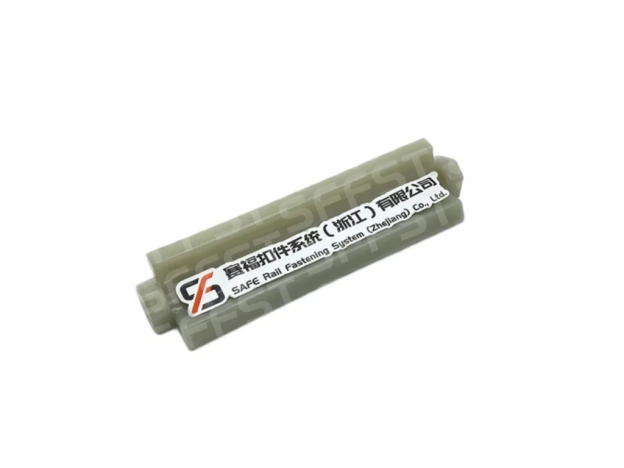
A railway level crossing system combines the crossing surface, track structure, road interface, drainage, and, where applicable, road and railway traffic-control equipment. This article focuses on the track and crossing-surface interface, particularly railway rubber level crossing panels and their compatibility with rails, sleepers, and fastening components.

What Railway Level Crossing Systems Need to Achieve
Creating a stable road-rail interface
A level crossing must allow road traffic, maintenance machinery, or pedestrians to traverse the rail with minimum disruption to the existing surface continuity and without blocking the required flangeway. Rubber level crossing panels are used in the level crossing zone where the rail is placed to create a flangeway for the wheels of the train. These panels create a modular crossing surface between the rail and adjacent road/footpath surface.
This is just one of the elements that constitute the interface. The rail profile, panel geometry, ballast system, fastening location, drainage, and condition of the road pavement have an impact on the behavior of the interface. Thus, it makes sense to base a technically good specification on the accepted track plan and crossing layout.
Connecting crossing panels with the track structure
There should be compatibility between the crossing surface and the rail fastening system. The rail fastening system is responsible for restraining the rails while the rail pads give the necessary elastic bearing between the rail and its bearing surface.Gauge-control or insulation components may also be incorporated depending on the track design.
Rubber Components Used in Railway Level Crossing Systems
Railway rubber level crossing panels
SFFST identifies Railway Rubber Level Crossing as part of its non-metal railway product selection. Product information also mentions rubber crossing plates and rubber products which could be manufactured depending on project requirements. The crucial factors during engineering review would include geometry of panels, continuity between flange and groove, bearing area, repeated compressibility, and compatibility with the planned railway design.
Related rubber products for the crossing area
Based on the type of track and crossing used, extra rubber parts like insertion strips, walking boards, or ballast retaining parts can be employed. Each of these plays various functions in terms of interface/accessibility and must be chosen based on the recommended design of the crossing instead of being treated as direct alternatives for the primary crossing part. The appropriate set will ensure that the crossing remains well organized.
How to Evaluate Railway Level Crossing Systems
Rail profile, sleeper, and interface compatibility
The first selection step is dimensional compatibility. Confirm the rail section, crossing width, panel dimensions, support arrangement, and flangeway dimensions.
Traffic loads, environmental exposure, and maintenance requirements
With regard to interurban, standard, and industrial railways, level crossings may experience considerable vehicle movements, train loadings, moisture, contamination, and temperature fluctuations. In case of high movement level crossing, the following considerations should be taken into account: compressive strength, durability, drainage, edge restraint, and maintenance.
SFFST Production and Quality Control
Rubber production and vulcanization
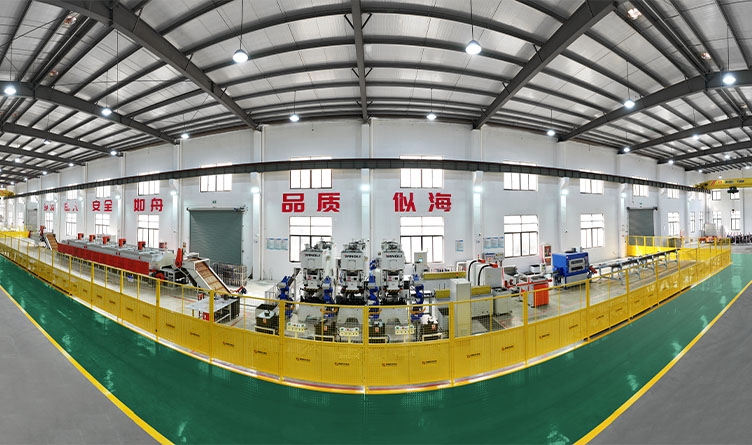
In SFFST, there is described the manufacturing of rubber articles line which includes automated batching, automated mixing, and vulcanizing, as well as testing equipment and a quality management system. Railway rubber level crossings, rubber pads, and rubber boots are identified among other applications for these products due to the same composition of materials used. Such relationship is important as there are factors which influence the performance of rubber components.
Laboratory checks for railway rubber products
The non-metal laboratory scope includes tensile performance, Shore A hardness, static stiffness, dynamic stiffness, fatigue performance, hot-air aging, and insulation resistance. These checks should be linked to the part’s drawing, material, service environment, and acceptance method. A laboratory result is most useful when the tested specimen represents the same production route and configuration as the supplied component.
For railway level crossing systems, dimensional inspection and visual condition are also important. Clean bearing surfaces, stable openings, correct flange clearance, and the absence of cracks or deformation support reliable installation.
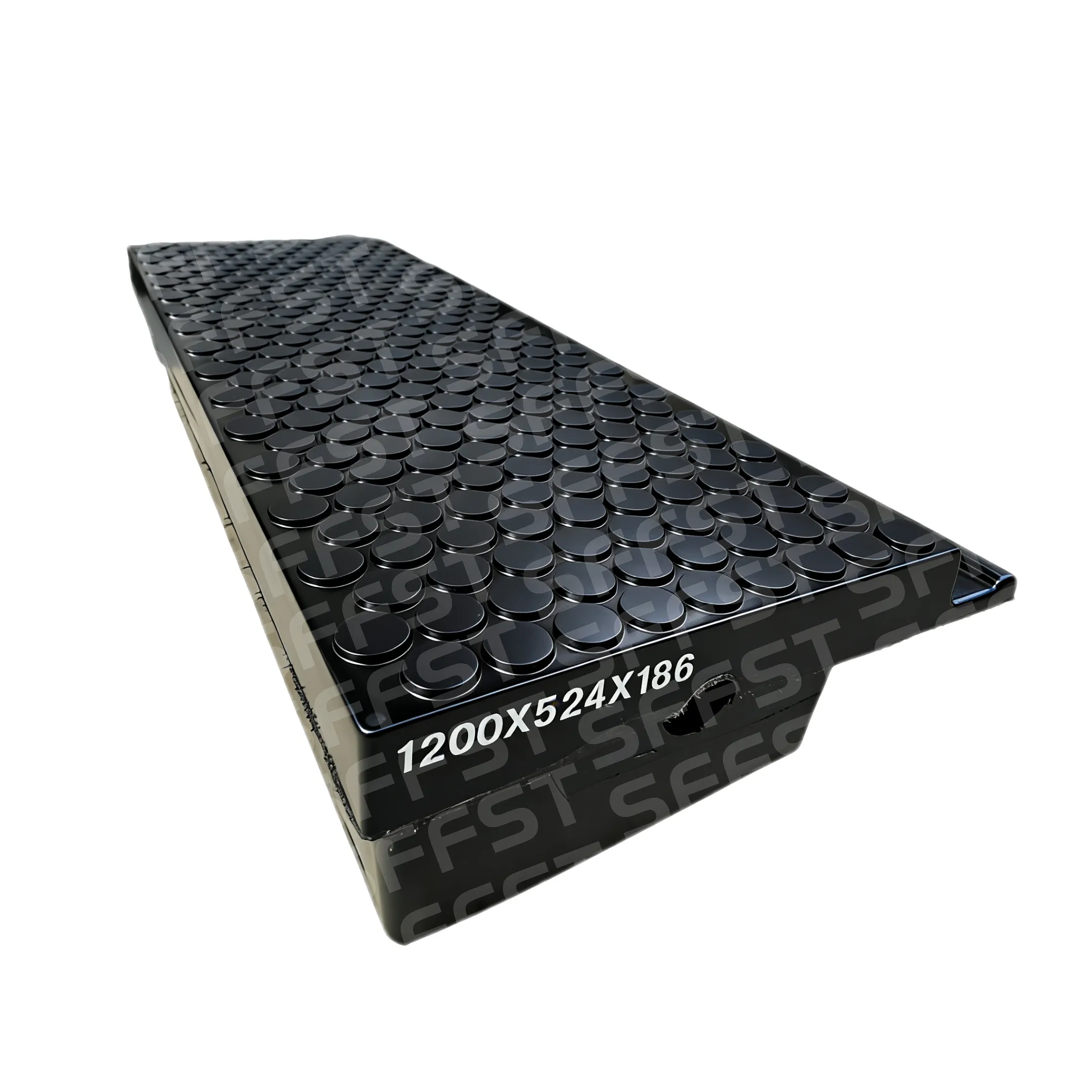
Railway Level Crossing Systems in Different Applications
Intercity and conventional railway crossings
A distinct interface is required between railway traffic and road users for intercity and traditional railway crossings. Factors to be considered include the configuration of the crossing, train frequency, road traffic, drainage, access for maintenance, and sub-panel support.
Industrial and heavy-haul railway crossings
At industrial grade crossings, the use of heavy road traffic together with rail traffic is common. In such cases, the analysis must look at issues relating to panel seating, edge restraint, repeated compressions, abrasions, contaminations, and access for replacement. The company SFFST also provides fastening items for heavy rail haulage, and thus the grade crossing may be looked at as an integral part of rail restraint and elasticity.
Crossings connected with vibration and noise mitigation
The crossing surface is not meant to substitute the vibration isolation system. The vibration and noise levels depend on the entire load path along the rail, rail fastening system, railpad, sleeper, sub-ballast, ballast, or structure. SFFST explains that vibration and noise control is a design discipline of rail fastening systems for conventional railway, high-speed railway, metro rail, and heavy haul railway systems.
Choosing SFFST for a Railway Level Crossing System
Product and system coordination
SFFST can be considered when a project needs railway rubber level crossing products alongside rail fastening components, elastic pads, gauge insulators, and related railway rubber parts. Its product information covers metal parts, non-metal parts, casting parts, and other products, allowing engineers to review the crossing interface and the supporting track components together.
Evidence-based technical selection
It is advisable for the following sequence to be used when selecting products: confirming the rail/sleeper system, specifying road/rail traffic conditions, environmental exposure conditions, required inspection locations, and finally, matching the product configuration to the approved drawings. The production and laboratory data at SFFST may be used for the above review process, but specific dimensions and installation requirements should be provided by the relevant engineering team.
Conclusion
Railway level crossing systems are most reliable when the crossing surface, rail fastening, sleeper or base, drainage, and maintenance access are designed as one interface. Rubber level crossing panels provide the visible road-rail surface, while clips, pads, gauge components, and supporting layers control rail position and load transfer. SFFST’s rubber production, railway product range, and laboratory capabilities provide a useful basis for coordinated technical review. Explore SFFST’s railway fastening and rubber crossing solutions for your next railway level crossing system. Contact us today!
FAQ
Q: What is a railway level crossing system?
A: Railway level crossing is an integrated unit by which vehicles, industrial or pedestrian traffic can traverse a railway track. This comprises the crossing itself, rail clearances, securing method, sleepers or sub-base, drainage, and connections to adjacent road pavement. This should be chosen as a combined unit.
Q: What are railway rubber level crossing panels used for?
A: The panels made from rubber material cover the area surrounding the rail and ensure that there is the provision of flange groove for the railway wheels. The panels increase the continuity of the road/rail interface and are also able to be replaced when there is a need for maintenance work.
Q: What tests help evaluate railway rubber crossing products?
A: Relevant tests include tensile properties, Shore A hardness, static stiffness, dynamic stiffness, fatigue properties, hot-air aging, insulation resistance, dimensional tests, and visual examinations for any cracks or distortion. The precise test procedure should be dependent upon the product, material, drawing, service conditions, and acceptance criteria. The testing conditions must be documented along with the test results.