In global railway engineering, track safety depends on highly engineered components. Among these, the rail fastening system secures rails to sleepers, maintains gauge, and distributes dynamic loads. For procurement managers, EPC contractors, and track engineers, selecting a reliable rail fastening system manufacturer is a critical procurement decision that can influence track safety, fastening durability, lifecycle performance, and maintenance requirements.
We, at SFFST, are a professional rail fastening system manufacturer with extensive experience in railway fastening technology and manufacturing. Operating a state-of-the-art production base in Zhejiang Province spanning over 50,000 ㎡ with an investment exceeding 50 million RMB, we deliver high-quality components designed for safety and longevity. We operate with an annual production capacity of 5 million sets of rail fastening systems, supported by a 30,000-ton automated 3D warehouse. We understand the immense engineering responsibilities placed on track engineers and project developers, and we have compiled this guide to help you select a reliable partner for your next infrastructure project.
Evaluating Challenges in Rail Fastening Procurement
Discerning Real Manufacturers from Pure Trading Integrators
A major hurdle in railway procurement is identifying whether a potential rail fastening system supplier is a genuine manufacturer or simply a trading integrator. Trading houses often present catalogs but lack direct control over production schedules, raw material sourcing, and quality consistency. Intermediaries cannot guarantee delivery timelines under tight schedules, nor can they provide reliable material traceability. At SFFST, we welcome international technical audits; our physical infrastructure allows us to operate with absolute transparency, maintaining direct oversight over every step of the manufacturing journey, which ensures quality and timeline compliance.
Assessing Risks Associated with Fragmented Component Suppliers
A complete rail fastening system integrates diverse materials, including metal components, polymer and elastomer components, and cast components. Sourcing these from multiple uncoordinated factories introduces severe compatibility risks. Dimensional incompatibility between the rail clip, shoulder, rail pad and other fastening components can affect installation accuracy, clamping force and long-term fastening performance. We mitigate this systemic risk by offering complete system assemblies manufactured entirely in-house. By coordinating metal, polymer, and cast iron production under one unified quality management standard, we ensure dimensional compatibility and consistent assembly performance across the fastening system.
Key Criteria for Selecting a Reliable Supplier
Manufacturing Metal Non-metal and Casting Parts In-house
To qualify for a railway project’s supplier shortlist, a rail fastener manufacturer must possess comprehensive, in-house manufacturing capabilities across all three material categories:
Metal Parts: Forging and precision threading for components such as the W Tension Clamp, SKL Tension Clamp, Spike, Bolts, Nut, and Washer.
Non-metal Parts: Elastomeric components like high-resilience rail pads, Baseplate Pad, Resilient Tie Pad/Elastic Pad, Rail Gauge Insulator, and Dowel may be manufactured using processes such as injection molding, rubber vulcanization, or polyurethane processing, depending on the component design.
Cast components, such as rail tie plates/baseplates and cast shoulders, provide the required mechanical interface between the rail fastening assembly and the supporting structure.
As a vertically integrated railway fastening system manufacturer, we maintain advanced production lines for all three segments on a single campus, supporting consistent dimensional control and system-level compatibility.
Engineering Design and Fastening System Optimization
Railway line parameters are rarely static; unexpected geological conditions demand prompt design adaptations. A reliable railway fastening system supplier must have the design capabilities to recalculate mechanical parameters and rematch individual components. When project parameters change—for example, axle load, operating speed, rail section or track structure—the fastening system may need to be re-evaluated and its components optimized accordingly. We achieve this advanced engineering capability through our International Joint R&D Center, which we operate in close collaboration with the Shanghai University of Engineering Science.
Requesting Standardized Laboratory Test Reports Over Catalogs
Laboratory test reports are an important part of verifying the performance and conformity of a rail fastening system. Buyers should request reports that identify the applicable standard, test method, specimen configuration, test conditions, laboratory, and results. We operate an advanced testing facility, which includes a dedicated Metal Lab, Non-metal Lab, and a specialized Assembly Testing Lab. This enables us to conduct rigorous inspections, such as on the Electro-Hydraulic Servo Rail Clip Fatigue Testing Machine (100T), drop hammer impact tests, and track fastener longitudinal resistance tests, supporting documented test results and performance verification.
SFFST: A Benchmark of Rail Fastening Excellence
Six Automated Production Lines for Railway Fastening Components
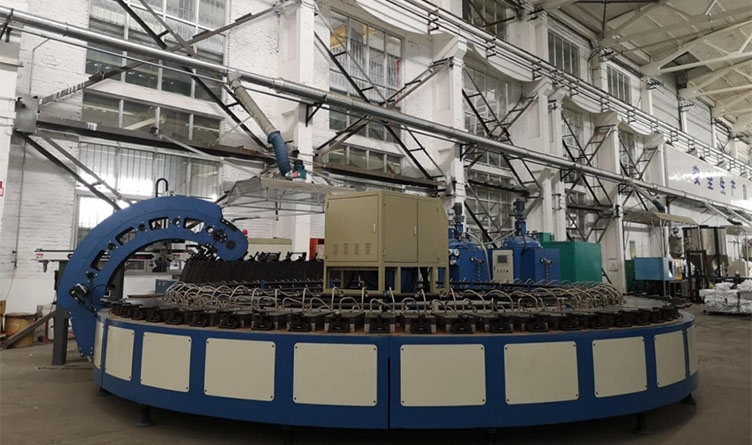
Our facility is equipped with six highly automated, specialized production lines designed to improve process consistency, production efficiency, and repeatability:
Automatic Tension Clamp/Rail Clip Production lines: Fully mechanized steel cutting to packaging, producing clips like the W Tension Clamp and SKL Tension Clamp.
Automatic Polyurethane Pouring Machine Production lines: CNC-driven automated casting of elastomer components, such as our Resilient Tie Pad/Elastic Pad, Baseplate Pad, and Rail Pad.
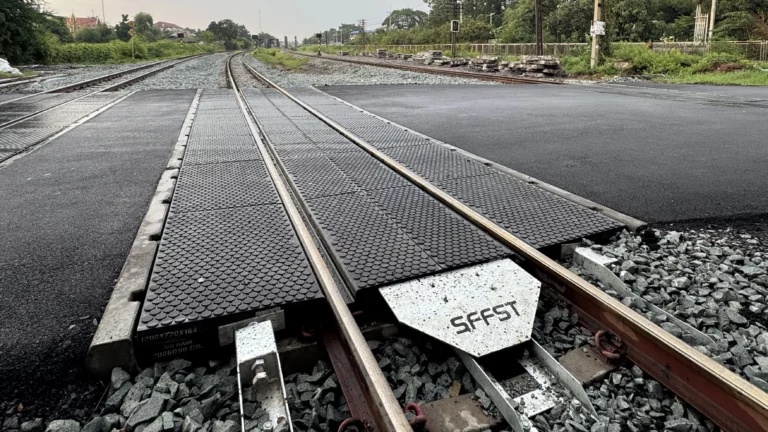
Rubber Products Production lines: Featuring automated batching and vulcanization to manufacture durable products like the Rubber Pad, Sleeper Rubber Boot, and Rubber Level Crossing Panels.
Injection Molding Production lines: Utilizing a central feeding system and high-pressure molding machines to produce high-precision Rail Gauge Insulator, Rail Gauge Baffle, and Dowel components.
Casting Production lines: Highly efficient casting of iron products, including our robust Rail Tie Plate/Rail Baseplate and embedded Cast Shoulder assemblies.
Fastener (Spike, Nut, Bolt, Washer) Production lines: Highly mechanized lines producing essential connection hardware like spikes, bolts, nuts, and washers.
Comprehensive SFFST Quality Control and Certified Testing
SFFST operates documented quality, environmental, and occupational health and safety management procedures aligned with the requirements applicable to its railway fastening business. The company applies structured production management, ERP-based process control, and site-management practices to support consistent manufacturing and quality assurance.
Proven Global Project Experience and EPC Support
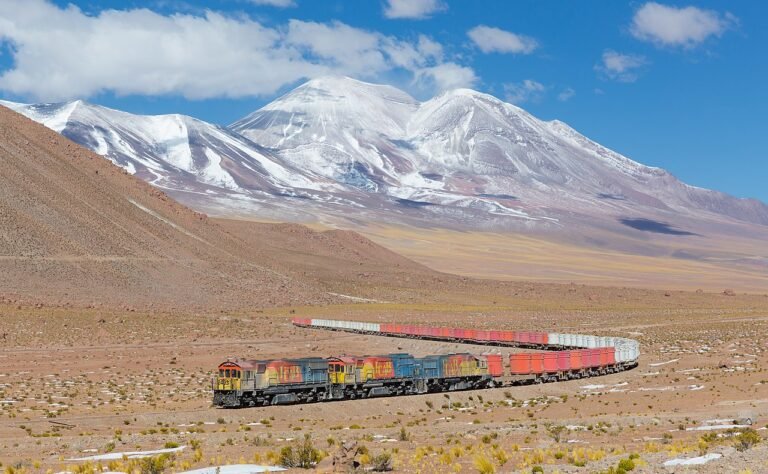
A manufacturer’s theoretical capability must be validated by real-world field experience. Over the years, we have served as a trusted partner for numerous complex global railway projects. In 2026, SFFST reported supplying SKI 12 tension clamps for the Chile Alameda–Melipilla Railway Project. Furthermore, in 2025, our Nabla G4 blades for turnouts were supplied to the Kenitra-Marrakech High-Speed Railway Project in Morocco. We also delivered full sets of rubber level crossing systems in Ayutthaya, Thailand, optimizing public transit safety. Beyond manufacturing, we provide an extensive EPC+M+O (Engineering, Procurement, Construction, Management, and Operation) solution model.
Strategic Selection Checklist for Rail Fastening Procurement
Verification of Quality Certifications and Standards Documentation
When conducting a rail fastening supplier evaluation, procurement officers should systematically verify compliance documentation. Ensure that the manufacturer possesses valid ISO management certifications alongside standard-specific product testing reports or relevant domestic credentials. Request relevant documentation covering raw-material chemistry, mechanical properties, heat treatment where applicable, dimensional inspection, and spring-clip fatigue performance.
Evaluation of Custom OEM and Rapid Prototyping Capabilities
Railway projects can differ in track structure, rail section, axle load, operating speed, temperature range, environmental exposure, and performance requirements. Project developers should evaluate whether a manufacturer can rapidly adapt to custom 2D/3D design drawings and precise technical specifications. At SFFST, we specialize in custom OEM services. Our engineering team provides a rapid response, offering professional feasibility analysis and precise prototyping from design concepts, transforming custom track ideas into field-ready realities with strict quality control.
Elevating Railway Safety with Trusted Partners
Rail fastening systems are safety-critical components, so their design, manufacturing, testing, and quality control require rigorous engineering and verification. Selecting a qualified rail fastening system manufacturer is not merely about finding a vendor with the lowest price; it is about establishing a long-term partnership with a technically competent, quality-focused, and appropriately qualified manufacturing partner. A qualified manufacturer should demonstrate effective process control, material testing, system-level engineering, and production traceability. By choosing an experienced partner like SFFST, railway projects can successfully mitigate construction risks, reduce ongoing maintenance expenditures, and support the long-term performance, reliability, and maintainability of railway infrastructure.
Záver
The safety and operational efficiency of any railway project begin with the integrity of its rail fastening system. When evaluating a rail fastening system manufacturer, procurement teams must prioritize unified in-house material manufacturing, advanced engineering customization, and accredited, rigorous laboratory testing. We, at SFFST, remain committed to our founding vision of “Fastening Excellence, Entire Solution,” leveraging our state-of-the-art automation and advanced joint R&D to deliver world-class infrastructure components to the global rail industry. Kontaktujte SFFST to discuss your project requirements and develop a fastening solution aligned with the applicable technical specifications and standards.
Často kladené otázky
Q: How to choose a rail fastening system manufacturer?
A: To select a reliable manufacturer, procurement teams must evaluate whether the supplier can produce metal, non-metal, and casting parts in-house under a single quality system to avoid compatibility issues.
Q: What to look for in a rail fastener supplier?
A: Look for a supplier with complete manufacturing transparency, advanced automated production lines, and robust quality management credentials (such as ISO 9001 and CRCC or TÜV NORD certifications). A qualified supplier must also demonstrate extensive global project experience and provide entire solutions, from engineering design to on-site construction counseling and installation training.
Q: Why is system-level testing critical for railway fastening assemblies?
A: Component-level testing alone does not fully characterize the performance of a complete fastening assembly under representative loading and environmental conditions. Assembly testing, such as fatigue resistance tests conducted on our Electro-Hydraulic Servo Rail Clip Fatigue Testing Machine (100T) and track fastener longitudinal resistance tests, simulates real-world stress to support the required safety, durability and performance of the fastening assembly.