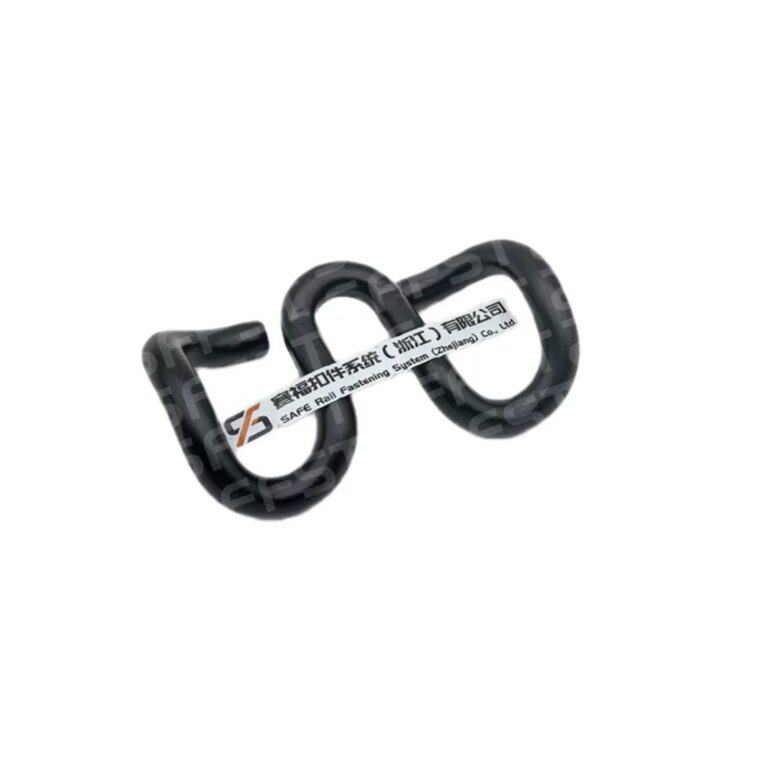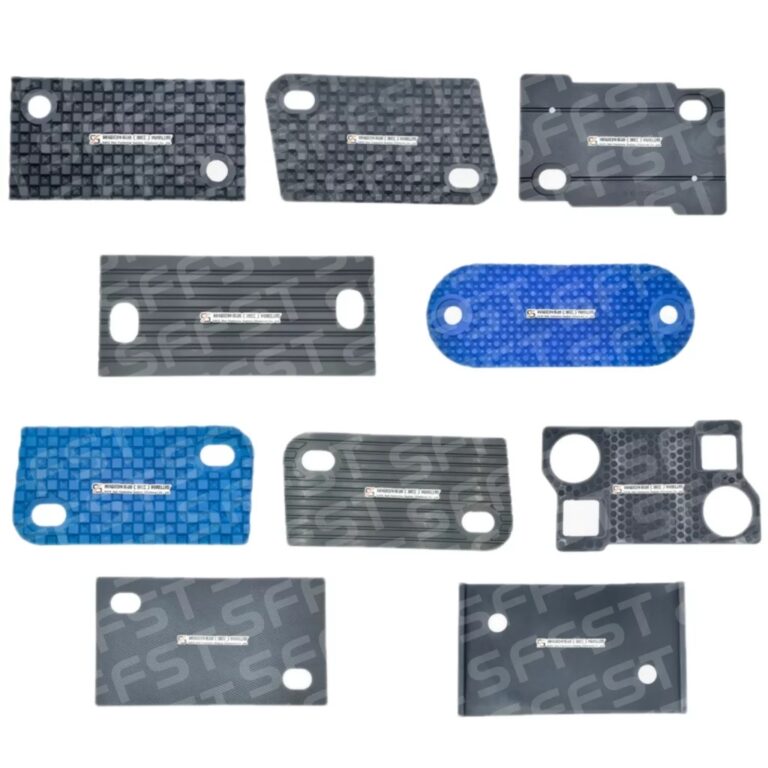
Railway rubber product manufacturing combines material control, manufacturing precision, and quality testing to produce railway rubber components. For Rubber Level Crossing Panels, rail pads, baseplate pads, resilient tie pads, and other vibration components, the process affects dimensional accuracy, interface stability, insulation performance, durability and mechanical performance during service. As a railway rubber products manufacturer, SFFST integrates rubber production, polyurethane processing, laboratory testing, and OEM support for railway infrastructure applications.
The process begins with the application: road-rail crossings need stable panel support, while vibration isolation components require controlled stiffness and resilient performance within the fastening or support system. Separating these applications helps engineers select components according to their specific functional requirements.
Why Railway Rubber Product Manufacturing Matters
From Surface Safety to Track Elasticity
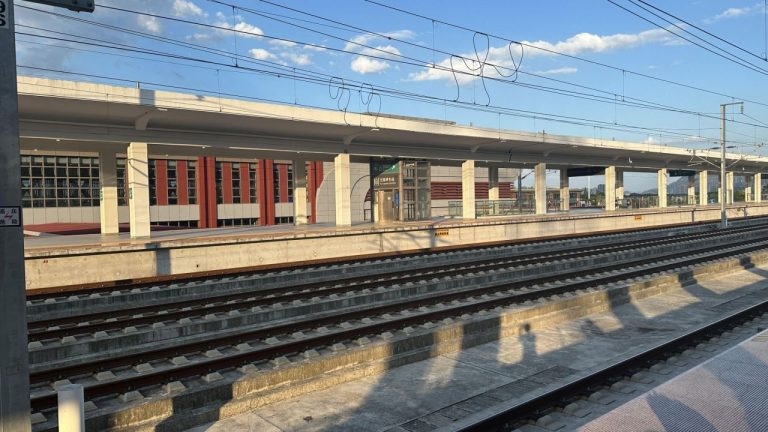
Rubber products in railways do not all work in the same position. A railway rubber crossing plate forms the road-rail interface at level crossings, while rail pads, baseplate pads, and resilient tie pads work inside the fastening interface. Under sleeper pads, under ballast mats, and slab track mats act at other structural levels.
Manufacturing quality has to follow these functional differences. A crossing panel must support road and rail interaction, maintain stable seating, provide effective load transfer, and resist deformation. A vibration component must provide resilience without losing track geometry.
Why Material Consistency Affects Performance
SFFST product information describes rubber level crossing panels with shockproof performance, insulation, wear resistance, aging resistance, high strength, high load-bearing capacity and good structural adaptability, and limited deformation after repeated compression. These characteristics depend on compound control, reinforcement structure, molding quality, and stable processing.
Rubber Level Crossing Panels in the Production System
Rubber Crossing Plate Materials and Structure
SFFST Rubber Level Crossing products use a new formula with nylon wire reinforcement or synthetic reinforcement technology and can replace reinforced concrete paving in suitable applications.
Depending on project requirements, a crossing system may include supporting structures and locking components together with rubber crossing plates. These parts show why the crossing plate is an interface system, not a single flat sheet. SFFST Rubber Level Crossing solutions need precision in panel shape and accessory fit.
Rail, Sleeper, and Set-Length Compatibility
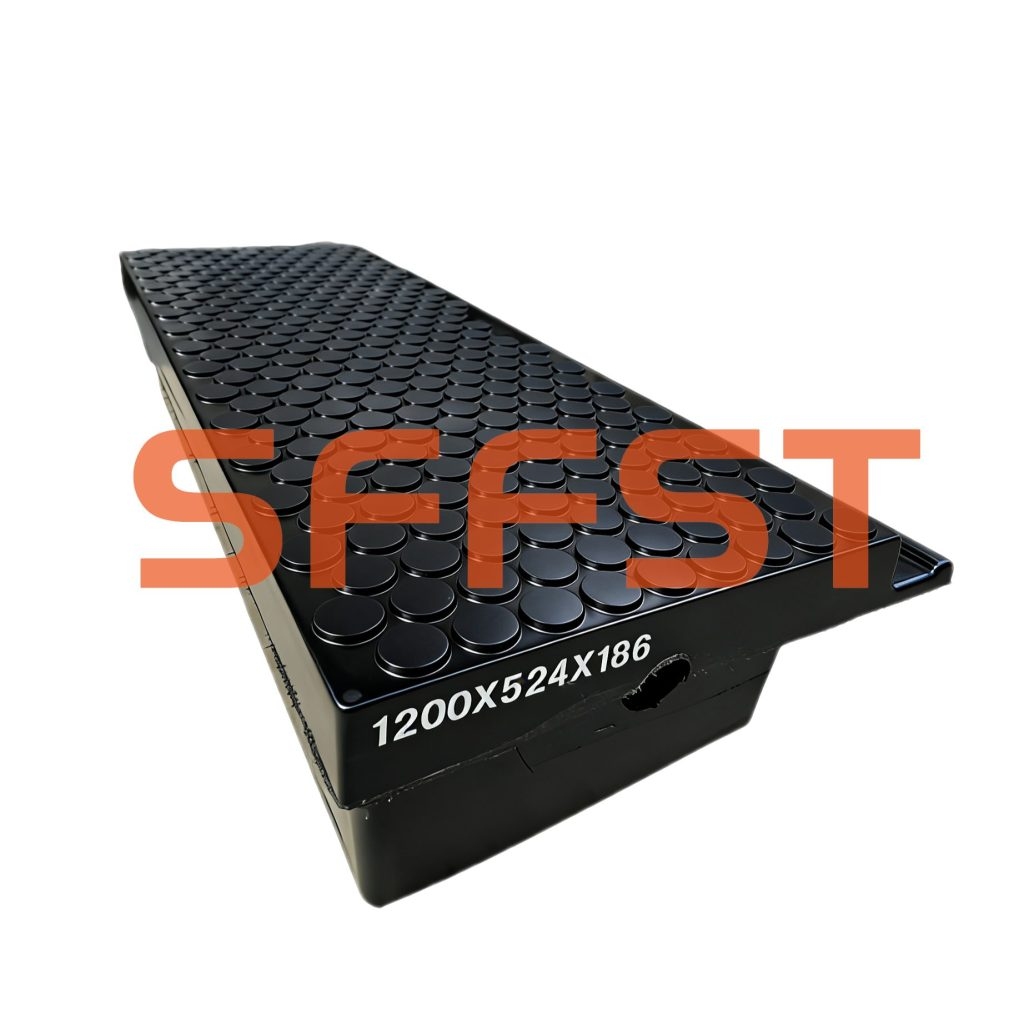
Compatibility is another manufacturing concern. SFFST rubber crossing panels can be customized according to different rail profiles and project requirements, as well as wooden and concrete sleepers. Available set lengths include 1.1, 1.65, and 2.2 linear meters for different crossing widths and layouts.
For railway-highway crossings, urban light rail, stations, baggage corridors, freight yards, maintenance areas, enterprise lines, and mining railways, dimensional fit is central. Manufacturing tolerances, panel geometry, and end-lock compatibility affect how the crossing behaves after installation.
Production Lines Behind Rubber and Polyurethane Components
Automatic Batching, Mixing, and Vulcanization
The rubber products production lines used by SFFST involve automatic batching, automatic mixing, and vulcanization. These processes support rubber pads, rubber boots, railway rubber crossing plates, and related products. SFFST production lines also support repeatable material handling for parts under dynamic railway loads.
Automatic batching helps reduce variation, while mixing affects ingredient distribution and reinforcement behavior. Vulcanization determines the final mechanical properties, elasticity, and durability of rubber components. For railway use, that discipline is tied to insulation, wear resistance, compression behavior, and component fit.
Polyurethane Pouring for Elastic Components
SFFST also describes automatic polyurethane pouring lines for resilient tie pads or elastic pads, baseplate pads, and rail pads. The automated polyurethane production line controls pouring, mold opening, mold closing, demolding, and component removal. This route supports controlled shape, repeatable thickness, and consistent elastic behavior.
Rubber and polyurethane components may share a railway objective, but they are not manufactured in the same way. Rail pads and elastic pads work near the fastening system, while crossing panels work at the track-road surface.
Connecting Crossing Plates with Vibration Components
Rail Pads, Baseplate Pads, and Resilient Tie Pads
A rail vibration reduction system often begins at the interface closest to the rail. Rail pads, rail strips, baseplate pads, and resilient tie pads help manage dynamic load transmission between rail, fastening components, and the supporting structure. Their role is different from the road-facing function of a rubber level crossing panel.
For projects that combine road-rail crossings with urban vibration concerns, manufacturing logic should separate surface safety from track elasticity. This avoids treating every vibration issue as a crossing panel problem.
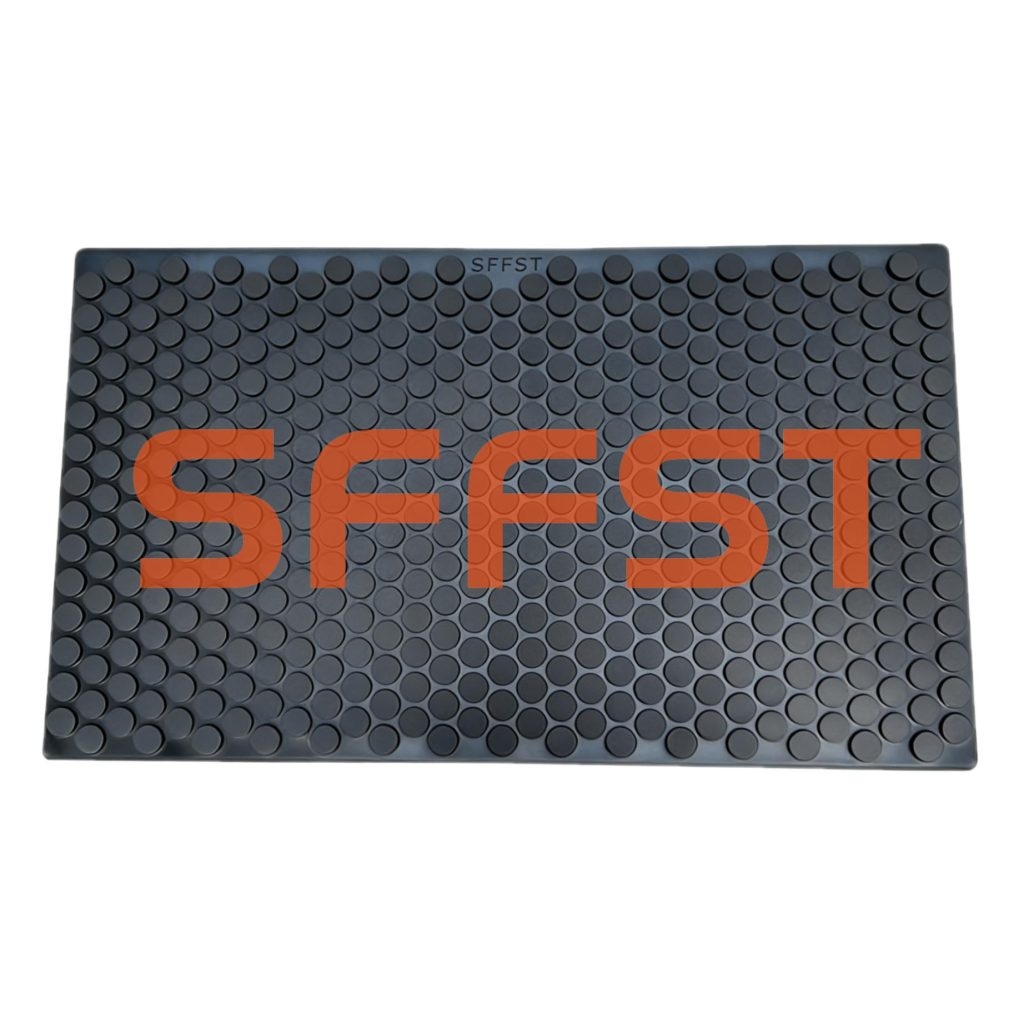
Under Sleeper Pads, Mats, and Noise Mitigation Products
Under sleeper pads, under ballast mats, slab track mats, strips, pads, and noise barriers extend vibration and noise control into different parts of the railway system. They may be considered where track structure or the surrounding environment requires a broader approach.
Each product needs the geometry, material system, and process route that matches its location in the track. SFFST’s range allows a project to combine crossing panels and vibration components without using a single component for applications beyond its intended function.
Laboratory Testing and Quality Verification
Fastener and Component Testing Capabilities
Manufacturing quality is stronger when supported by testing. SFFST laboratory equipment includes clip fatigue testing machines, electro-hydraulic servo fatigue testing systems, Track Fastener Longitudinal Resistance Testing Machines, and MTS servo-hydraulic testing systems.
What Should Be Verified Before Application
Before applying rubber crossing panels or vibration components, engineers should verify rail type, sleeper type, track form, interface height, drainage, fastening arrangement, and maintenance environment.
OEM and Custom Railway Rubber Components
When Custom Dimensions Are Needed
OEM and custom railway rubber products are useful when standard parts do not match rail profile, sleeper structure, crossing width, fastening arrangement, or vibration control location. SFFST describes customization for rubber pads, rubber boots, and railway rubber crossing plates. Drawings and application requirements should guide the manufacturing route.
How SFFST Supports Project-Specific Requirements
SFFST can connect product categories, production lines, laboratory capability, and engineering support around a project requirement. For industrial lines, freight yards, stations, urban rail corridors, and mining railways, the focus shifts toward product compatibility, manufacturing process control, verification, and lifecycle performance.
Conclusion
Railway rubber product manufacturing is the foundation behind reliable Rubber Level Crossing Panels and vibration components. Material consistency, automatic batching, mixing, vulcanization, polyurethane pouring, dimensional compatibility, and laboratory verification all influence product behavior in the track system.
SFFST brings rubber crossing plates, rail pads, resilient tie pads, baseplate pads, mats, and rubber boots, production capability, and testing resources into one practical railway rubber product ecosystem. Explore SFFST production and product solutions to apply manufacturing quality control to improve crossing reliability.
FAQ
Q: How are Rubber Level Crossing Panels different from rail pads?
A: Rubber Level Crossing Panels create a road-rail surface interface around the track, while rail pads work inside the fastening system beneath or near the rail. Crossing panels focus on surface stability, bearing behavior, insulation, and wear resistance. Rail pads focus more on elastic support and dynamic load transfer.
Q: Why does laboratory testing matter for railway rubber products?
A: Laboratory testing helps verify whether railway components can meet the mechanical and interface demands expected in track systems. It can support fatigue, resistance, and component behavior checks. However, testing equipment alone does not prove a universal result; each application should still be matched to drawings, operating conditions, and project requirements.
Q: Does SFFST manufacture customized railway rubber components?
A: Yes. SFFST provides customized railway rubber components including rubber crossing plates, rail pads, rubber boots, and other elastic components according to project requirements.
Q: What manufacturing processes are used for railway rubber products?
A: Railway rubber products typically involve material preparation, automatic batching, mixing, molding, vulcanization, polyurethane pouring, and quality testing.