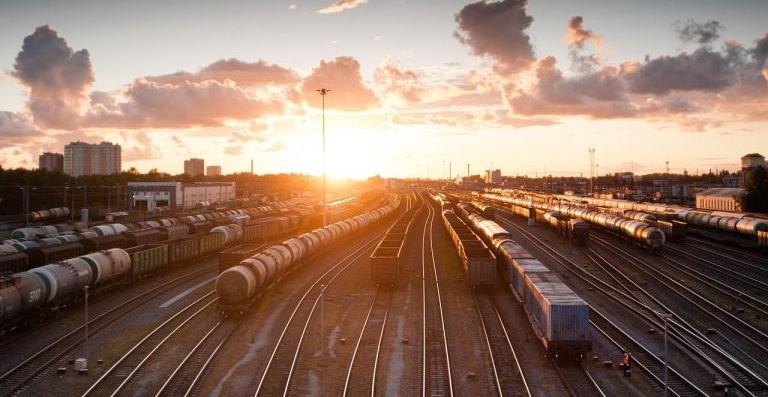
Railway level crossing systems are designed to provide a stable and durable crossing surface where roads, pedestrian routes, maintenance access, or industrial traffic intersect railway tracks. Selecting the right crossing solution requires more than choosing a panel size. Rail profile, track gauge, sleeper type, traffic loading, flangeway geometry, locking method, and site conditions all need to be considered to ensure dimensional compatibility and reliable long-term performance.
For railway operators, contractors, and equipment buyers, rubber level crossing panels offer a practical solution for a wide range of road-rail and pedestrian crossing applications. Depending on the track configuration and operating requirements, crossing systems can be supplied in different panel configurations and with supporting components such as flangeway fillers, locking devices, rubber wedges, and strips.
This guide introduces the main types and components of railway level crossing systems and explains the key factors to consider when selecting rubber crossing panels for different gauges, rail profiles, sleeper types, and traffic conditions. SFFST provides railway crossing products, customization, testing, and OEM support for project-specific requirements.
What Is a Level Crossing System?
How Level Crossings Work
A railway level crossing provides a road or pedestrian crossing surface at track level, allowing authorized road users or pedestrians to cross the railway while maintaining the required clearance around the rails. The crossing surface must support the intended traffic while maintaining the required flangeway clearance for railway wheel flanges and preserving safe wheel-rail operation.
For this reason, a level crossing should be treated as a complete system rather than a single panel. Rail profile, track gauge, sleeper arrangement, panel geometry, locking devices, and flangeway design all affect installation.
Main System Functions
A properly designed system should provide a stable crossing surface, withstand repeated traffic loading, maintain the required wheel-rail interface and flangeway clearance, and allow efficient inspection and maintenance. Designers should also consider component wear, drainage, debris accumulation, environmental exposure, temperature variation, and access for future component replacement.
Key Design Requirements
Before selecting railway crossing panels, confirm the rail profile, track gauge, sleeper type, crossing width, traffic type and loading, and installation conditions. These details determine whether a standard configuration is suitable or customization is required.
Types of Level Crossing Systems
Heavy-Traffic Level Crossings
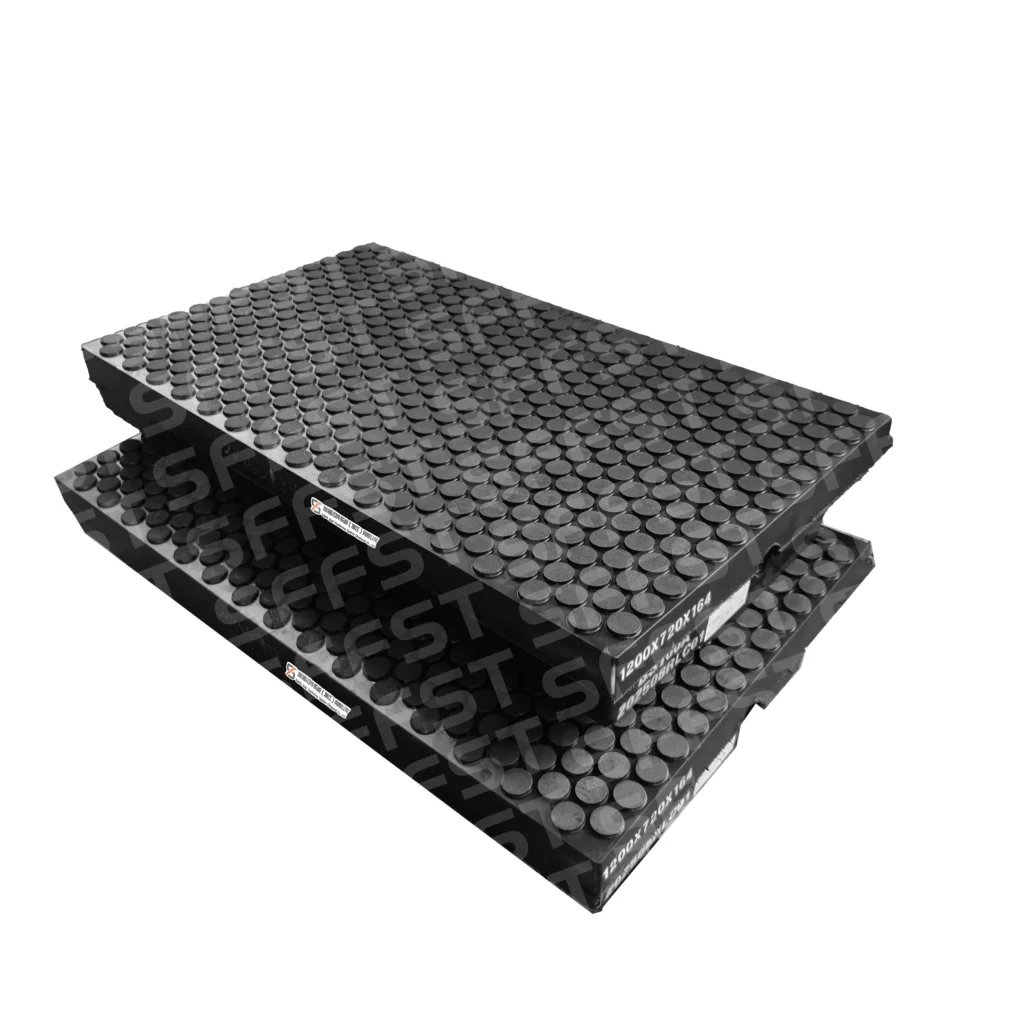
For vehicle crossings and demanding applications, SFFST supplies Rubber Level Crossing Panels. The range can be adapted to P43Kg, P50Kg, and P60Kg rails and to wooden or concrete sleepers. Developed configurations include 1.1, 1.65, and 2.2 linear meters per set.
The rubber panel design incorporates nylon wires or meridian synthesis technology. SFFST lists bearing performance, shock resistance, insulation, wear resistance, elasticity, and limited deformation after repeated compression among its characteristics. Applications include road-rail crossings, urban light-rail crossings, freight yards, railway depot and maintenance tracks, and industrial or mining railway crossings.
Pedestrian and Light-Duty Crossings
Not every railway crossing is designed for road vehicles. Pedestrian and light-duty access crossings can use dedicated walking boards or pedestrian crossing surfaces designed for the intended traffic conditions.
Main Level Crossing Components
Rubber Level Crossing Panels
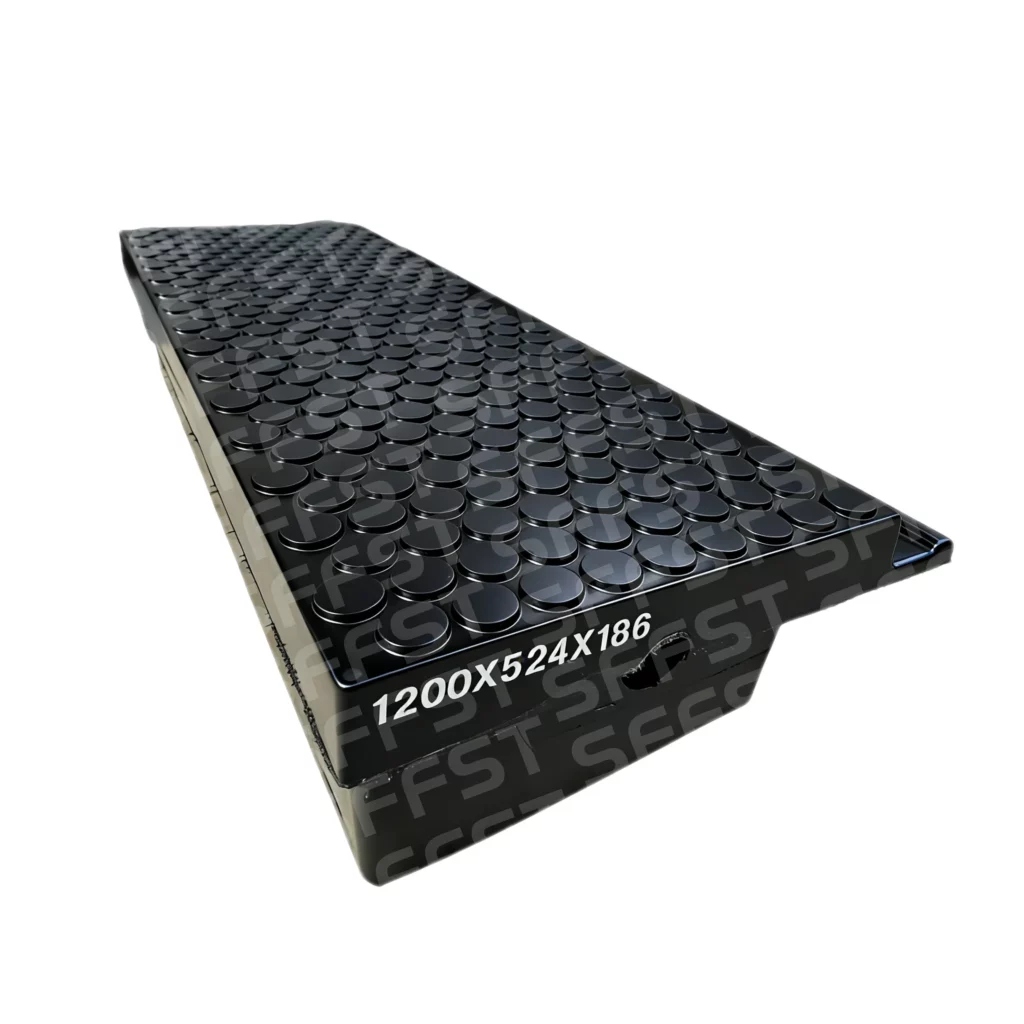
The crossing panel is the primary load-bearing surface, but product selection should be based on dimensional and track compatibility rather than appearance. SFFST offers Rubber Level Crossing Panels and gauge-specific variants including Rubber Level Crossing Panel_ Standard Gauge, Rubber Level Crossing Panel_ Meter Gauge, and Rubber Level Crossing Panel_ Broad Gauge.
Panel Locking Systems
The SFFST range includes Steel End-Lock Locking System, Internal-Lock Device, and Rubber End-Lock Locking System.
The locking method should be considered together with panel geometry, installation space, maintenance access, and the complete crossing layout.
Rubber Flangeway Fillers
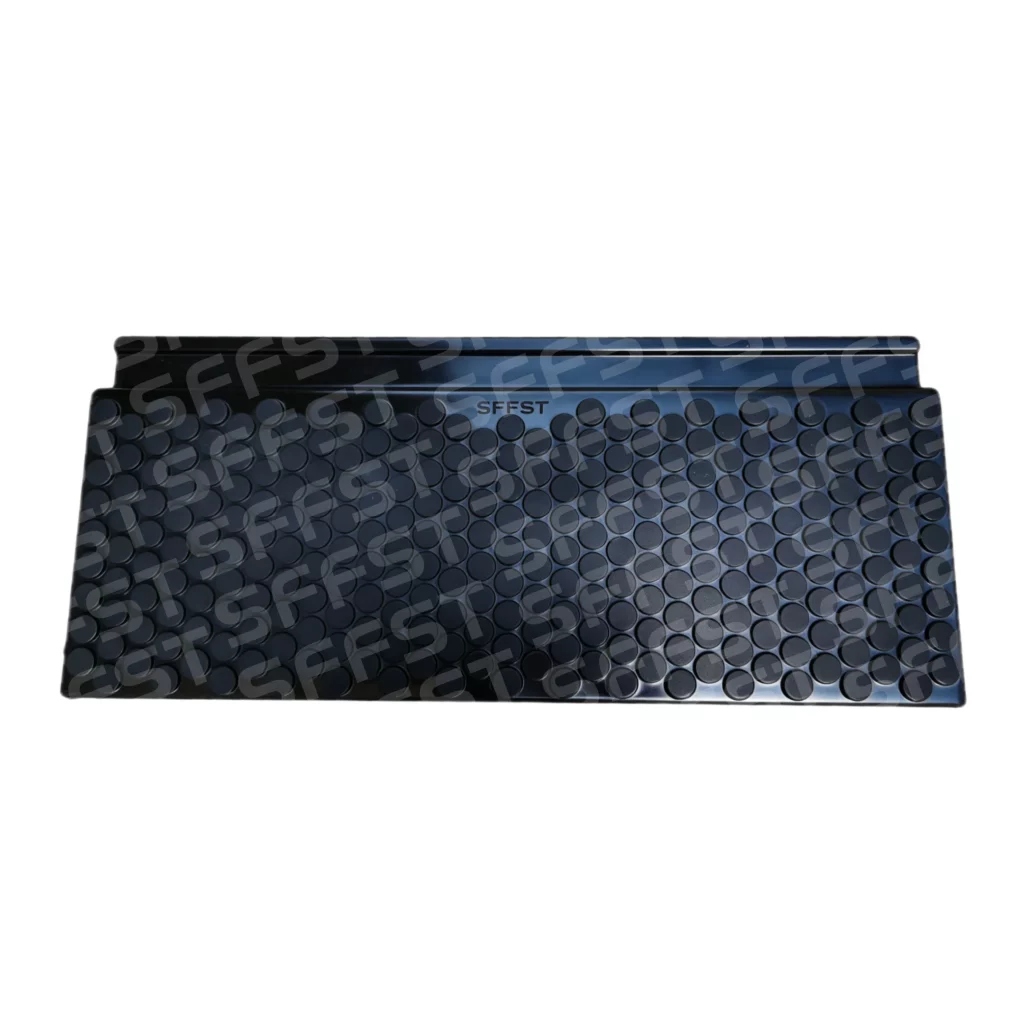
The flangeway is the clearance beside the rail that allows the wheel flange to pass. The SFFST Rubber Flangeway Filler uses a vertically separated two-piece design to facilitate installation and removal during maintenance. Its published standard length is 2.1 m, and the length can be customized.
The separated design is intended to simplify installation and removal during maintenance.
Rubber Support Components
SFFST also provides Rubber Wedge & Rubber Strip and other auxiliary products within the Level Crossing Systems category. These supporting components should be considered as part of the full interface between panels, rails, edges, and adjacent structures.
Systems for Different Rail Gauges
Standard Gauge
SFFST offers Rubber Level Crossing Panel_ Standard Gauge as a dedicated variant. Rail section, sleeper arrangement, crossing dimensions, and traffic requirements should still be confirmed before selection.
Meter and Broad Gauge
SFFST also lists Rubber Level Crossing Panel_ Meter Gauge and Rubber Level Crossing Panel_ Broad Gauge. These variants support projects where railway gauge differs by country or network.
Gauge alone is not enough for ordering. Engineers should also provide the rail profile, sleeper type, dimensions, and layout drawings when available.
How to Choose the Right System
Determine Traffic Loads
Start by defining the intended traffic type and loading conditions. Pedestrian traffic, passenger vehicles, heavy trucks, railway maintenance vehicles, freight-yard equipment, and industrial vehicles impose different loading and durability requirements. Traffic frequency, axle loads, vehicle types, and environmental conditions should be evaluated together when determining the required crossing-panel performance.
Confirm Rail Specifications
Rail profile is a critical input. SFFST Rubber Level Crossing Panels can be adapted to P43Kg, P50Kg, and P60Kg rails. Track gauge is equally important; standard, meter, and broad gauge products should not be treated as interchangeable.
Check Sleeper Compatibility
SFFST states that its Rubber Level Crossing Panels can be adapted to wooden and concrete sleepers. Buyers should identify the sleeper type and arrangement because these affect panel support and installation geometry.
Consider Locking and Maintenance
Future maintenance should be considered during selection. Check how panels will be removed, how the flangeway will be inspected and cleaned, whether water and debris can accumulate, and how worn components will be replaced.
When a standard configuration does not match the project, SFFST provides OEM support. Customers can submit specifications, dimensions, materials, functions, 2D/3D drawings, or concept sketches for engineering review.
Manufacturing and Project Support
Rubber Production and Testing
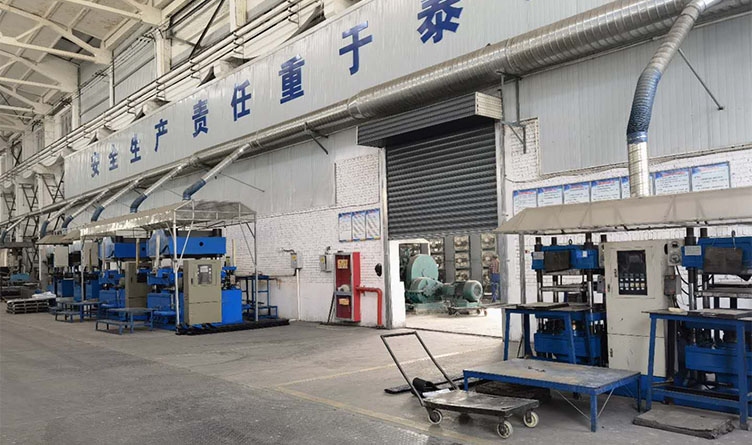
SFFST operates automated material batching, rubber mixing, molding, and vulcanization processes for customized railway rubber crossing products.
Our laboratory includes an Akron abrasion machine, aging test chamber, electro-hydraulic servo fatigue testing machine, Drop Hammer Impact Test System, and MTS Servo-Hydraulic Testing System (25T). These resources support material and durability evaluation.
Project Reference: Wuhan–Huangshi Intercity Railway
In 2022, we supplied high-performance railway rubber level crossing products to China Railway 11th Bureau Group for the Wuhan-Huangshi Intercity Railway Project.
Our EPC+M+O capabilities also cover engineering consultation, testing, procurement, manufacturing, installation support, project management, and operational support.
Conclusion
A reliable railway level crossing system begins with accurate project information. Traffic type and axle loads, rail profile, track gauge, sleeper type, panel dimensions, locking method, flangeway geometry, drainage, road-surface interface, and maintenance access all influence the final crossing configuration.
At SFFST, our portfolio includes Rubber Level Crossing Panels, gauge-specific panel variants, Rubber Pedestrian Walking Board, Steel End-Lock Locking System, Internal-Lock Device, Rubber End-Lock Locking System, Rubber Flangeway Filler, and supporting rubber components. By combining manufacturing, testing, customization, and project support, we help customers match the crossing system to actual track and traffic conditions.
Contact SFFST to discuss rubber level crossing panels or a complete railway level crossing system configured for your track gauge, rail profile, sleeper type, traffic loading, and project requirements.
FAQ
Q: What are railway crossing panels made of?
A: Crossing panels can use different materials. SFFST supplies Rubber Level Crossing Panels manufactured with a rubber-based design incorporating nylon wires or meridian synthesis technology.
Q: How do I choose railway crossing panels?
A: Select railway crossing panels based on the rail profile, track gauge, sleeper type, traffic type, axle load, crossing width, flangeway requirements, locking arrangement, and installation conditions. The manufacturer should confirm dimensional compatibility before production.
Q: Why does a railway crossing need a flangeway?
A: The flangeway provides clearance for the railway wheel flange to pass alongside the rail while maintaining a practical crossing surface.
Q: Can level crossing panels be customized?
A: Yes. SFFST provides OEM support based on project specifications, dimensions, materials, functions, and technical drawings or concept sketches.