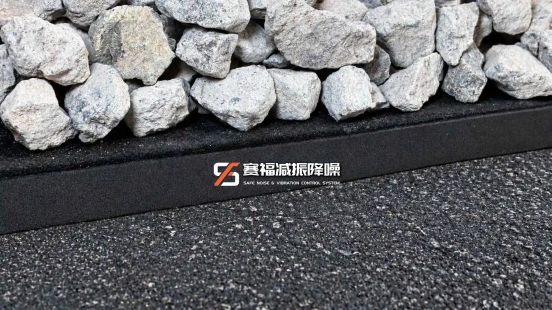
Rail Noise & Vibration Control Systems can provide a controlled resilient interface where a sleeper is installed within or against a rigid slab or embedded track structure. This localized design can help attenuate high-frequency vibration and dynamic load transmission.
That makes the product different from a flat pad or a broad mat. It works at the sleeper boundary, where geometry, stiffness, sealing, and contact pressure meet. The key question is whether the sleeper interface needs a fitted elastic enclosure.

Why Sleeper-to-Concrete Isolation Matters in Slab Track
High-Frequency Impact in Rigid Slab Tracks
Slab and embedded tracks provide a firm structural base, but a rigid support can provide a direct transmission path for dynamic loads and vibration when the sleeper interface is not appropriately isolated. Wheel and rail forces pass through the fastening assembly into the sleeper, concrete bed, and surrounding structure. A resilient elastomeric interface can modify the mechanical transmission path and reduce direct transmission of vibration into the supporting structure.
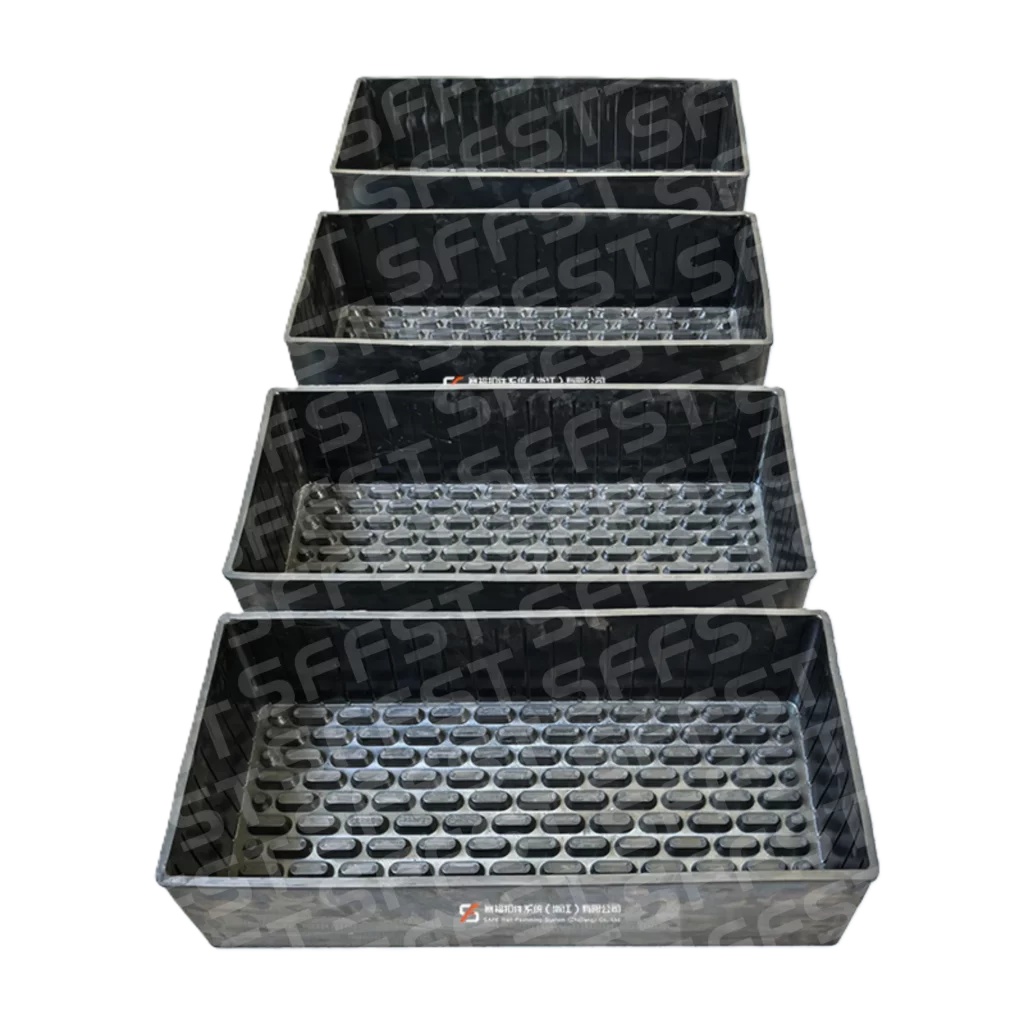
A Sleeper Rubber Boot is designed for this local problem. It covers the underside and sides of the sleeper, creating an elastic boundary rather than providing resilience primarily through the sleeper’s bottom contact plane. The boot provides a controlled load-transfer and contact interface around the sleeper.
Structure-Borne Noise Around Sleeper Interfaces
Structure-borne noise is transmitted through solid materials rather than only through the air. In a station, tunnel, viaduct, or dense urban corridor, vibration can travel from the rail to the sleeper, concrete bed, structural slab, and nearby building elements. The sleeper interface is therefore one of the locations where controlled separation can contribute to reduced structure-borne vibration and associated noise radiation, subject to system-level design.
The vibration and noise reduction achieved by the boot depends on the complete track system and cannot be represented by a single universal dB value. Its role is to provide a defined elastic and sealed interface that works with the fastening and track structure. Selection should therefore consider geometry, stiffness, electrical resistance, exposure, and the project-specific vibration criteria and trackform requirements.
How Sleeper Rubber Boot Works
Three-Dimensional Elastic Encapsulation
A flat under-sleeper pad mainly separates two surfaces across one plane. In contrast, a Sleeper Rubber Boot encapsulates the underside and side faces of the sleeper. This three-dimensional geometry maintains a controlled elastomeric interface around the sleeper and provides elastic support and restraint along the sleeper bottom and side interfaces.
The shape also gives designers a way to coordinate vertical support with lateral containment. The boot can be matched to the sleeper geometry and the surrounding concrete detail so the elastic material supports the track without compromising dimensional stability, seating, or interface tolerances. Precision fit is important because a gap, fold, or uneven edge can change the intended stiffness and sealing behavior.
Resilient Interface Between Sleeper and Concrete Bed
The concrete bed provides structural support, while the rubber boot introduces a resilient elastomeric interface between the sleeper and the surrounding concrete. This interface provides elastic compliance under dynamic loading and reduces direct hard contact under repeated dynamic loading. It can also help protect the sleeper-to-concrete interface from moisture and debris ingress.
For embedded long-sleeper tracks, this relationship is important because the sleeper is integrated into a rigid surrounding structure. For bi-block non-ballasted tracks, the boot provides localized elastic encapsulation. In both cases, it should be evaluated as part of the track assembly.
Product Details That Shape Performance
Hardness, Resistivity and Stiffness Matching
SFFST Sleeper Rubber Boot product details identify a hardness range of 60-75 Shore A. The same information identifies volume resistivity of at least 1.0 x 10^10 ohm-cm, with customization available according to signaling standards. These are useful selection points because the boot may need to combine elastic response with electrical insulation.
The vertical and shear stiffness of the boot should be specified according to the trackform, sleeper geometry, loading conditions, and required system performance. A responsible selection cannot rely on a universal stiffness number. The boot must be coordinated with rail support, sleeper geometry, loading conditions, and the surrounding fastening system.
Sealing, Aging Resistance and Water Protection
The product’s geometric seal is a central difference from a simple flat pad. A close-fitting enclosure helps limit water and debris from entering the sleeper interface. That protection matters in concrete track beds, because trapped debris or moisture can affect contact conditions, inspection access, and the long-term behavior of the surrounding interface.
SFFST also identifies ozone resistance, aging resistance, and minimal water absorption. These points matter in outdoor, tunnel, humid, or maintenance-intensive environments and should be reviewed with drainage and laboratory evaluation conditions.
Where SFFST Sleeper Rubber Boot Fits Best
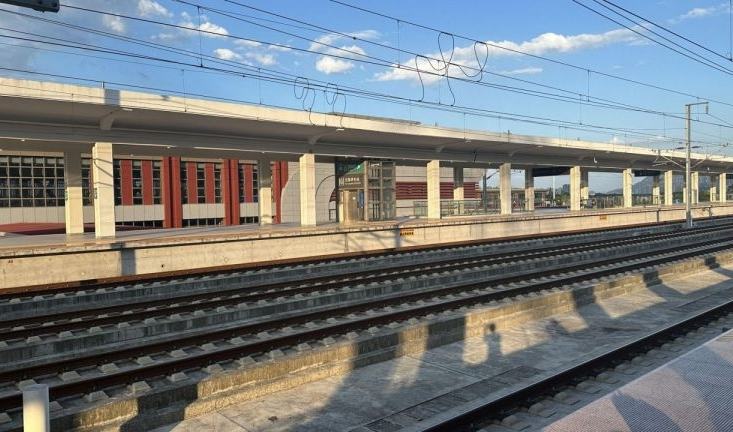
Bi-Block Non-Ballasted Tracks
Bi-block non-ballasted tracks rely on a rigid supporting structure and carefully controlled sleeper positioning. A fitted rubber enclosure can add local resilience around the sleeper while preserving the designed relationship between the sleeper and concrete bed. This makes it relevant where impact transmission and interface protection are both concerns.
The design review should check the sleeper profile, boot geometry, concrete recess, drainage route, rail fastening clearance, and electrical requirements. A good fit is more valuable than a generic increase in material thickness because the enclosure must work as a complete interface.
Embedded Long-Sleeper Tracks, Tunnels and Stations
Embedded long-sleeper tracks place the sleeper inside or close to a concrete track bed. Tunnels and stations add sensitivity to structure-borne noise, inspection access, water management, and electrical isolation. A Sleeper Rubber Boot can address these local interface needs while working alongside rail pads, baseplate pads, and other railway rubber components.
SFFST also offers other railway noise and vibration control components, including rail pads, baseplate pads, under-sleeper pads, under-ballast mats and slab track isolation products.
How to Compare Related Vibration Control Products
Sleeper Rubber Boot Versus Under Sleeper Pad
An under sleeper pad is primarily a planar elastic layer below the sleeper. A Sleeper Rubber Boot adds side encapsulation and a geometric seal, so it can provide a different combination of support, protection, lateral containment, and environmental separation. The choice depends on whether the project needs only vertical resilience or a more enclosed sleeper interface.
This distinction also affects installation planning. The boot needs accurate geometry and edge seating, while a flat under-sleeper pad is primarily evaluated as a planar resilient layer, with parameters such as stiffness, thickness, load distribution, fatigue performance and long-term durability considered as part of the track design. Engineers should compare the actual interface problem before choosing.
Sleeper Rubber Boot Versus Under Ballast Mat and Slab Track Mat
Under ballast mats and slab track mats work across a much wider structural area. They can influence the ballast bed, slab, or supporting structure, while a sleeper boot operates locally around the sleeper. These products are not direct substitutes. A project may use a broad structural mat for one vibration path and a sleeper boot for a separate contact and sealing problem.
Product selection should follow the dominant vibration transmission path—from the rail and fastening system, through the sleeper-to-concrete interface and track structure, to the supporting structure and adjacent building elements.
Conclusion
Rail Noise & Vibration Control Systems become more precise when the sleeper interface is treated as its own engineering layer. A Sleeper Rubber Boot adds resilient elastomeric isolation at the sleeper-to-concrete interface. SFFST supports this focused solution with defined hardness, resistivity, stiffness-matching, and environmental performance criteria.
For slab and embedded track projects where local sleeper impact, structure-borne noise, sealing, and insulation must be managed together, choose an SFFST Sleeper Rubber Boot matched to the complete track assembly.
FAQ
Q: What problem does a Sleeper Rubber Boot solve?
A: It creates a three-dimensional elastic enclosure around the sleeper, providing a resilient elastomeric interface between the sleeper and concrete bed. This can help reduce high-frequency vibration transmission, direct structure-borne vibration, limit water and debris entry, and provide electrical resistance at the sleeper-to-track-bed interface, subject to the specified track and signalling requirements.
Q: What hardness and resistivity are identified for the product?
A: SFFST product information identifies 60-75 Shore A hardness and volume resistivity of at least 1.0 x 10^10 ohm-cm. Resistivity can be customized according to signaling standards, while static shear and vertical stiffness are matched to the track system specification and axle-load classification.
Q: Is a Sleeper Rubber Boot the same as an under sleeper pad?
A: No. An under sleeper pad is generally a planar elastic layer below the sleeper. A Sleeper Rubber Boot also covers the sleeper sides and creates a geometric seal. It is selected when the project needs enclosure, lateral containment, environmental protection, and a controlled sleeper-to-concrete interface.