Managing railway noise and vibration works best when you treat it as a multi-level system instead of looking at just one part. The strongest energy flow moves from the wheel–rail interface into the rail, the sleeper, the ballast bed, and finally the subgrade. At the same time, a second energy path travels through the air as noise. By placing flexible parts at the correct levels—such as under-ballast mats in the track bed, under-sleeper and slab-track mats above the subgrade, and a noise barrier on the surface—a rail line can block ground-borne vibration at the source and air-borne noise at the receiver. This layered strategy is the foundation of SFFST’s noise and vibration control systems.
Why One Layer Is Not Enough
The path from rail to receiver
Vibration and noise originate from the point of contact between wheel and rail. Such factors as rolling contact, flange friction, rail roughness, and joint excitation produce a variety of vibrational energy waves. These waves transfer to the rail, fastenings, sleeper, and ballast/concrete slab. Further on, they transfer to the subgrade and soil. Also, some of the vibrational energy converts to airborne noise, which propagates to residential areas and quiet zones.
Where the track bed decides the outcome
A stiff track bed lets more energy pass into the ground. In contrast, a flexible bed absorbs and softens it. This makes the ballast-bed layer the most critical spot for controlling ground-borne vibration. For this reason, an under-ballast mat is often seen as a vital solution rather than just an extra feature.
Under-Ballast Mats Stop Vibration at the Subgrade
Lowering track-bed stiffness to interrupt ground-borne vibration
An under-ballast mat creates a steady elastic layer between the ballast and the subgrade. This reduces the total stiffness of the track support. By lowering this stiffness, the mat changes the natural frequency of the track and weakens structure-borne noise before it hits the soil. Since the mat covers the entire width of the track, it deals with the whole area instead of just a single point.
Standard and heavy-haul mat options
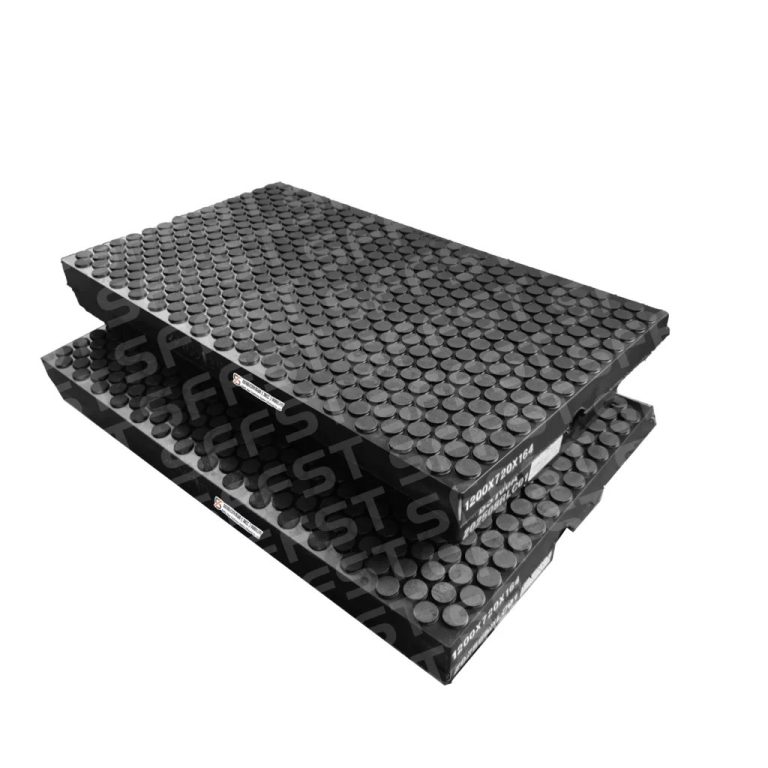
SFFST offers standard under-ballast mats with a density of 200–850 kg/m³ and thicknesses from 10 to 50 mm. Common sizes include 12.5, 25, and 50 mm, though we provide full customization. These products are tested to meet GB/T 39705, EN 17282, and DIN 45673-5. For heavy-haul lines and transition zones, we offer a studded version. It is made from a mix of synthetic and natural rubber with a special bottom shape for drainage. It supports axle loads up to 250 kN at all speeds and meets DIN 45673-7 standards.
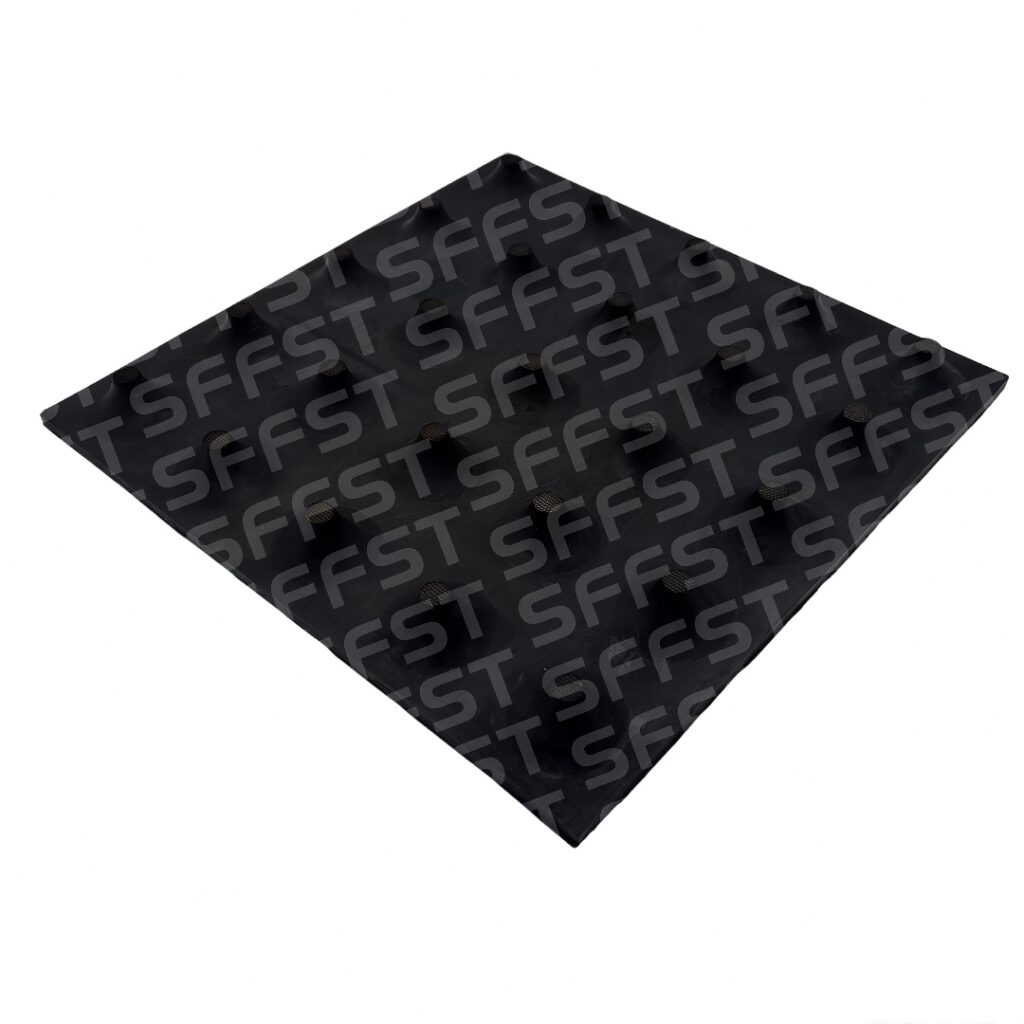
Under-Sleeper and Slab-Track Layers Add Precision Isolation
Factory pre-bonded under-sleeper pads
Under-sleeper pads go directly under the sleeper to add flexibility to the track and protect the ballast. We bond them to the sleeper at the factory, which makes installation very fast. This process does not depend on the weather and causes very little downtime for trains. These pads work well for high-speed, heavy-haul, and standard tracks during both repairs and new builds.
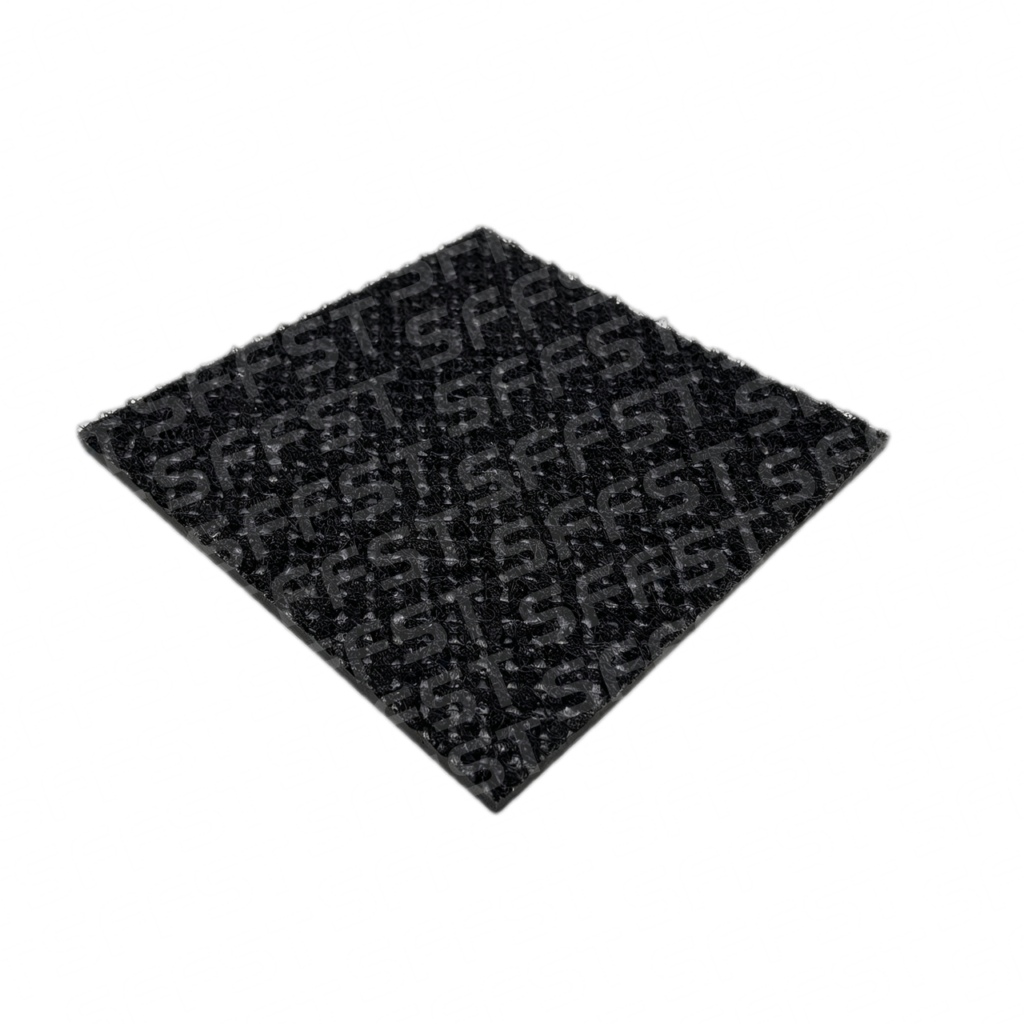
Slab-track mat configurations
On slab tracks, a flexible mat under the concrete slab helps block dynamic loads. This reduces the natural frequency for the benefit of people living nearby. These mats can be installed as full-surface, strip, or point supports to fit the budget and technical needs of a project. They stay elastic even after years of heavy use, constant pressure, and changing weather.
The Noise Barrier Handles the Airborne Path
Creating an acoustic shadow zone
When airborne noise is the main problem, a noise barrier is placed between the track and the receiver. This creates an “acoustic shadow zone” where the sound is much quieter. For rail projects, these parts meet TB/T 3122-2019 standards. The weighted sound reduction index (Rw) is at least 30 dB. For types that absorb sound, they offer a noise reduction coefficient of at least 0.70.
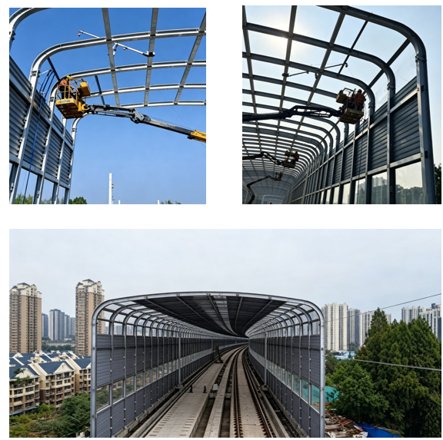
Materials and structural options
For those who want metal barriers, you will have the choice between galvanized steel and aluminum. You can also have clear materials such as polycarbonate or reinforced acrylic. If metal is not what you are looking for, then we can provide you with concrete, ECP, FRP, and even polyurethane.
Railway Noise and Vibration Control by Transmission Path
Match the layer to the dominant path
The first thing is determining which path the energy takes. Does it go through ground-borne vibration, structure-borne noise, or airborne sound? A sub-ballast mat will block the ground-borne path. An under sleeper or a slab-track mat will improve the rail-to-structure path. A noise barrier will block the airborne path. It is important that the component be matched to the specific path to work effectively in practice.
Coordinate the layers and the applicable standard
After identifying the path, we coordinate the layers so they work as one unit. SFFST provides engineering services to help with this. We define the energy path, check the standards, and plan the layout. This ensures every part of the track corridor performs correctly together.
Conclusion
Controlling railway noise and vibration will be best done when all these layers are selected at once. An under ballast mat will deal with ground-borne vibrations, an under sleeper mat with precision isolation, and a noise barrier will block air-borne noise. In doing so, all the layers together form a solution that will address the root cause of the problem and not just its effects.
For a custom design, you can work with SFFST to find the best transmission path and the right layout for your specific rail project.
FAQ
Q: What is the main function of an under-ballast mat?
A: An under-ballast mat acts as a flexible layer under the ballast to reduce track stiffness. It stops ground-borne vibration and structure-borne noise before it hits the subgrade. It protects the entire track width rather than just small points under the rails.
Q: How does a noise barrier reduce railway noise?
A: A noise barrier stands between the train and the receiver to block sound waves. It forces noise to reflect or dissipate, creating a quiet zone. Our barriers meet TB/T 3122-2019, offering high sound reduction and absorption rates.
Q: Can SFFST supply a complete noise and vibration control system?
A: Yes. SFFST provides under-ballast mats, under-sleeper pads, slab-track mats, and noise barriers. We also offer engineering support to make sure all these parts work together as a single, effective system.