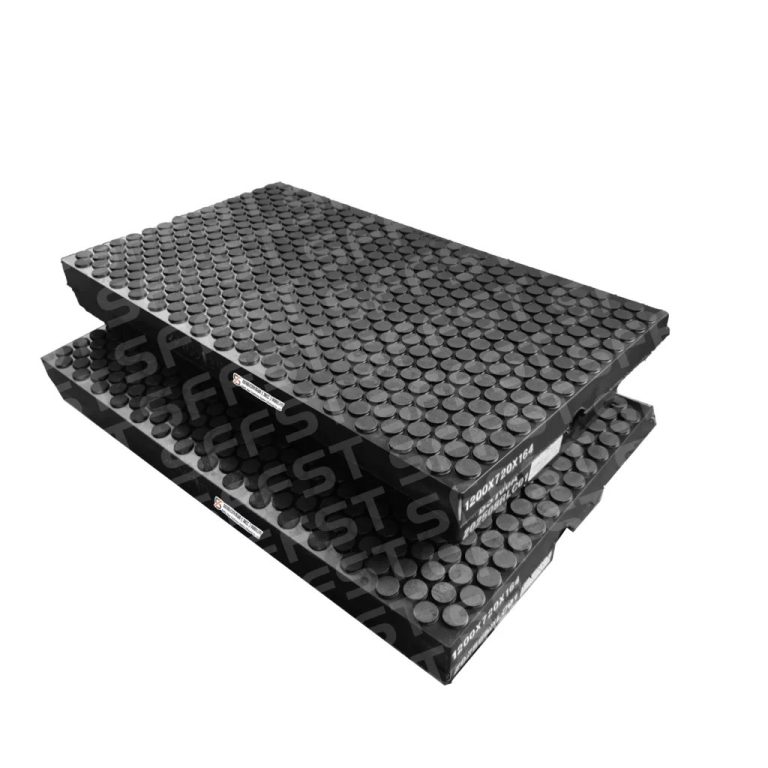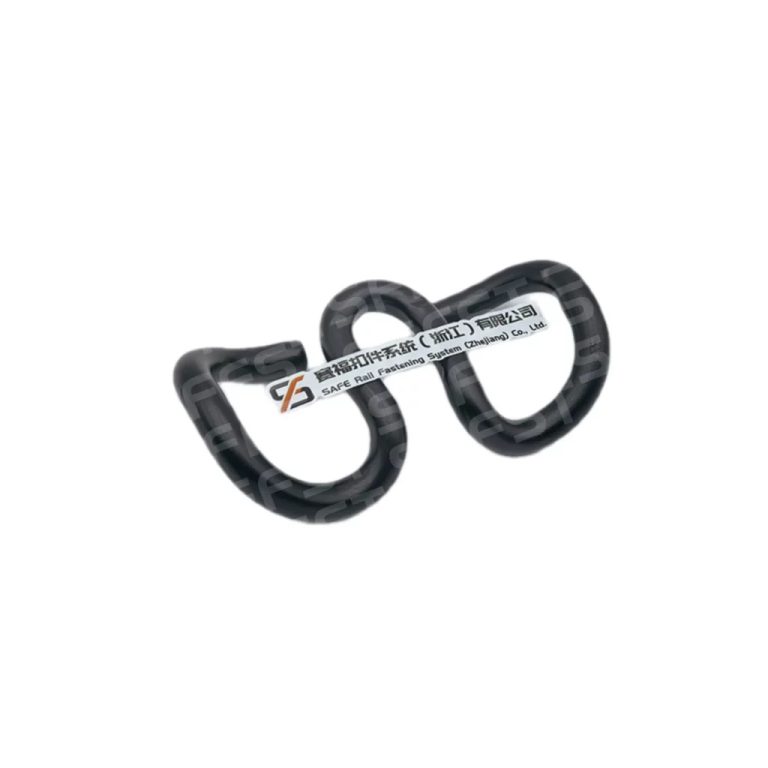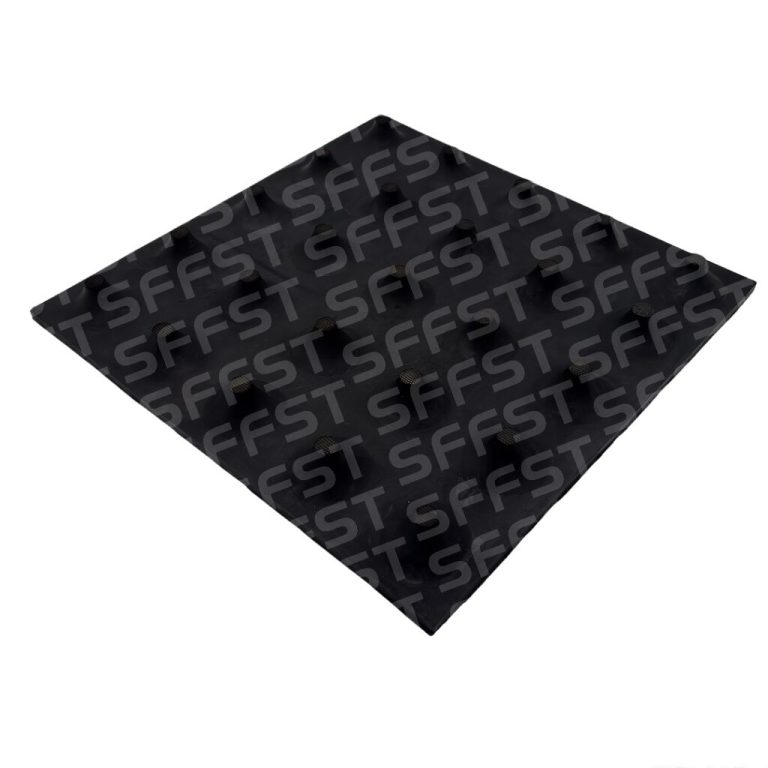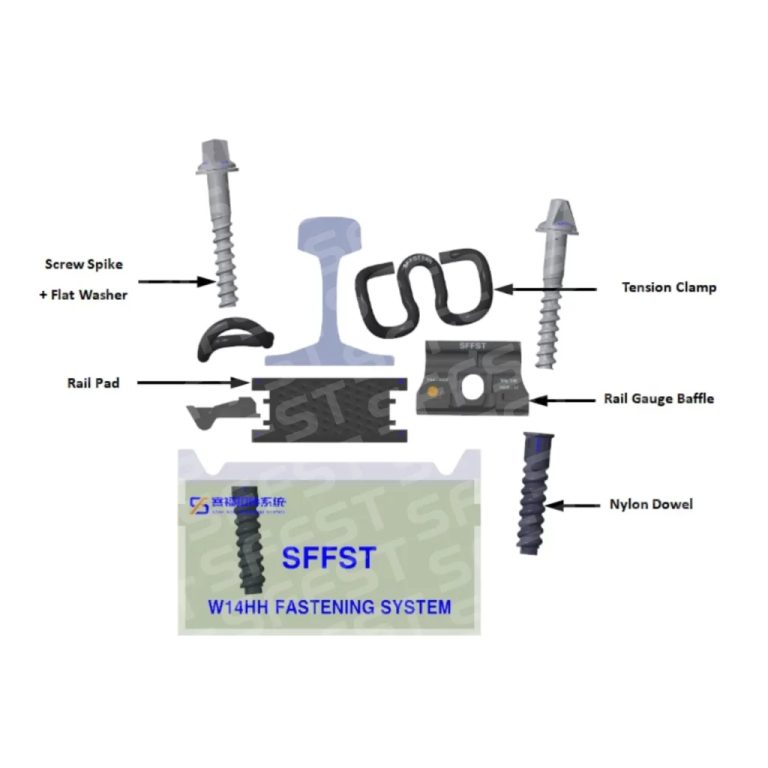
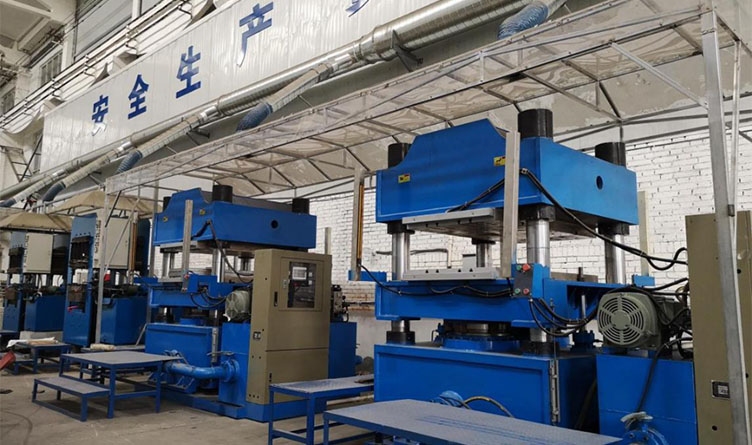
Rubber level crossings comprise a set of rubber materials and construction components that function as a unity to create a reliable, safe, and durable road-rail junction. Rubber level crossings consist of an industrial surface for passing vehicles and a flangeway groove through which train wheels can go smoothly. In addition, it has base components to provide stability of the structure under heavy loads. The entire range of products of this type is produced by the company SFFST using one vulcanization line.
What Is a Rubber Level Crossing System
A level crossing refers to the point where a road/pathway passes over railway tracks on the same level. In the case of level crossings, the ability to accommodate trains while maintaining the surface smoothness for vehicles is a significant requirement. Rubber level crossings have proven themselves as the most effective means to cater to this requirement. Rubber level crossings are made from flexible and resilient materials that cover the rail tracks. A channel, which allows the flange of the rail wheel to run smoothly, is formed in the rubber material.
Instead of one component, the rubber crossing should be treated as an entire matching system consisting of the crossing surface itself, the exact flangeway design, and wedge strips for sealing gaps adjacent to the pavement. The components of this system are designed according to the rail profiles and sleeper types.
Core Components of an SFFST Level Crossing System
Rubber Level Crossing Panel
The Rubber Level Crossing panel is the main part that carries vehicles across the tracks. It is the most important piece for cars and maintenance trucks. SFFST provides these panels in standard 1.1-meter lengths. We also offer 1.65-meter and 2.2-meter versions for wider roads or specific track layouts.
Pedestrian Walking Board
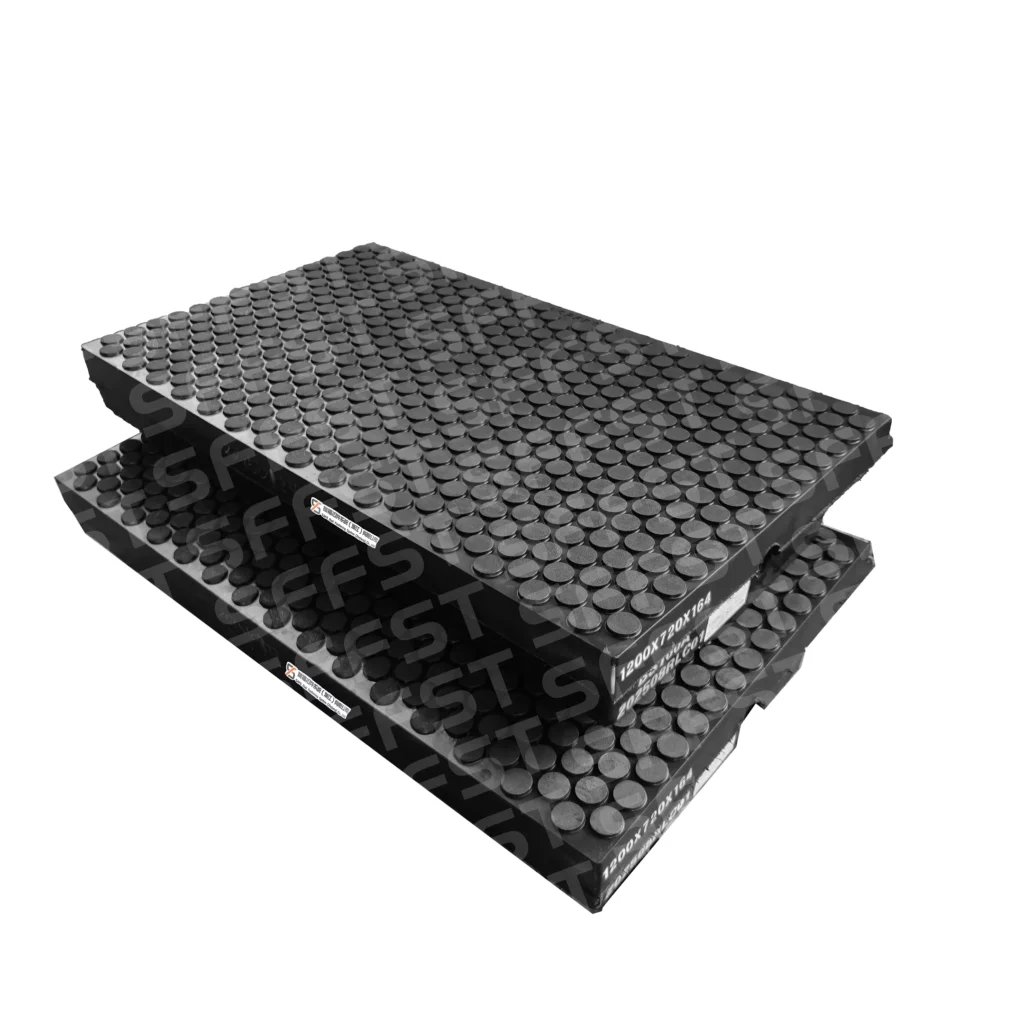
If a crossing is only for people on foot, a pedestrian walking board is a better choice. These are narrower and provide a slip-resistant path while keeping the rail area clear. They are perfect for train stations or footpaths where no cars are allowed.
Flangeway Filler and Wedge Strips
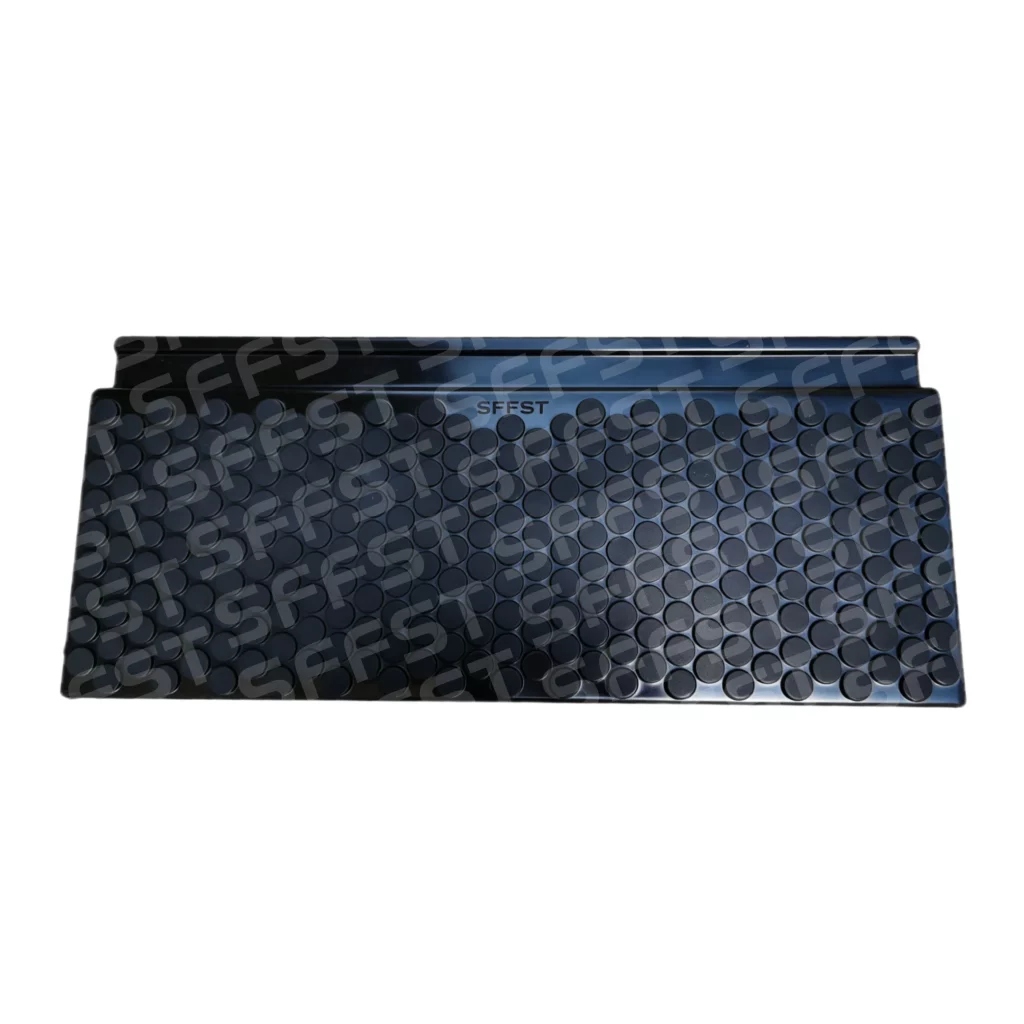
These small rubber strips fill the empty spaces between the main panels and the road. They stop rocks and water from getting into the track area. They also help prevent the edges from breaking and make the transition from road to rail much smoother.
The Rubber Level Crossing Panel in Detail
A rubber level crossing panel is a thick slab made of cured rubber. It has a groove cut into it that matches the shape of a train wheel. Because the groove fits the rail head perfectly, the train wheel touches the steel rail while the rubber stays out of the way. Meanwhile, the flat top of the panel supports car tires easily.
The panel is built to spread out the weight of heavy loads. It soaks up shocks and pops back into its original shape after a vehicle passes. We add internal layers to keep it from sagging or getting dented over time. SFFST makes these panels to fit P43, P50, and P60 rail profiles. They work perfectly with both concrete and wooden sleepers.
Rail Profile and Sleeper Compatibility
Choosing the right system starts with checking the rail profile. SFFST creates panels and boards for P43 (43 kg/m), P50 (50 kg/m), and P60 (60 kg/m) rails. These cover everything from small branch lines to heavy freight tracks. We machine the flangeway to match the exact width of the rail so the wheels stay on track.
SFFST products are compatible with both wood and concrete bases. We adjust the support parts under the rubber to match your specific sleeper spacing. This means you get a custom-fit solution rather than a generic one-size-fits-all part.
SFFST offers separate lines for standard and broad gauges to meet different regional needs.
Material and Compound Design
The rubber mix is the most vital part of the system. SFFST uses a vulcanized blend that is toughened with nylon or meridian cords. These internal fibers give the panel extra strength. They help the rubber stay flat even after years of being squashed by heavy trucks.
SFFST produces all these parts using a manufacturing line for automation of mixing and vulcanization processes. The testing of these products in conditions similar to those under which they will be used is carried out as well.
Installation, Track Circuit, and Maintenance
Setting up the system requires careful planning around train schedules. If the crossing is in a signaling zone, we check the insulation levels carefully. We make sure the rubber and any metal fasteners won’t interfere with the track circuit before we finish the job.
Maintenance is also very straightforward. You can lift or replace single panels without tearing up the whole track.
Since the SFFST creates the entire unit, all components are compatible. This makes planning for inspections and storing replacement components simpler. There is no issue with ensuring that components produced by different manufacturers are compatible.
How to Specify a Level Crossing System
First, look at who will use the crossing. If cars are involved, you need a full rubber level crossing panel. For foot traffic only, a pedestrian walking board is the right choice. This first step helps decide how strong the material needs to be.
Second, check the track details. You need to know the rail profile (like P43, P50, or P60) and the type of sleepers used. Also, measure the total width of the crossing. This tells us which panel length will work best for your project.
Third, consider the environment. Is it near a track circuit? Is the weather very hot or cold? We use this info to pick the right rubber mix and insulation level.
Manufacturing and Quality Control at SFFST
SFFST uses a high-tech factory for all rubber production. Our automated machines handle mixing and curing to keep quality high. We produce panels, boards, and fillers that all meet the same strict standards.
Our factory holds ISO 9001, ISO 14001, and ISO 45001 certificates. We test every product for strength, weather resistance, and long-term wear. For special projects, SFFST can even simulate years of heavy traffic to prove our panels will hold up.
We have invested over 50 million RMB in our 50,000-square-meter facility. With a capacity of 5 million sets per year, we serve railway projects all over the world.
Conclusion
Rubber Level Crossing systems are intelligent designs for managing the interface between roads and rails. They operate with the help of a system consisting of panels for vehicles, channels for wheels, and strips for edges. The correct selection of rail profile and sleeper types guarantees the longevity of this product. SFFST produces such crossings that can be used under difficult conditions and withstand heavy loads. If your needs require either an entire road or footway crossing, SFFST products will provide you with everything.
FAQ
Q: What is a rubber level crossing system?
A: It is a complete kit of rubber panels and parts used to create a flat road over railway tracks. It includes the main surface, wheel channels, and edge fillers. SFFST provides the whole system as a ready-to-use set.
Q: What are the standard panel lengths?
A: The most common length is 1.1 meters. However, we also offer 1.65-meter and 2.2-meter options to fit different road widths and sleeper layouts.
Q: Do SFFST crossing products work with both wooden and concrete sleepers?
A: Yes. We adapt the support parts of our panels to fit whichever sleeper type you have. This ensures the rubber stays stable regardless of the track base.