
Rubber Level Crossing Panels help stabilize road-rail interface zones where vehicle traffic crosses railway tracks. They form a wear-resistant rubber crossing surface around the rail, improve ride smoothness and reduce impact caused by uneven road-track interfaces, and work together with rail pads, baseplate pads, and other resilient components to support vibration management. For SFFST, a suitable crossing solution is not a single plate choice; it is a coordinated rubber system matched to rail profile, sleeper type, surface level, drainage, and traffic stress.
A railway level crossing is a high-load interface because road traffic loads, rail structures, fastening systems, and supporting foundations interact within a limited area. If one interface is too rigid or uneven, the crossing can become noisy and maintenance-heavy.
Why Rubber Level Crossing Panels Matter at Road-Rail Interface Zones
Load Transfer Between Road Surface and Track
At a level crossing, road vehicles apply vertical and horizontal force beside a rail that must still guide trains accurately. Rubber Level Crossing Panels are used to form a practical running surface while allowing the rail and fastening system to keep their working geometry. The panel must sit securely, support repeated loading, and avoid creating localized stress concentration around the rail interface.
Alignment Stability Around the Rail Seat
Track transition zones are often judged by riding quality, but alignment begins below the visible panel. Sleeper condition, rail profile, concrete interface, fastener fit, and drainage all influence whether the panel remains stable.
SFFST rubber crossing panels have been described for P43Kg, P50Kg, and P60Kg rails, and for wooden and concrete sleepers. Available set lengths include 1.1, 1.65, and 2.2 linear meters, giving designers room to match panel layout with the rail and crossing width instead of forcing one general dimension onto every site.
Product Details That Shape Crossing Performance
Panel Surface and Edge Fit
The crossing panel should provide adequate skid resistance for road traffic and enough dimensional control to protect the rail area. The working surface should resist wear while the edge geometry fits the rail seat without interfering with the rail. In practice, the edge condition is where many crossing problems begin, because small gaps can collect water, grit, and impact force.
The role of SFFST Rubber Level Crossing Panels is to maintain functional compatibility between road pavement and railway track components. The panel is a railway rubber component that must respect gauge, fastener space, sleeper spacing, and the movement envelope around the rail.

Thickness, Support and Subgrade Contact
Panel thickness and support conditions affect both comfort and durability. Where the supporting surface is uneven, even a strong rubber panel can experience local pressure, rocking, or early surface fatigue. The crossing design should therefore check subgrade strength, concrete level, drainage path, and the relationship between road height and rail head height.
Connecting Rubber Crossings with Vibration Control
Rail Pads and Baseplate Pads
A level crossing becomes more reliable when the visible rubber surface and the underlying resilient track components are considered together. Rail pads sit below the rail, while baseplate pads work under the baseplate where that structure is used. Their stiffness, fatigue behavior, and insulation properties influence how much vibration reaches the sleeper and surrounding structure.
SFFST product categories include rail pads, baseplate pads, height adjustment pads, insulation buffer pads, resilient tie pads, under sleeper pads, under ballast mats, slab track mats, rubber boots, and other railway vibration and noise mitigation systems. This matters because vibration control is rarely solved by one component alone.
Height Adjustment and Insulation Buffer Pads
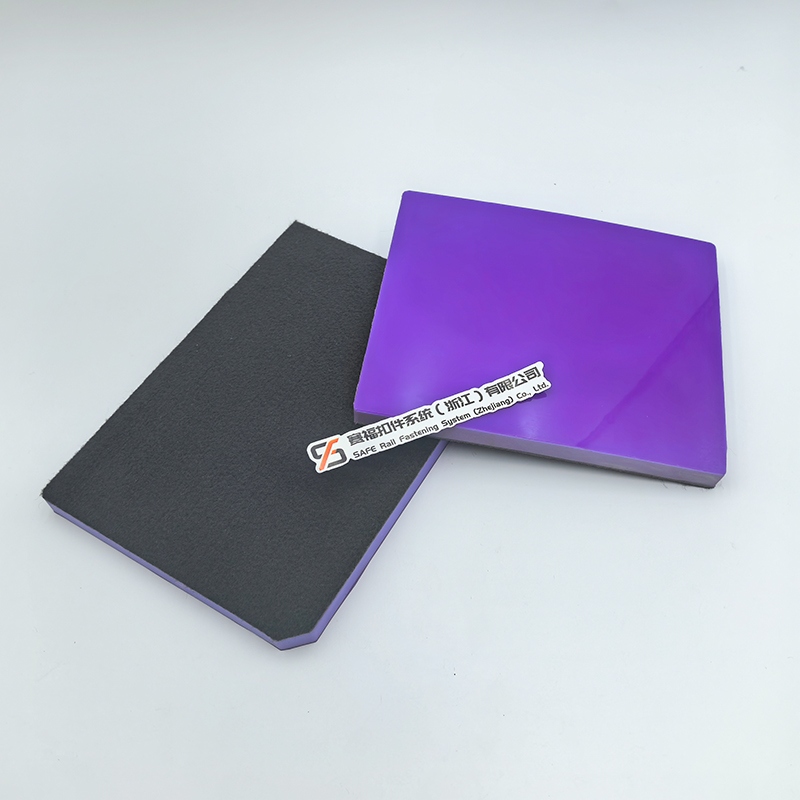
Height adjustment pads and insulation buffer pads help refine the interface when the rail seat, sleeper, or slab condition requires correction. In a level crossing zone, small height differences can become repetitive impacts as vehicles pass over the panel edge. Elastic adjustment components can support a more controlled transition when used within the approved fastening configuration.
The resilient system should provide controlled stiffness rather than excessive flexibility. Rubber components need a controlled stiffness window so the track absorbs impact without allowing excessive rail movement.
Where This Solution Fits Best
Urban Roads and Industrial Access Tracks
Rubber level crossings are useful where road traffic crosses active railway tracks and the surface must remain serviceable. Urban access roads need predictable ride quality and controlled noise. Industrial sites need durable panels that tolerate repeated movement from maintenance vehicles, trucks, and rail operations.
The transition-zone approach is useful where a crossing is more than a short road patch. In those settings, product selection should begin with site conditions before moving to panel length and related rubber components.
Maintenance-Sensitive Railway Interfaces
Crossings often become maintenance-sensitive because they face road wear, rail vibration, water, debris, and repeated inspection needs. A modular rubber surface can make the interface easier to manage than a rigid road surface that bonds too tightly to the railway zone.
For SFFST, the purchasing discussion should sound like an engineering conversation: rail profile, sleeper type, crossing width, road level, expected traffic, drainage, and vibration target. That is more useful than choosing only by a catalog image because the transition zone must perform as a complete interface.
How SFFST Supports Better Track Interfaces
Production Control for Rubber Components
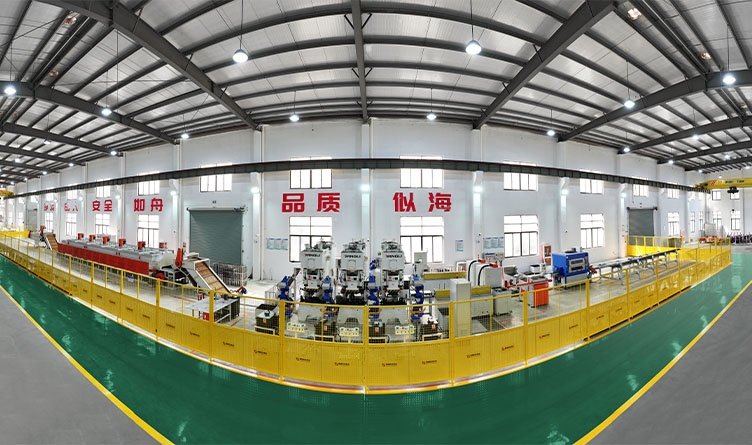
SFFST supports rubber railway products through production capabilities that include rubber product manufacturing and automatic polyurethane pouring for elastic pads, rail pads, height adjustment pads, and related products. A crossing panel or vibration component must repeat the intended material behavior across batches, not only look correct when new.
The company also identifies OEM and ODM support, which is relevant when a crossing layout, sleeper arrangement, or railway fastening requirement differs from standard conditions. For transition zones, customization should still stay within verified rail and fastening requirements so the crossing does not compromise track safety.
Testing as a Selection Filter
Testing helps separate unverified products from components that can survive railway use. SFFST laboratory information includes equipment for fatigue testing, longitudinal resistance testing, clip fatigue testing, and MTS servo-hydraulic testing.
When evaluating a level crossing system, these test categories are more useful than unsupported claims about fixed service life or exact noise reduction. The SFFST laboratory provides supporting test data for product evaluation and engineering selection.
Conclusion
Rubber Level Crossing Panels are most effective when applied as part of a wider track transition-zone system. The crossing surface maintains road traffic functionality, while rail pads, baseplate pads, height adjustment pads, and other vibration components manage impact below the surface. SFFST brings these products together through rail-focused rubber manufacturing, application matching, and laboratory validation.
For projects where road traffic, rail geometry, and vibration control meet in one high-load operating environment, choose SFFST solutions that match the full transition zone rather than a single surface dimension.
FAQ
Q: What makes Rubber Level Crossing Panels important in track transition zones?
A: Rubber Level Crossing Panels create a stable surface where road vehicles cross railway tracks while allowing the rail and fastening system to keep their geometry. In transition zones, they help reduce hard impact, manage surface wear, and protect the interface between pavement, sleeper support, and rail components.
Q: Can rubber crossing panels work with vibration reduction components?
A: Yes. Rubber crossing panels address the visible road-rail surface, while rail pads, baseplate pads, height adjustment pads, and under sleeper products support vibration and impact control at different structural levels. The best result comes from matching these components to rail profile, sleeper type, load path, and site conditions.
Q: What should engineers check before choosing a rubber level crossing system?
A: Engineers should check rail profile, sleeper type, road height, panel support, drainage, concrete interface, fastener clearance, and expected traffic. They should also consider whether rail pads, baseplate pads, or height adjustment pads are needed to control vibration and maintain a stable transition zone over time.