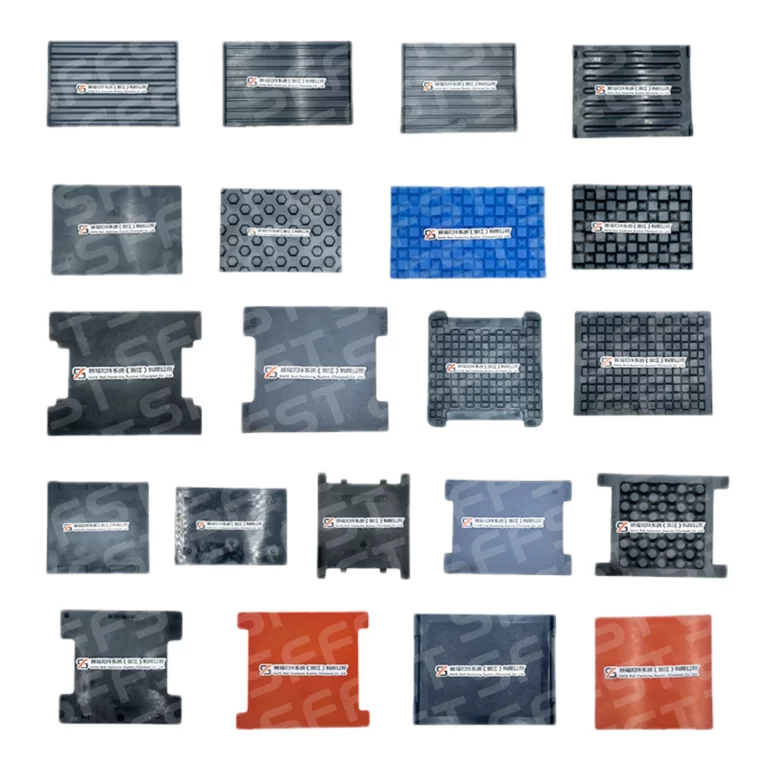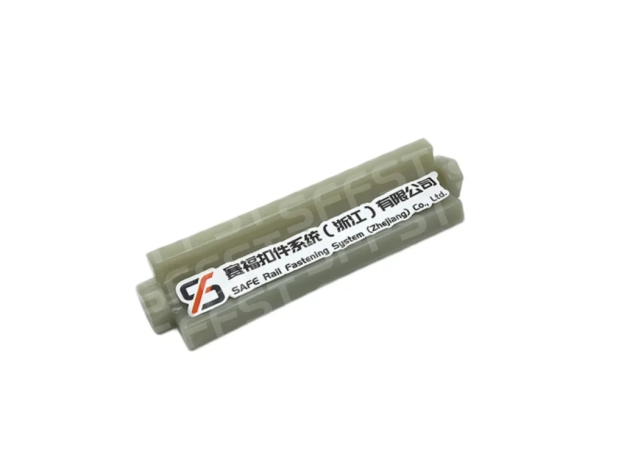
SFFST is located on a manufacturing base covering more than 50,000㎡ in Zhejiang Province, China, with advanced production facilities and railway component manufacturing capabilities. SFFST’s total investment is more than 50 million RMB, with an annual production capacity of 5 million sets of rail fastening systems, and an automated 3D warehouse which can store 30,000 tons of products. This manufacturing capability enables SFFST to provide reliable railway infrastructure solutions for high-speed rail, conventional railway and urban transit applications. As modern railways evolve toward higher speeds and heavier loads, the choice between rubber level crossings and concrete railway crossings becomes crucial. With safety, cost efficiency, and sustainability driving infrastructure decisions, this comparison aims to help railway professionals choose the optimal railway crossing system for long-term performance.

Material and Design Characteristics
Structural Composition
SFFST’s Railway Rubber Level Crossing is manufactured with advanced rubber formulations incorporating nylon wires or meridian synthesis technology to enhance strength, elasticity and durability. In contrast, concrete crossings use precast reinforced panels designed primarily for rigidity and load-bearing stability. The elasticity of rubber materials allows better vibration absorption, reducing stress on rails and sleepers compared to rigid concrete.
Design Flexibility
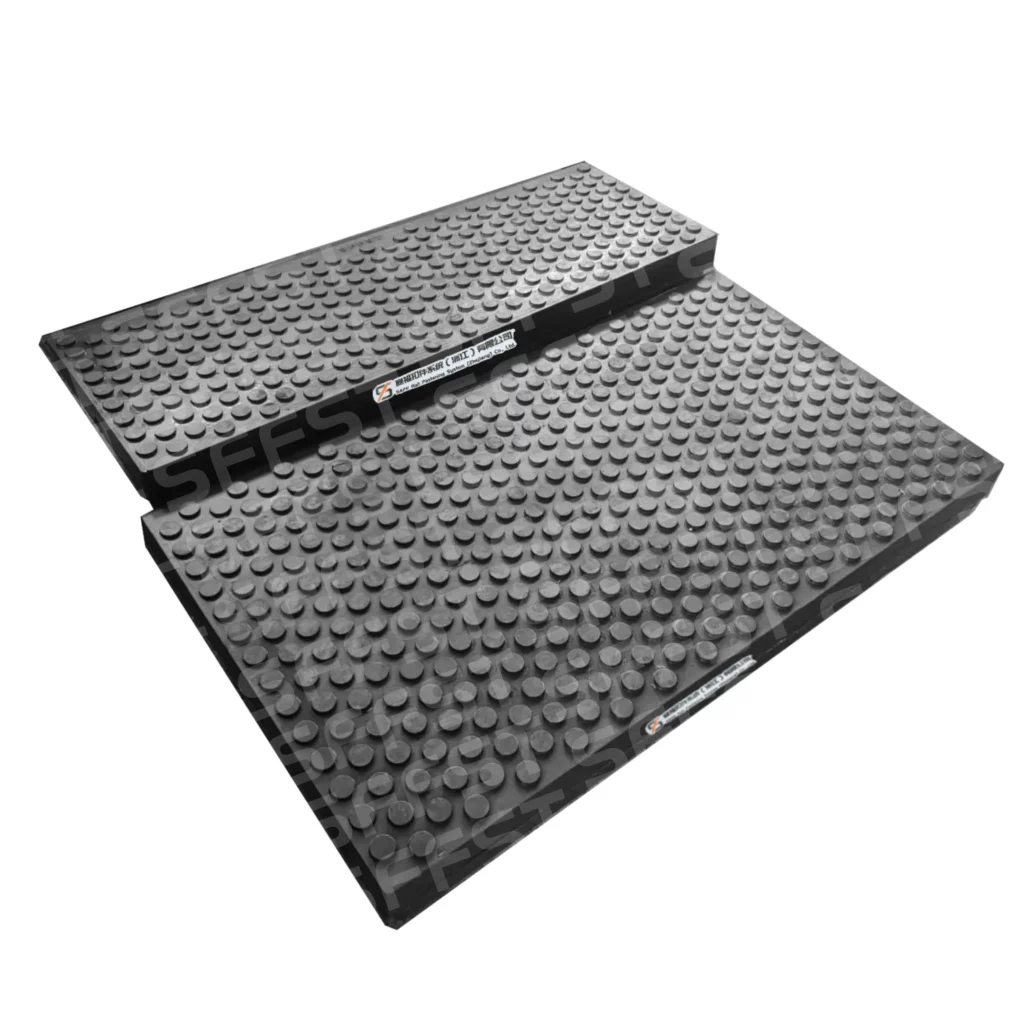
Rubber crossing panels can be custom-fitted for various rail profiles such as P43Kg, P50Kg, and P60Kg, as well as different sleeper types including wooden or concrete sleepers. In addition to the standard 1.1 linear meters per set, models of 1.65 linear meters per set and 2.2 linear meters per set have also been developed. Concrete designs are less adaptable to irregular track geometries or curved layouts. The modular nature of SFFST’s rubber systems simplifies future upgrades or replacements without requiring extensive civil works.
Installation Efficiency
Installation Process
Rubber crossing panels have lower handling weight compared with precast concrete panels, reducing lifting requirements during installation, allowing faster installation using minimal heavy machinery. Concrete crossings require cranes for positioning and longer curing or alignment times. Reduced installation time minimizes downtime and ensures continuous service operation—an essential factor for high-density freight railway operations.
Labor and Equipment Requirements
Rubber crossing panels generally require lighter lifting equipment compared with concrete panels, reducing installation complexity and manpower requirements. Concrete installations are labor-intensive due to their weight and need for precise alignment checks during placement. The streamlined installation process makes rubber crossing systems suitable for applications requiring minimized operational disruption.

Performance and Durability
Load-Bearing Capacity
Both systems handle substantial train loads; however, SFFST rubber panels perform effectively under dynamic loading conditions caused by frequent train and vehicle interactions. Laboratory fatigue tests increased durability performance from 150,000 cycles to 450,000 cycles, demonstrating improved resistance against repeated loading. This durability ensures consistent structural integrity even after years of repetitive loading.
Impact Resistance and Anti-Slip Properties
Rubber surfaces offer superior anti-slip performance under wet or icy conditions due to their textured elasticity. Concrete can become slippery unless treated with coatings that require periodic maintenance. The SFFST Railway Rubber Level Crossing maintains traction while providing a smoother transition between road surface and rail head—enhancing both vehicle control and passenger comfort.
Maintenance and Lifecycle Cost
Routine Maintenance Needs
Rubber elasticity helps maintain tighter interfaces and reduces the risk of water and debris penetration at panel joints. Concrete crossings are prone to cracking or spalling over time due to temperature fluctuations or mechanical stress. The resilient nature of SFFST rubber material minimizes joint deterioration even under harsh environmental exposure.
Lifecycle Cost Analysis
While initial investment in rubber systems may appear higher than concrete alternatives, overall lifecycle costs favor SFFST rubber level crossings due to reduced maintenance frequency and extended service life exceeding ten years under normal operating conditions. In practical usage scenarios, this extended lifespan translates to a durability of 10 to 15 years. Fewer replacements reduce long-term expenditure on materials and labor for railway operators.
Environmental Considerations
Sustainability Factors
Sustainability is integral to SFFST’s production philosophy. SFFST uses high-quality raw materials imported and produced by large domestic enterprises to provide product selection including rail fastening systems and various railway engineering equipment products for high-speed rails and conventional rails. Additionally, our rubber panels utilize recycled materials supporting circular economy goals. Compared with conventional concrete solutions, rubber crossing panels using recycled elastomer materials can contribute to lower material consumption and support more sustainable railway infrastructure practices.
Noise and Vibration Reduction
Rubber materials naturally provide vibration damping characteristics, which may help reduce noise and vibration transmission depending on track conditions and installation design. Conversely, the higher stiffness of concrete structures may transmit more vibration compared with elastic rubber systems.
Safety Performance Comparison
Passenger and Vehicle Safety
Enhanced traction on rubber surfaces improves surface traction and skid resistance for vehicles crossing under wet or icy conditions. Smooth transitions provided by flexible edges improve crossing surface continuity and reduce operational risks caused by uneven transitions. The SFFST Rubber Level Crossing includes wheel flange grooves precisely molded into each plate, ensuring safe passage without wheel lift-off incidents.
Long-Term Reliability in Harsh Environments
Rubber maintains elasticity across temperature extremes, preventing fatigue cracks common in concrete structures subjected to freeze-thaw cycles or thermal expansion stress. The product’s aging resistance ensures consistent performance whether deployed in tropical humidity or subzero climates.
Conclusion
SFFST Rubber Level Crossing provides significant advantages over conventional concrete solutions in terms of flexibility, maintenance efficiency and lifecycle value. Supported by our integrated EPC+M+O capabilities covering engineering design through long-term operation management, we deliver complete railway crossing panel solutions optimized for heavy-haul lines as well as urban transit applications worldwide. For operators seeking reliable infrastructure upgrades aligned with global sustainability goals while minimizing lifecycle costs—choose SFFST Rubber Level Crossing for enduring performance excellence. Contact us today to explore more!
FAQ
Q: What is the main difference between a rubber level crossing and a concrete railway crossing?
A: The primary distinction lies in flexibility—rubber provides superior shock absorption, noise reduction, and easier installation compared with rigid concrete structures that transmit more vibration into trackbeds.
Q: Does the initial cost outweigh long-term benefits?
A: Although initial procurement may be slightly higher than precast concrete alternatives, significantly lower maintenance requirements combined with extended operational lifespan result in reduced total ownership costs throughout the project lifecycle.
Q: What international management system certifications has the company obtained?
A: We comply with international standards including ISO 9001 (quality management), ISO 14001 (environmental management), and ISO 45001 (occupational health and safety management).