As the world’s high-speed rail (HSR) networks push the boundaries of velocity and efficiency, the demand for underlying infrastructure that can sustain such extreme dynamic loads has reached an all-time high. At SFFST, a professional manufacturer with established experience in railway fastening systems, we recognize that the safety of a 350 km/h journey often rests on the performance of its non-metal components. Among our most critical contributions to modern HSR is the Rubber Boot, a sophisticated component engineered within our Vibration and Noise Mitigation Systems. These high-speed rail components are not merely protective covers; they are the key components supporting track stability performance, providing essential high-speed rail vibration damping while significantly improving noise control. In this article, we will delve into the technical importance of the fastening system damping element and how SFFST solutions ensure a safer, smoother ride for the global rail industry.
Engineering Track Stability Rubber Boot for HSR
Support and Fixation for High-Velocity Operation
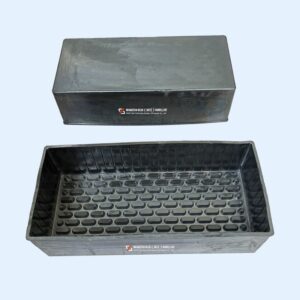
In high-speed environments, the track system faces immense pressure from frequent, high-velocity train passages. The Rubber Boot serves as a vital resilient interface between the rail or sleeper and the concrete track bed. By providing a controlled degree of elasticity, our track stability rubber boot ensures that the fastening system—such as the WJ-7 Fastening System or WJ-8 Fastening System—maintains optimal support even under intense dynamic stresses. This support is crucial for preventing the lateral and vertical displacement of the rails, which is the cornerstone of high-speed safety.
Track Stability Solutions for High-Speed Rail Systems
Stability is not just about rigidity; it is about resilience. Our Rubber Boot is designed to provide the necessary “give” to prevent track components from becoming brittle under repetitive loading. Integrated with other SFFST components like the Resilient Tie Pad and Rail Pad, the boot creates a holistic railway vibration reduction system. This synergy ensures that the entire track structure remains stable and secure, helping reduce localized stress accumulation within rail fastening components.
High-Speed Rail Vibration Damping Mechanisms
Impact Absorption with SFFST Performance in High-Speed Rail
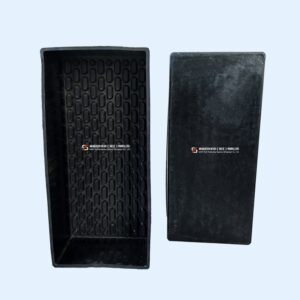
Vibration is the primary enemy of track longevity. As a train traverses a level crossing or a standard section of track, it generates high-frequency vibration waves. The SFFST Rubber Boot is specifically formulated for shock absorption. By utilizing high-performance materials in our Rubber Products Production lines, we create boots that dissipate kinetic energy before it can travel deeper into the track bed. This damping effect is essential for protecting sensitive components like the SKL Tension Clamps from loosening over time.
Vibration Reduction Materials Used in Railway Infrastructure
The choice of material determines the damping efficiency. SFFST offers Rubber Boot solutions made from natural rubber, synthetic rubbers (such as EPDM, SBR, and CR), and thermoplastic elastomers (TPE). Each material is selected based on its static and dynamic stiffness properties, which we verify in our Non-metal Lab.
Railway Noise Reduction and Vibration Control Systems
How Rubber Boots Improve High-Speed Rail Performance
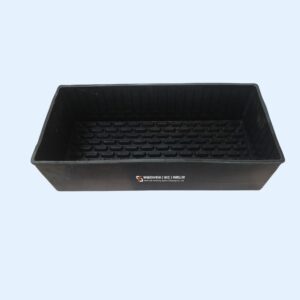
Noise control is a major concern for HSR lines passing through urban centers. The wheel–rail rolling noise and structure-borne vibration is often the result of resonant frequencies in the track. The Rubber Boot dampens these vibrations at the source, preventing the rail from resonant vibration amplification within the rail structure. This acoustic insulation is a core part of how SFFST improves passenger comfort and reduces the environmental footprint of modern transit.
Mitigating Acoustic Impact in Dense Urban Corridors
In densely populated areas, rail noise is not just a nuisance; it is a regulated environmental impact. Through our EPC+M+O model, SFFST provides engineering consultation to design systems that specifically address noise emission.
Environmental Adaptation for Noise-Sensitive HSR Zones
Different environments require different acoustic solutions. Whether it is a tunnel section where noise is amplified or an elevated viaduct that radiates sound, SFFST can customize the Rubber Boot to meet specific decibel reduction targets. Our International Joint R&D Center works closely with academic institutions to refine these “specialized, refined, unique, and new” solutions for the most noise-sensitive HSR zones.
Material Science Behind SFFST High-Speed Rail Components
Advanced Formulations: Natural Rubber vs. EPDM and TPE
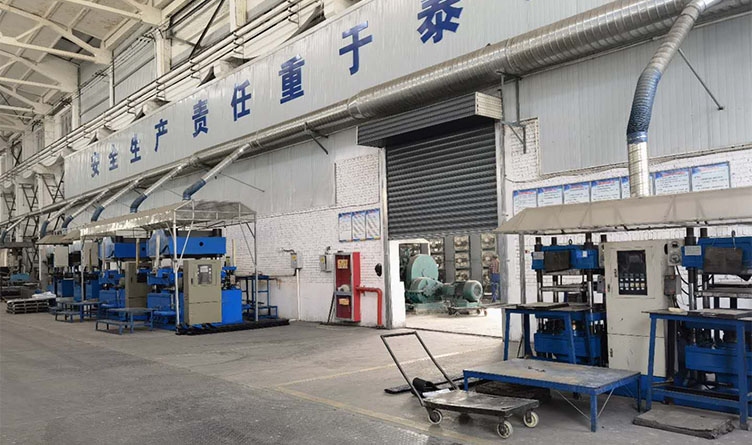
The performance of our high-speed rail components begins at the molecular level. In 2020, we replaced our older facilities with a new automated formula production line to produce high-strength, wear-resistant rubber products.
Durable Design for High-Frequency HSR Cycles
Longevity is a requirement, not a feature. In our Rubber Products Production lines, we implement automatic batching and mixing to ensure material consistency. Our Rubber Boot is tested to withstand the high-frequency cycles of modern HSR, maintaining its shape and elasticity over millions of load cycles without significant deformation or hardening.
Precision Testing for HSR Reliability at SFFST Labs
Every SFFST product undergoes rigorous validation. Our SFFST Labs are equipped with advanced international testing equipment, including the MTS Servo-Hydraulic Testing System (25T) and the Drop Hammer Impact Test System. For the Rubber Boot, we conduct vital tests such as static and dynamic stiffness, hot air aging, and insulation resistance in our Non-metal Lab to ensure they meet international EN 13146 and EN 13481 standards.
SFFST Solutions via Integrated EPC+M+O Model
One-Stop Engineering for Global Railway Infrastructure
We don’t just sell parts; we provide an entire lifecycle solution. Through our EPC+M+O model, we offer everything from initial consultation to on-site installation training. This ensures that the Rubber Boot is installed correctly and integrated perfectly into the larger Type VII Fastening System or other HSR configurations.
Customized OEM/ODM Manufacturing for HSR Specifications
Recognizing that every railway project has unique needs, SFFST thrives as a trusted OEM/ODM partner. We can customize the dimensions, materials, and functions of the Rubber Boot based on your technical drawings and specifications. Our rapid response team provides feasibility analyses and professional quotations to keep your project on track.
Ensuring Safety through Rigorous CRCC and ISO Standards
Safety is our ultimate metric of success. SFFST is ISO 9001, ISO 14001, and ISO 45001 certified, and we were among the first to obtain CRCC railway product certification. By adhering to these high standards, we guarantee that our track stability rubber boot is a reliable link in the chain of high-speed rail safety.
Conclusion
The evolution of high-speed rail demands a parallel evolution in infrastructure components. The Rubber Boot is a testament to how specialized material science and precision engineering can transform track performance. SFFST provides engineered fastening solutions in the rail fastener industry, delivering “Fastening Excellence” through every track stability rubber boot we manufacture. By mastering high-speed rail vibration damping and noise reduction, we are not only protecting the tracks but also enhancing the travel experience for millions of passengers worldwide.
Looking for high-performance track components for your next high-speed project? Contact SFFST today to explore our customized Rubber Boot and vibration damping solutions.
FAQ
Q: Why are rubber boots important in railway track systems?
A: Rubber boots for the railway are essential because they provide a resilient buffer between the rail components and the concrete track bed. They perform multiple functions, including shock absorption, noise reduction, and electrical insulation, which are critical for the safe and stable operation of any modern railway system.
Q: How do rubber boots improve high-speed rail performance?
A: They enhance high-speed rail vibration damping and ensure track stability. By absorbing the high-frequency energy of a passing train, SFFST rubber boots prevent vibrations from damaging the track substructure, maintain precise track geometry, and reduce the acoustic impact on the surrounding environment.
Q: Can SFFST customize rubber boots for specific HSR projects?
A: Yes. As an OEM & OBM manufacturer, SFFST can develop and customize Rubber Boot solutions according to customer specifications, dimensions, and functional requirements. Our International Joint R&D Center ensures that these customized products meet all necessary industry standards.