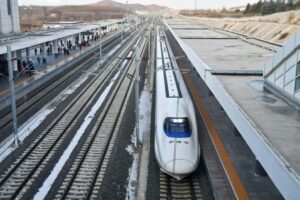
In the rapidly evolving landscape of Urban Rail Systems, the challenge of balancing efficient rail operations with environmental sustainability has never been more critical. As tracks weave through densely populated metropolitan areas, the resulting Track-Borne Vibration and Structure-Borne Noise can significantly impact both local residents and the longevity of the Railway Infrastructure. At SFFST, we understand that a Sustainable Railway requires more than just speed; it requires vibration control and operational stability. With over 40 years of experience in Railway Engineering, SFFST has pioneered advanced Railway Vibration Control Solutions. Central to this innovation is our Floating Slab Mat, one of the key elastic components used in a Floating Slab Track System and modern Railway Resilient Track Systems. In this blog, we will delve into the science of vibration isolation, the advanced manufacturing processes behind our products, and how our “Fastening Excellence, Entire Solution” approach is supporting the development of modern rail transit infrastructure.
Urban Rail Vibration and Noise Challenges
Mechanics of Track-Borne and Ground-Borne Vibration
The interaction between train wheels and the rail surface generates significant dynamic forces. These forces manifest as Track-Borne Vibration, which travels through the rail, sleepers, and ballast into the ground as Ground-Borne Vibration. Without effective mitigation, these vibrations can reach the foundations of nearby buildings, causing structural resonance and discomfort for nearby residents. Our engineering team has continuously optimized vibration isolation solutions through extensive laboratory testing and engineering research.
Addressing the Impacts of Structure-Borne Noise
When vibrations from the rail enter a building’s structure, they often radiate as audible sound, known as Structure-Borne Noise. In many urban centers, this noise is a significant engineering challenge to the expansion of metro lines and intercity railways. Traditional rigid track designs provide limited vibration damping, whereas our Railway Noise Reduction technologies, such as the Floating Slab Mat, effectively attenuate vibration transmission and reduce structure-borne noise.
Mechanism of SFFST Floating Slab Mats
Vibration Attenuation Through Decoupling Principles
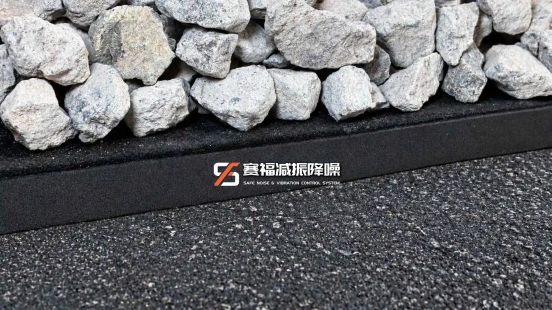
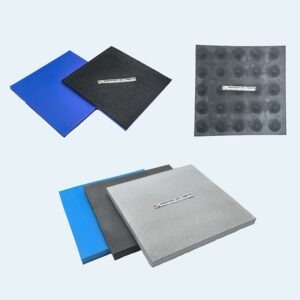
Our Floating Slab Mat is an elastic or resilient component strategically placed between the track slab and the base structure. It is called “floating” because it allows the rail and its support structure to “float” slightly, effectively decoupling the dynamic forces of the train from the rigid foundation. This decoupling principle is one of the most effective methods for railway vibration isolation.
Optimizing Static and Dynamic Stiffness Parameters
The performance of a Floating Slab Mat is largely determined by its Static Stiffness and Dynamic Stiffness. At SFFST, we engineer our mats using high-quality Polyurethane or specialized composite materials to achieve the perfect balance. Low static stiffness ensures effective Vibration Mitigation, while controlled dynamic stiffness ensures that the track remains stable under the heavy loads of a passing train. This precise engineering allows our Railway Vibration Isolation Methods to meet the diverse needs of different rail applications.
Manufacturing Excellence at SFFST Facilities
Automated Polyurethane Pouring and Digital CNC
We operate an Automatic Polyurethane Pouring Machine Production line that is controlled by digital CNC throughout the entire process. This high level of automation, part of our Automated Workshop culture, ensures that every Floating Slab Mat we produce meets exact specifications from pouring and mold closing to demolding. By minimizing human error and maximizing efficiency, we provide a reliable Rail Support System for global markets.
Customization Through SFFST OEM/ODM Rail Solutions
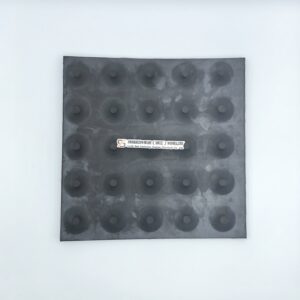
No two railway projects are identical, and we specialize in meeting unique project requirements. Through our OEM/ODM Rail Solutions, we offer fully customizable products where customers can specify material composition, dimensions, and color. Whether your project requires a standard Resilient Tie Pad/Elastic Pad or a high-load Floating Slab Mat for a heavy-haul line, our engineering team can support customized engineering requirements.
Rigorous Testing for Performance Assurance
Evaluating Damping Performance in Specialized Labs
To ensure our solutions have industry-leading testing capabilities, SFFST is equipped with more than 100 sets of advanced testing equipment. In our Non-metal Lab, we conduct vital testing items such as Damping Performance, Tensile Performance, and Insulation Resistance. These tests guarantee that our Railway Resilient Track System components can withstand the extreme environmental and mechanical stresses found in modern rail networks.
Ensuring Reliability Through Fatigue and Aging Tests
The reliability of a whole transit network often hinges on its critical components. We use the MTS Servo-Hydraulic Testing System (25T) and an electro-hydraulic servo fatigue testing machine to conduct rigorous Fatigue Performance and Hot Air Aging Performance evaluations. This ensures that our Floating Slab Mat remains wear-resistant and maintains its isolation properties over its entire service life, even in the harshest urban conditions.
Sustainable Benefits of Resilient Track Systems
Reducing Track Maintenance and Life-Cycle Costs
One of the most significant advantages of using SFFST resilient components is the reduction in long-term Track Maintenance. By attenuating dynamic loads, our Floating Slab Mat reduces the stress transmitted to the sleeper and the track foundation. This minimizes the wear and tear on other components like the Rail Fastening System, ultimately lowering the Life-Cycle Cost for rail operators and ensuring a more Sustainable Railway.
Enhancing Passenger Comfort and Social Responsibility
Beyond the technical benefits, our focus on Railway Noise Control directly translates to enhanced passenger comfort and reduced environmental noise. Projects like the Chengdu Metro Line 17 Project and the Wuhan-Huangshi Intercity Railway Project demonstrate our commitment to social responsibility by delivering “low noise” railway solutions that foster harmony between transit systems and urban living.
Conclusion
The integration of high-performance Floating Slab Mats is no longer an option but a necessity for modern Urban Rail Systems. By effectively decoupling the track slab from the foundation, SFFST provides a Railway Vibration Isolation solution that protects both the environment and the investment. Our commitment to R&D, validated through precision manufacturing and rigorous laboratory testing, ensures that our Railway Infrastructure components meet internationally recognized quality standards. As we look toward the future of Railway Engineering, we remain dedicated to our vision of “Fastening Excellence, Entire Solution,” delivering engineered solutions that improve railway safety, vibration performance, and long-term operational reliability.
Contact SFFST today to learn how our Floating Slab Mat solutions can enhance the acoustic performance and durability of your next urban rail project!
FAQ
Q: What is the primary function of a Floating Slab Mat in a rail system?
A: A Floating Slab Mat is an elastic component placed between the rail/track slab and the foundation to provide cushioning, Vibration Damping, and Noise Reduction. It allows the track to “float” slightly, absorbing dynamic forces and preventing Ground-Borne Vibration from reaching nearby structures.
Q: Can SFFST Floating Slab Mats be customized for specific project requirements?
A: Yes. Through our OEM/ODM Rail Solutions, we can customize material (Polyurethane or composites), size, and functionality to meet the specific Vibration Isolation needs of conventional, high-speed, or metro rail projects.
Q: What impact do these mats have on track maintenance costs?
A: By absorbing impact forces and reducing stress on sleepers and foundations, our Floating Slab Mat significantly extends the service life of the track structure. This reduces the frequency of Track Maintenance and lowers the overall Life-Cycle Cost of the infrastructure.